
How to Spot a Well-Maintained Used Boat in 60 Seconds

If you want to get out on the water, buying a used boat can be a great opportunity to do so without paying the price of a brand-new vessel. However, it is important to know what to look for in a used boat, since your experience will depend on the care of the previous owner. While a professional survey can give you the most complete picture of a boat’s condition, you can get a lot of clues in just a minute or two of looking yourself.
Knowing key areas to check—such as the hull, the transom, the deck, electronics, and all available maintenance records—you can spot potential red flags or evidence that the boat has been receiving proper care. Here are some tips for spotting a well-maintained boat in 60 seconds:
Checking the boat’s exterior
The hull is one of the biggest and easiest parts of a boat to check for wear or damage, if you know what to look for. A quick walk around the boat can give you a lot of information. Just remember to catch all angles and always check the underside as well. Some boats may have been damaged underneath from running aground in shallow water, striking underwater objects, or being moved on the wrong trailer. When inspecting a boat’s hull, look for cracks or uneven spots in the gelcoat, or deep dents. Some small scratches are to be expected, but they do lower resale value, and deeper cracks—especially around important structural spots—can point to more serious damage.
You should also take a quick look at the propeller for bent blades or uneven edges. Again, small nicks happen over time. You want to look for bigger or excess damage. Feel the railings to make sure they are secure.
Another good spot to check is the transom. This is the flat—or slightly curved—wall in the back of the boat that closes off the hull, where the engine is attached. This is an important part of the hull to inspect for uneven gelcoat, dents, or stress cracks where the engine is mounted. A sound transom protects the boat’s engine, which you should also check for rust or corrosion.
Checking the boat’s interior
After taking a look around the outside of the boat, you will want to check its interior. Walk around the deck pressing firmly to check if it has soft or spongy spots, which indicate damage. Look for waterlines in the boat’s interior, particularly in the storage compartments or other places that are supposed to stay high and dry. Try all the compartments to make sure they open and close correctly. Warped doors could mean the boat has been filled with water and taken damage inside it. This could also leave a mildew smell in the boat, so pay attention as you inspect it to what it smells like.
Test out all the electronics on the vessel to make sure they are fully functioning. Damaged electronics, headlights that are out, or screens that no longer turn on can be evidence of poor maintenance or electrical problems that were not immediately obvious otherwise. Be sure to turn on all screens, and test the GPS, sonar, bilge pump, radio, navigation tools, and lights to see everything working properly. Include horn and windshield as well on boats that have them. You will also want to test electronics that are not “necessities” such as stereo or speakers, even if they are not your top priority—you do not want to end up paying for something that does not function.
In addition to testing out screens and tools, be on the lookout for exterior electronical problems. Exposed wiring or tangled nests of wires can be signs of incorrect or sloppy repair jobs.
Check the boat’s service records
A boat’s service records can give you a lot of history with a quick read. Always ask a seller to show you their records and be wary of buying a boat with no available history—it might be well-maintained but that purchase is more of a gamble.
Look over the maintenance records for major repairs in the past and good routine maintenance. This includes regular oil changes, good winterization and de-winterization, and battery replacements.
Another piece of useful information to have is the boat’s engine hours. This is simply the total hours that the engine has been running—similar to reading the miles on a car, only measured in hours for boats, rather than distance. Engine hours should not dictate your whole decision. A boat with high hours that is well-maintained might be a better purchase than one with lower hours that has been damaged or taken care of poorly. However, the hours are a good factor to consider, alongside other observations.

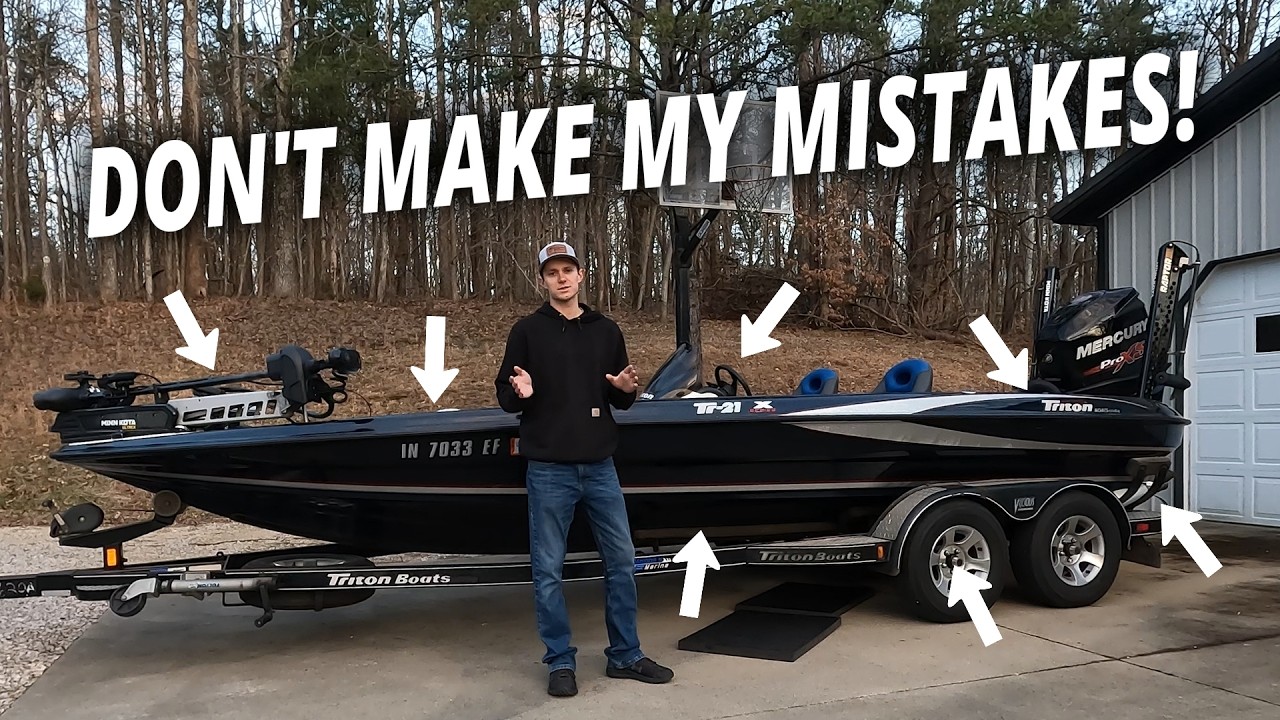
Check the trailer before purchasing as well!
If you are purchasing a used trailer along with your boat, be sure to look it over carefully as well. It is important not to overlook the trailer while you focus on the boat itself. A damaged or ill-fitted trailer can also in turn damage your boat.
Your trailer needs to be sized correctly to the boat you are looking at—not just any boat can go on any trailer. They also have lights and wiring to check, not to mention brakes and tires which need to be tested and inspected for damage. You do not want to invest in a boat only to have it immediately damaged by a faulty trailer!
Frequently Asked Questions (FAQ’s):
How can I quickly tell if a used boat has been well maintained?
A well-maintained used boat will usually show signs of consistent care both inside and out. Start by walking around the vessel and look for a clean hull, secure railings, and propeller blades that are not bent or dented. Check the deck for soft spots, inspect interior and storage compartments for water damage, and pay attention to any smell of mildew. Test all electronics, including navigation equipment, lights, and pumps, to confirm that they work properly. Always ask to see maintenance records. Regular oil changes, careful winterization, and documented repairs are strong indicators that the boat has been cared for in a responsible way.
How can I tell if a used boat was stored properly?
Proper storage shows through a boat’s condition. Look for a clean interior with no signs of water or water damage, mildew, mold, or fading from excessive sun exposure. Storage compartments should be dry and free of waterlines, while upholstery and flooring should show minimal deterioration. Inspect all metal components, including the engine, for excessive rust or corrosion, which can indicate long, problematic exposure to moisture. Ask the seller about their winterization and de-winterization procedures and where the boat was stored during the off-season. Maintenance records documenting seasonal preparation and storage can provide additional confidence that the boat has been consistently and correctly looked after.
What should I look for in the bilge of a used boat?
The bilge can contain a lot of evidence about how a boat has been maintained. Ideally, it should be clean, dry, and free from strong odors of fuel, oil, or mildew. Look for standing water, excessive amounts of dirt, oil residue, or signs of leaking fluids. These can point to poor maintenance and possible mechanical problems. Inspect hoses, wiring, and fittings for corrosion and low-quality repairs. If possible, test the bilge pump to ensure it operates correctly. A clean bilge with well-organized components often reflects an owner who has properly cared for the vessel and addressed problems quickly instead of letting them get worse.

How to Handle Paperwork When Selling Your Boat Privately

Where to Find the Best Boat Deals at the End of Season

How to Research Boat Models Before the Summer Buying Frenzy