
How to Keep Your Boat Upholstery Protected From Summer Sun
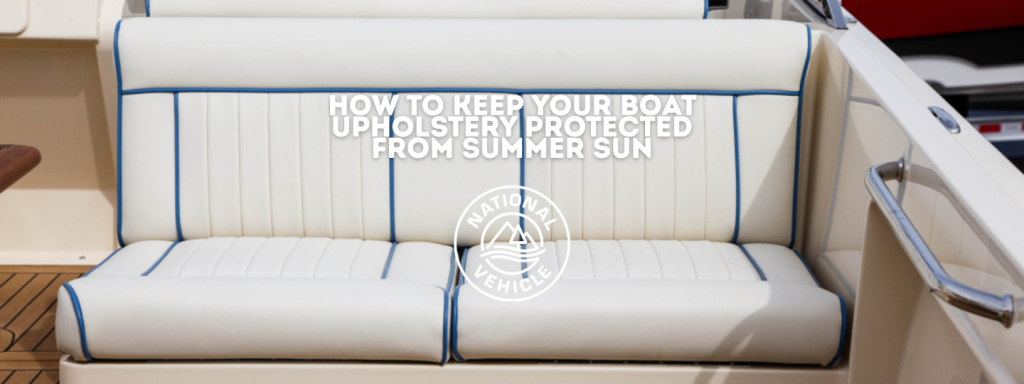

You know the sharp pokes and sometimes even cuts you can get on those hard peeling seats you sit on in a boat that has had little summer care? There are several reasons you want to protect your boat upholstery from the intense summer sun. Not only to protect your skin when you go for outings, but you also want to prevent fading of your seats and ultimately, the resale value of your vessel. Let’s look at ways you can extend the life of your marine upholstery by years.
Why Does My Boat Upholstery Fade and Crack?
Before we get to the details of extending your upholstery life, consider why your seats start this process to begin with. Seats must maintain the vinyl’s moisture and UV resistance. Fading occurs when UV rays break down the pigments in the vinyl, while cracking happens when the essential oils that keep the material supple evaporate. Here is a quick overview of protecting your seats.
- Keep it Covered – Always use a breathable cover when the boat is not in use.
- Condition Monthly – Use a marine-grade conditioner that restores lost oils.
- Clean Regularly – Remove dirt, salt, and body oils after every trip, as these contaminants can accelerate the breakdown of the vinyl’s protective top coat.
Keep these steps in mind when caring for the inside of your boat. Let’s break these general steps down into specifics.
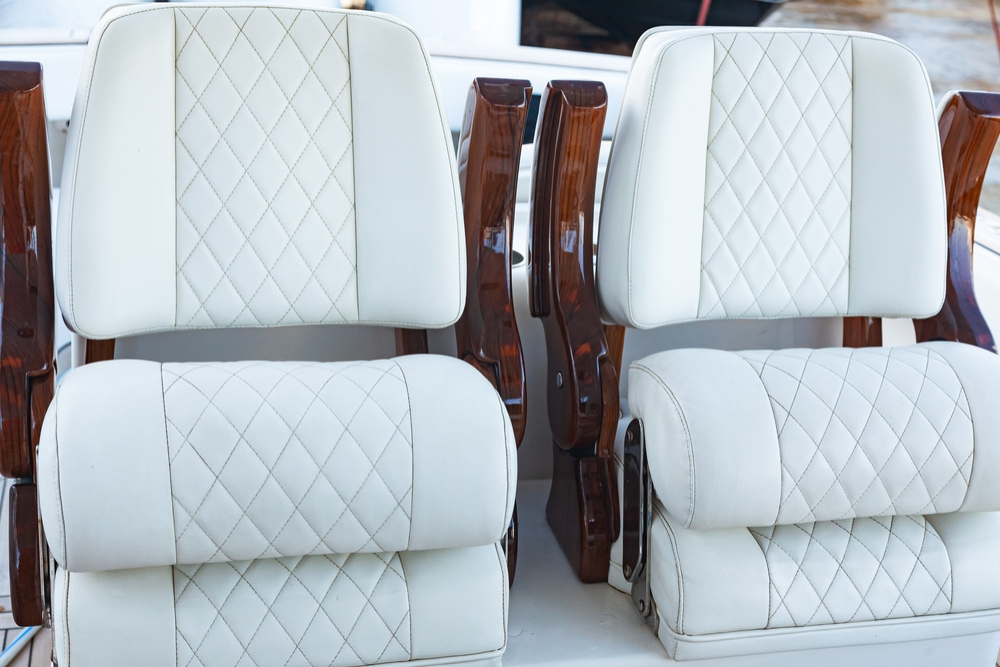
Physical Barriers: The First Line of Defense
The most effective way to protect your boat seats is to keep the sun from ever reaching them.
- High-Quality Boat Covers – Invest in a custom-fitted, breathable boat cover. Avoid cheap plastic tarps, as they trap moisture and heat, which creates a breeding ground for mold and mildew.
- Bimini Tops and Sunshades – When on the water, use a Bimini top or sunshade to provide constant relief for your passengers and your upholstery.
- Stowable Cushions – If your boat has removable cushions, store them in a console or locker when the boat is docked and not in use.
Specialized Marine UV Protectants
Marine vinyl is manufactured with built-in UV inhibitors, but these degrade over time. You must replenish this barrier regularly.
- Application Frequency – For boats kept in high-sun areas, apply a UV protectant every 3 to 5 weeks.
- Proper Technique – Always apply protectants to clean, dry surfaces out of direct sunlight. Spray the product onto a microfiber towel rather than directly onto the seat to ensure even coverage and avoid overspray.
- Using the Right Protectants – The “best” products are those specifically formulated for marine environments, which are free from silicone, petroleum distillates, and alcohol. Look for top-rated options available at retailers marked with terms like SPF, UV protectant, and polymers.
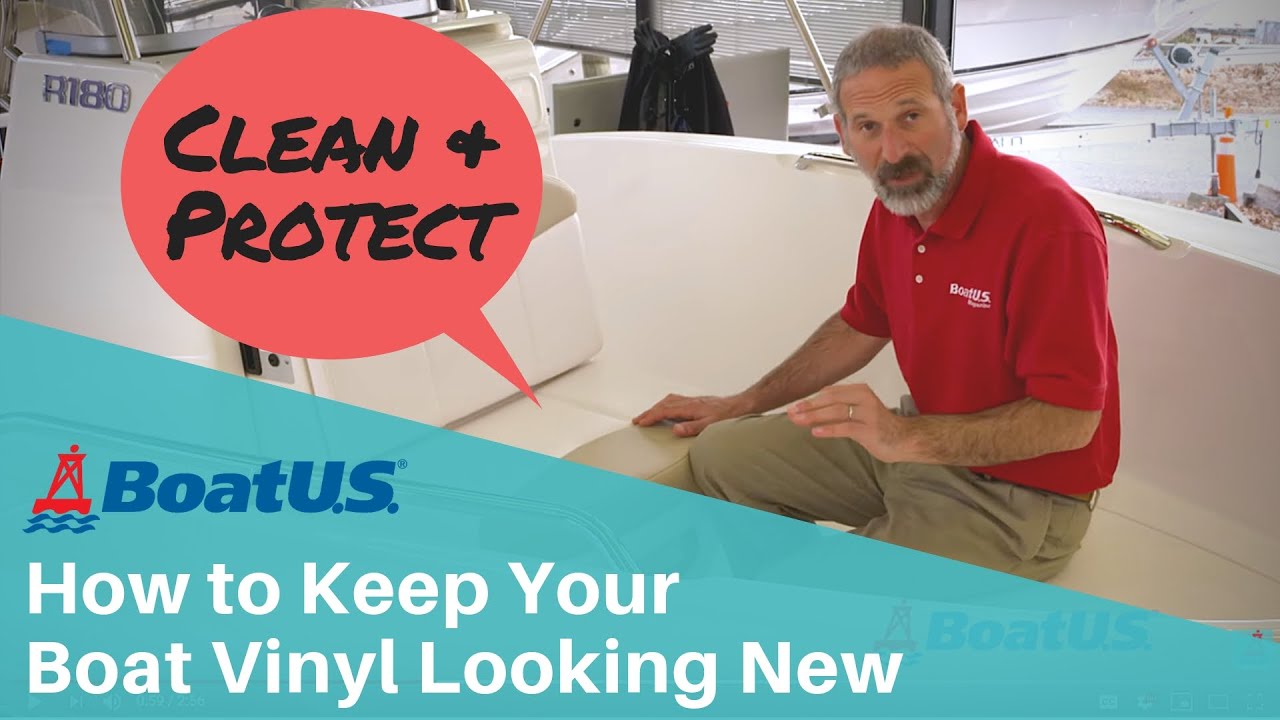
Smart Boating Habits
Daily habits can significantly reduce the cumulative damage caused by the sun and human activity.
- Sunscreen Management – Avoid spray-on sunscreens, which can leave a damaging mist on your vinyl. Encourage guests to apply lotion-based sunscreen before boarding so it has time to absorb into the skin.
- The Towel Rule – Placing towels down before sitting creates a physical barrier that prevents sweat, body oils, and sunscreen chemicals from leaching into the upholstery.
Best Cleaning Steps to Protect Your Vinyl Boat Seats?
Try these steps for the best results and a long life for your vinyl seats:
- Rinse Boat Seats – Use fresh water to wash away loose salt and grit.
- Gentle Washes – Use a mild, pH-neutral soap (like Dawn or a dedicated marine cleaner) and a soft cloth. Avoid household cleaners like bleach or Windex, which can dry out vinyl and weaken the stitching.
- Target Stains – For stubborn spots or mildew, use a specialized marine cleaner.
- Dry Thoroughly – Wipe the seats completely dry with a clean microfiber towel.
- Apply Protection – Once dry, apply a UV protectant and buff it until dry to the touch to ensure a proper bond.
How Often Should You Clean Your Boat Seats?
A proper cleaning schedule for vinyl boat seats ranges from a quick 10-minute wipe-down after every trip to deep cleaning at the start and end of each season. Consistently following a routine can prevent 30–60% of common upholstery damage caused by salt, sun, and mildew. Here is a great chart to get you started.
Maintenance activities can vary by region, storage, and water. Don’t forget to include these in your maintenance schedule based on your specific needs:
- Saltwater Boating – Always rinse with fresh water and towel dry after every outing. Salt crystals left to air dry can act like sandpaper on vinyl and stitching.
- High-Sun/Altitude Regions (FL, AZ, TX) – Bump UV protection application to every 2 weeks during peak summer to prevent yellowing and cracking.
- Storage Preparation – Before covering your boat for any length of time, ensure seats are 100% dry. Trapped moisture under a cover is the primary cause of mold and mildew growth.
By combining these chemical defenses with physical barriers—such as using breathable boat covers and Bimini tops—and a regular maintenance schedule, you can create a comprehensive shield that preserves the upholstery’s suppleness and vibrant color for years to come. Which translates into a comfortable boating experience!
Frequently Asked Questions with National Vehicle:
How do I keep my boat seats from fading and cracking?
Maintain the vinyl’s moisture and UV resistance.
What is the best type of product to protect boat seats from the sun?
Look for top-rated options available at retailers marked with terms like SPF, UV protectant, and polymers.
What is the best way to clean and protect vinyl boat seats?
Follow a regular cleaning routine and ensure you do not strip away your boat vinyl’s natural protections.
Boat Storage and the Common Mistakes to Avoid

Boating with Dogs 101: How to Safely Bring Your Dog Aboard

What to Know About Boating in National Parks 2025