
How to Detect Early Signs of Boat Engine Wear

This is the perfect time to check your engine for wear. You have probably had several early summer boating excursions and gotten in some regular use of your boat. Before you launch into a summer of regular trips on the water, make sure you do some routine maintenance so you don’t put a stall in your fun.
What Boat Engine Problems Do You Look For?
Your engine spends most of its life under a constant load, and they are good about speaking up when they have issues. You just need to watch and listen so you don’t wind up with catastrophic failures. There are early signs you can watch for to catch wear and tear early.
Unusual Boat Engine Noises
A healthy boat engine produces a steady, rhythmic hum. Any deviation from this is your first red flag. If you hear any of these sounds, it’s time for an inspection.
- Knocking or Pinging – A metallic tapping or knocking sound can indicate bad spark plugs, low fuel octane, carbon buildup in the combustion chamber, or even failing internal components like piston rods or worn bearings.
- Squealing or Screeching – High-pitched screeches typically point to a loose or worn-out serpentine or alternator belt.
- Grinding or Rattling – A gravel-like sound usually means the engine bearings are worn, while grinding upon starting can point to a faulty starter motor or damaged flywheel teeth.
- Hissing or Sizzling – This can indicate a coolant leak, an exhaust leak, or an issue with the water pump.
Excessive or Discolored Exhaust Smoke from the Boat Engine
The color and volume of your exhaust smoke are immediate indicators of what is happening inside the combustion chamber.
- White Smoke – If the white smoke is thick and constant, it usually means your engine is burning coolant—a telltale sign of a blown head gasket or a cracked cylinder block. (Note: light, wispy white steam on a cold morning is just condensation and is entirely normal.)
- Blue Smoke – This suggests that engine oil is leaking past the piston rings, valve seals, or cylinder walls and burning in the combustion chamber.
- Black Smoke – Black smoke means your engine is “running rich,” meaning it is burning too much fuel compared to air. This could be caused by a clogged air filter, faulty fuel injectors, or a bad fuel pump.
Loss of Power and Sluggish Performance
If your boat struggles to reach its typical wide-open-throttle (WOT) RPMs, planes slowly, or feels sluggish under load, it indicates declining engine health. Worn-out piston rings, degraded valves, or clogged fuel filters rob the engine of its power. If you notice a drop in top-end speed without an apparent change in weight distribution or water conditions, your engine needs immediate diagnostics.
Excessive Vibration
Smooth sailing should feel exactly that—smooth. If you feel excessive vibrations when accelerating, it is a warning sign. While it could be a bent propeller or a fishing line wrapped around the prop shaft, heavy vibration can also indicate failing engine mounts. Over time, worn engine mounts cause misalignment, which can damage the drivetrain and the hull.
Difficulty Starting or Rough Idling
If your engine takes multiple attempts to turn over, requires extended cranking, or stalls as soon as you bring it back to idle, internal wear is likely present. Hard starting often points to fouled spark plugs, low compression, or a weak starter motor. Similarly, erratic idling suggests the fuel injectors are dirty, or the fuel-to-air ratio is imbalanced.
Unusual Gauge Readings or Warning Alarms
Modern boats have sophisticated gauge clusters and onboard computers. Ignoring an alarm or a flashing error code is a recipe for disaster.
- Overheating – If your temperature gauge climbs into the red or the overheating alarm sounds, shut the engine down immediately. It usually means there is an obstruction in the water intake, a worn-out water pump impeller, or a blocked sea strainer.
- Fluctuating Oil Pressure – Low oil pressure is a critical warning that indicates either a failing oil pump, severe internal engine wear, or diluted oil.
Poor Fuel Efficiency
If you are burning through fuel much faster than usual, your engine is working harder than it should to produce the same speed. This inefficiency is usually a symptom of worn-out carburetors, aging fuel injectors, or fouled spark plugs.
Preventing Boat Engine Wear With Maintenance
Routine maintenance acts as an insurance policy for your boat engine. By executing basic tasks regularly, you keep contaminants out of critical systems, prevent corrosion, and drastically prolong the motor’s lifespan.
Flushing the Cooling System
Because most boat engines take in raw water (either freshwater or saltwater) to cool the powerhead, flushing the engine after every use is vital. Saltwater is highly corrosive, and even freshwater can leave behind sand, silt, and mineral deposits. Use the designated flushing port or attach “muffs” to the lower unit, run the engine to allow the thermostat to open, and flush thoroughly. This flushes contaminants from the cooling passages and prevents blockages.
Changing Engine Oil and Filters
Just like in a car, oil is the lifeblood of a four-stroke boat engine. It lubricates moving parts and reduces friction. Over time, marine oil breaks down and becomes contaminated with combustion byproducts and microscopic metal shavings. Change your engine oil and filter per the manufacturer’s manual to ensure the engine runs with clean, viscous lubrication. For two-stroke outboards, always ensure your oil reservoir is topped off with high-grade marine oil.
Spark Plug Inspection and Replacement
Spark plugs are responsible for the precise ignition of your fuel-air mixture. Over hundreds of hours, they can foul with carbon deposits or corrode, leading to misfires, reduced power, and rough idling. Inspect your spark plugs regularly, clean them if they are lightly soiled, and replace them entirely if the electrode is worn or severely fouled.
Fuel System Maintenance
Marine fuel systems are particularly vulnerable due to the prevalence of ethanol-blended fuels, which can attract moisture and degrade fuel lines over time.
- Fuel-Water Separators – Check and replace your fuel-water separator filters regularly. Water in your fuel system is a primary cause of engine sputtering and stalling.
- Stabilizers – If your boat will be sitting for an extended period (such as during the off-season), always add a marine-grade fuel stabilizer to prevent the gas from going stale and forming varnish in the fuel injectors or carburetors.
- Fuel Lines – Inspect flexible fuel lines for signs of dry rot, cracks, or loose connections that could allow air into the system.
Lower Unit and Gear Lube Replacement
The lower unit (the gearcase) houses gears that undergo tremendous stress. You should regularly check the gearcase lubricant. Milky or cloudy oil is a sure sign of a failing seal that is allowing water to infiltrate the gearcase. Replacing the gear lube annually prevents severe gear wear and catastrophic lower unit failure.
Water Pump Impeller Maintenance
The water pump impeller is a small, flexible piece of rubber that pumps raw water through your engine to keep it cool. It is often considered the most critical wearable part on a boat. If the impeller vanes degrade or snap off, water stops flowing, causing the engine to overheat almost immediately. Replace the water pump impeller every 1 to 3 years, depending on your frequency of use.
Propeller Inspection and Maintenance
You might not immediately associate the propeller with the engine, but a damaged prop directly affects engine wear. A bent, nicked, or chipped propeller causes microscopic imbalances that put unnatural stress on the driveshaft and engine seals. Regularly inspect your propeller for damage, ensure it is torqued correctly, and check behind the prop for fishing line wrapped around the shaft, which can destroy the propeller shaft seal.
Zinc Anodes (Sacrificial Anodes)
Marine engines are susceptible to galvanic corrosion when different metals interact in the water. To combat this, engines are equipped with zinc or aluminum anodes. These anodes are designed to corrode instead of your expensive engine block or lower unit. Inspect your anodes and replace them when they are about 50% corroded.
Servicing Your Boat for Longevity
When it comes to servicing a boat engine, time is measured differently than in automobiles; marine engine maintenance is universally tracked in operating hours rather than miles. While the exact maintenance timeline varies slightly depending on the brand (e.g., Yamaha, Mercury, Suzuki, Honda), marine mechanics and manufacturers adhere to a standardized, universally accepted schedule.
The 20-Hour (or Initial) Service
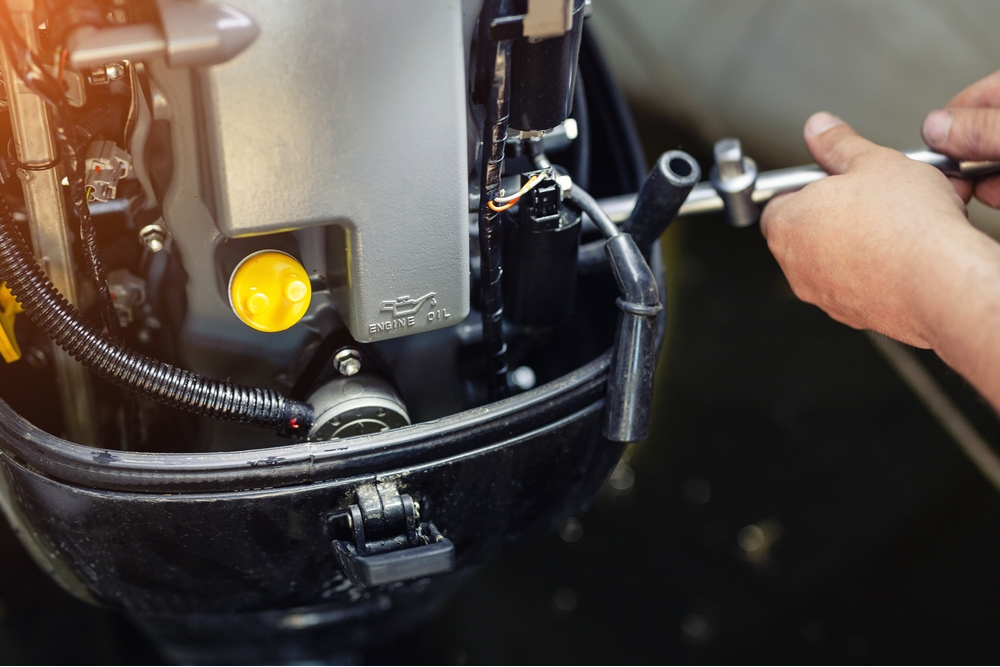
If you buy a brand-new boat or a newly repowered engine, the 20-hour service is the most important appointment you will make. During this break-in period, the internal components of the engine settle, and microscopic metal shavings naturally accumulate in the engine oil and the lower unit gear case. A 20-hour service involves changing the engine oil, the oil filter, and the lower unit gear lube to flush out these break-in contaminants, alongside a thorough inspection of cables and engine alignment.
The 100-Hour (or Annual) Service
The standard rule of thumb for marine engines is a full service every 100 hours of operation, or at least once per calendar year, whichever comes first. Even if you do not reach 100 hours of runtime, an annual service is necessary because engine oil degrades over time, and fuels left sitting for 12 months can turn stale.
- A standard 100-hour service includes:
- Changing the engine oil and oil filter.
- Changing the lower unit gear lube.
- Replace the fuel filters and fuel-water separators.
- Inspecting and replacing spark plugs.
- Checking and lubricating all grease points on the engine and steering linkages.
- Inspecting the water pump impeller.
- Inspecting the propeller and greasing the prop shaft splines.
The 300-Hour (or 3-Year) Service
Every 300 hours or three years, your engine requires a more comprehensive maintenance to prevent major internal issues. In addition to all the tasks included in the annual 100-hour service, marine technicians will typically:
- Completely replace the water pump impeller and housing.
- Check and adjust the valve clearances (essential for maintaining engine compression and preventing internal wear).
- Inspect and replace the engine’s timing belt.
- Clean or replace internal zinc anodes.
- Run diagnostic tests using factory software to check the engine control unit (ECU) for any stored fault codes.
The 5-Year Checklist
Certain heavy-wear items only need attention every five years. As rubber and flexible components age, they harden, crack, or lose tension, which can be detrimental to an engine.
- Engine Mounts – Over years of operation, flexible engine mounts can wear out, transferring the weight and vibration of the engine directly onto the drivetrain and causing harmful misalignment.
- Exhaust Systems – On inboard and sterndrive engines, the exhaust risers and manifolds should be inspected and often replaced every five years to prevent internal water ingestion and blockages caused by scale buildup and corrosion.
- Hoses and Bellows – On sterndrive boats, the rubber bellows that protect the drive shaft and shift cables must be inspected for cracks or leaks and replaced if there is any doubt about their integrity.
Off-Season Maintenance (Winterization)
For boaters living in regions with freezing temperatures, winterization is a fundamental part of the service schedule. Water trapped inside a block or cooling passage can freeze and expand, cracking the engine block and causing irreversible damage. Winterization includes stabilizing the fuel, draining all raw water from the cooling system, fogging the cylinders with anti-corrosion oil, and changing the lower unit oil so that any water intrusion does not freeze and crack the gearcase over the winter.
If you have a regular maintenance schedule in place and you are always alert to what your boat sounds like and how it moves, you will have no difficulty in detecting engine issues early.
Frequently Asked Questions
What are the early signs of boat engine problems?
Listen for odd engine sounds that are off from your normal use experiences. Watch for the color of smoke from your engine and excessive vibrations. Is the engine getting harder to start each time? These are all indications of a problem.
What routine maintenance prevents boat engine wear?
Flushing your system, replacing spark plugs, and changing the oil and filters. These few things can go a long way to preserving your engine.
How often should a boat engine be serviced?
You should have a regular maintenance check in place that includes service at 20 hours, 100 hours, 300 hours, and a five-year checklist. Also, don’t forget to do special maintenance in the winter months.

Mid-Season Boat Maintenance: Keep Things Running Smoothly All Summer
How to Spot a Well-Maintained Used Boat in 60 Seconds
Boat Storage and the Common Mistakes to Avoid