
Biggest Mistakes First-Time Boat Sellers Make


Selling your boat for the first time is usually not a basic transaction. For most boaters, this is the end of a blissful water-loving chapter. Whether you’re moving up to a larger vessel or hanging up the dock lines for good, you don’t need your final boat experience to be full of problems and stress.
Because selling your boat is such a specific niche and can be a seasonal issue, it is easy to become a victim of predictable traps. Not only can mistakes cost you thousands of dollars in potential income, but they may also lead to months of frustration and delays in selling.
To ‘navigate’ the boat sales process like you did the waters, you need to think like the buyer but sell with the experience of a professional boat broker. Let’s take a look at some of the mistakes first-time boat sellers usually make so you can avoid them and sell quickly and confidently.
Overpricing Your Boat
The most common mistake you can make is pricing your boat based on what it’s worth to you. As you remember the sunset cruises, the first time your child caught a fish, and the expensive radar system you installed three years ago, the price goes up.
The reality is, buyers don’t pay for your memories. While to you, the value of your boat goes up, memories can’t be sold. Buyers often don’t pay for your upgrades either. High-end electronics or custom canvas work depreciate faster than the boat itself. A $5,000 stereo system might make your boat more attractive than a competitor’s, but it rarely adds $5,000 to the market value.
What About Dock Appeal?
While it is not an official proverb, we do widely use the expression, “First impressions are everything”. Many sellers list their boat “as-is,” assuming a buyer will want to clean it their way. This is a bad tactical mistake.
First of all, when I see a boat in that state, the first thing I think is that the seller doesn’t care, so I should be able to negotiate a really low deal. A dirty boat also signals a neglected engine. If the seller didn’t bother to wipe down the mildew on the seats or vacuum the fish box, I will assume they have also skipped a few oil changes and impeller replacements. This is why I don’t eat in a dirty restaurant or one that doesn’t take the time to repaint its outdoor signs.
You will want to invest the time and money into a high-quality hull wax and a deep-cleaned interior. This can easily add 10–15% to the final sale price. Remove all personal gear—fishing tackle, life jackets, half-empty sunscreen bottles, and coolers. A clean boat makes the space look larger and allows buyers to envision their own gear on board.
Picture This Beauty!
In this digital decade, images sell. No one is going to stop and look at grainy, blurry photos. You have already lost sales on your boat because they can’t see what they will be getting. Three or four photos aren’t enough today. Especially if one of those is the boat covered.
Today you need to think in the 20’s. At least 20 high-resolution photos. They should be able to click on a small image, and it opens up in their browser or phone in a full color experience. You need to show your boat on the water, what the helm area looks like, and the prize and glory – the clean engine bay or area. You almost shouldn’t do a post without a video walk-through. They are better because people can experience the space of your boat, but it also builds trust and transparency when an owner shares their boat’s beauty.
What’s Wrong With Your Boat?
Don’t be afraid to mention that soft spot in the deck or a temperamental bilge pump. Serious buyers will hire a marine surveyor to inspect a boat before they sign the papers and hand you the cash. A surveyor’s job is to find every flaw, even one someone tried to hide.
When a surprise appears during the survey, it gives the buyer a lot of leverage to demand a big price drop or walk away entirely because the trust is broken. When you post your boat for sale, it is important to list known issues with your boat and stipulate that, based on those issues, you are asking a fair price. The buyer should see the value difference in what they are purchasing and what they will need to pay for in repairs later.
Pricing Your Boat
When it comes to pricing your boat, there are several reasons a buyer will pay more for your boat. You’ll often see identical boats to yours and from the same year listed for different prices. This happens for three primary reasons:
- Maintenance History – A boat with documented professional service records commands a premium. This shows your boat has been well taken care of. A “clean” boat that has lived in a garage vs. one that sat in salt water all year also represents two different prices. If yours has been housed, make note of that in your sales information.
- Location – Boats in high-demand coastal regions or near major lakes often fetch higher prices than those in landlocked or remote areas where the buyer pool is small. If you are not near one of these areas, consider whether it is feasible to relocate your boat for sale to an in-demand region.
- Engine Hours – This is where the true value of your boat will be. Naturally, a boat with 200 hours will get a bigger price tag than the same model with 1,200 hours. You have paid for those memories, and you get to keep them.
Selling Your Boat
The number one place to sell a boat is where it will be most accessible to a buyer. That includes both the physical placement and ad placement. For physical placement, you want the boat open for buyers to see it. Boats secured in a remote storage facility or a place that takes you a long time to get to and meet with the buyer don’t work. The buyer will pass you over for someone available.
What about the other options? It depends on the value of your vessel. Selling boats under $15,000 may work best on local online marketplaces where people can deal with cash-in-hand buyers looking for smaller transactions. But when you are selling a boat that has a decent price range, you will want an online service that provides you with a global audience of serious buyers.

Allowing for the Sea Trial
The sea trial is the test drive in the boating world. As a first-time boat seller, we often want to be transparent and trustworthy, and we feel this extends to a sea trial, but it doesn’t, not yet. There are a few steps in between. You need to first negotiate a price based on a view of the boat. You can even require a deposit that will cover the cost of a sea trial, which can be applied to the payment.
You do NOT want to become a free boat ride service. Don’t put the boat in the water until you have a signed Purchase and Sale Agreement. It will be noted that a satisfactory sea trial and survey will depend on the final sale. Then you can take it out on the water. Before you go, make sure the batteries are charged, the fuel is fresh, and the engine starts on the first turn. (Unless you have already noted these as issues). These can kill your sale quickly if they happen with the future buyer standing on the dock.
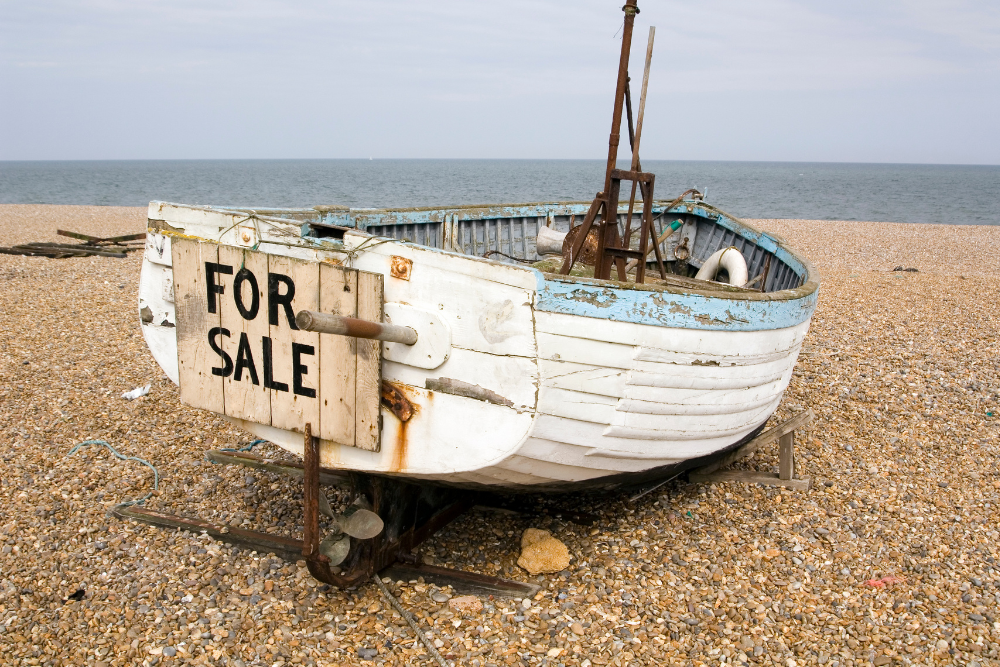
Selling a boat requires a shift in mindset. You are no longer the owner. You are now a salesperson for a high-end luxury item. By putting on hold the emotional attachment, cleaning the vessel to a professional level, and pricing it according to current market value rather than personal value, you can avoid the For Sale sign becoming a permanent fixture on your hull.
Frequently Asked Questions from Boat Sellers
What causes a boat to sit on the market too long?
Trying to sell your boat based on upgrades and the memories you have in it doesn’t pay. If you build in pricing because you added a few low-cost features or because you had some great times in the boat – those do not add the same value to the buyer. Your boat could sit too long when it is overpriced. (Dirty, ill-kept boats will set longer, too.) Or, you may have a highly specialized boat. You could see longer than 60+ days on
Why are similar boats priced differently?
Whether the boat comes with an extensive maintenance history shows the care level. Where you sell it is important. Water regions will often sell for much higher than land-locked areas. And most importantly, how many hours the engine has on it will have the greatest effect on the pricing.
Where is the best place to sell a boat?
Make sure your boat is accessible for viewing first. Then look into options that work best for your price range. Boats that sell over $15,000+ work well for online trades like National Vehicle. If you are selling a specialty niche boat, you might consider working with a broker option, too.
Serious Boat Buyers Are Still Actively Shopping in June

How to Vet Potential Boat Buyers and Avoid Boating Scams

Maintenance Tips That Increase Your Boat’s Resale Value