
How to Sell a Boat With a Loan or Lien

Still making payments on your boat? You are in good company. Most boats on the water were bought with financing, and plenty of owners decide to sell long before the last payment is made. Maybe you are upsizing, maybe you are trading the bowrider for a pontoon, or maybe the boat just sat at the dock more than you planned.
Here is the good news: you can sell a boat with a loan still on it. A lien does not lock you into ownership. It just adds a few steps between “I found a buyer” and “the boat is gone.” Once you know those steps, selling a financed boat is about as simple as selling one you own outright.
This guide walks through how to sell a boat with a loan or lien, from getting your payoff number to handing the buyer a clean title. We will also cover what to do if you owe more than the boat is worth, and why a private sale usually leaves you in a stronger spot than a trade-in.
What a Lien Means When You Sell a Boat With a Loan
When you finance a boat, your lender gets a legal claim on it until the loan is paid. That claim is the lien. It is the lender’s protection: you cannot transfer clean ownership to someone else while they still have money tied up in the boat.
Where that lien lives depends on how your boat is registered:
- State-titled boats: The lender is listed as the lienholder on your state title. In some states the lender keeps the paper title until payoff. In others, you hold it with the lien printed on it.
- Coast Guard documented boats: Larger boats are often federally documented, and the loan is usually recorded as a preferred ship mortgage with the U.S. Coast Guard instead of on a state title.
Either way, the goal of the sale is the same. The loan gets paid, the lender releases its claim, and the buyer walks away with ownership free and clear.

Step by Step: How to Sell a Boat With a Loan or Lien
1. Request a payoff letter from your lender
Your monthly statement shows a balance, but that is not the number you need. Call your lender and ask for an official payoff letter. It lists the exact amount to close the loan, the date that amount is good through, and the daily interest that adds up after that date.
While you are on the phone, ask a few more questions:
- How do they accept payoff funds (wire, cashier’s check, in-branch payment)?
- Can a buyer pay them directly?
- How long does it take to release the lien after payoff?
- Will they mail the title or lien release to you, or to the new owner?
Those answers shape how you set up the closing, so get them before you list.
2. Find out what your boat is worth
Now compare that payoff number to your boat’s real market value. The difference is your equity, and it tells you how much money you will walk away with after the lender is paid.
Guessing here is where sellers get burned. Price too high and the boat sits while interest keeps adding to your balance. Price too low and you leave money on the table you may need to clear the loan. A free boat valuation from NationalVehicle.com looks at current listing prices, Blue Book values, dealer comparables, sold history and your boat’s condition, so you start with a number based on what boats like yours actually sell for.
3. Know whether your boat is titled or documented
This decides what paperwork the lien release looks like.
- Titled boat: The lender signs off on the title or issues a lien release letter. The buyer takes that to their state agency to retitle the boat.
- Documented boat: The lender files a satisfaction of mortgage with the Coast Guard’s National Vessel Documentation Center. The buyer will want to see that the mortgage has been released before ownership is transferred.
Not sure which you have? Check your paperwork for a state title or a Certificate of Documentation, or ask your lender.
4. Choose how you will close the sale
This is the part that makes buyers nervous, and the part that makes it easy for you to stand out. A buyer handing over thousands of dollars wants to know the lien will actually be released. Here are the most common ways to close when you sell a boat with a loan:
- Pay off the loan first. If you have the cash or can bridge it, pay off the lender, get your clear title or release, then sell. It is the simplest closing, and buyers love it.
- Close at your lender’s branch. You and the buyer meet at your bank or credit union. The buyer pays the lender directly, the lender confirms the loan is satisfied, and any extra equity goes to you. Everyone sees the money land where it should.
- Buyer pays the lender, then you. Without a branch visit, the buyer sends the payoff amount straight to your lender and pays you the remaining balance. Get everything in writing in the sales agreement first.
- Use an escrow service. A neutral third party holds the buyer’s money, pays off your lender, and releases the rest to you once the lien is cleared. It adds a fee, but it is a great fit for long-distance sales.
- The buyer’s lender pays yours. If the buyer is financing, their lender can often send funds straight to your lender as part of their loan process.
Whichever route you choose, put it in your sales agreement: the sale price, the payoff amount, who pays the lender, and how the title or lien release reaches the buyer.

5. Gather the rest of your paperwork
Once the lien piece is handled, the rest of the sale looks like any other private boat sale. Have these ready:
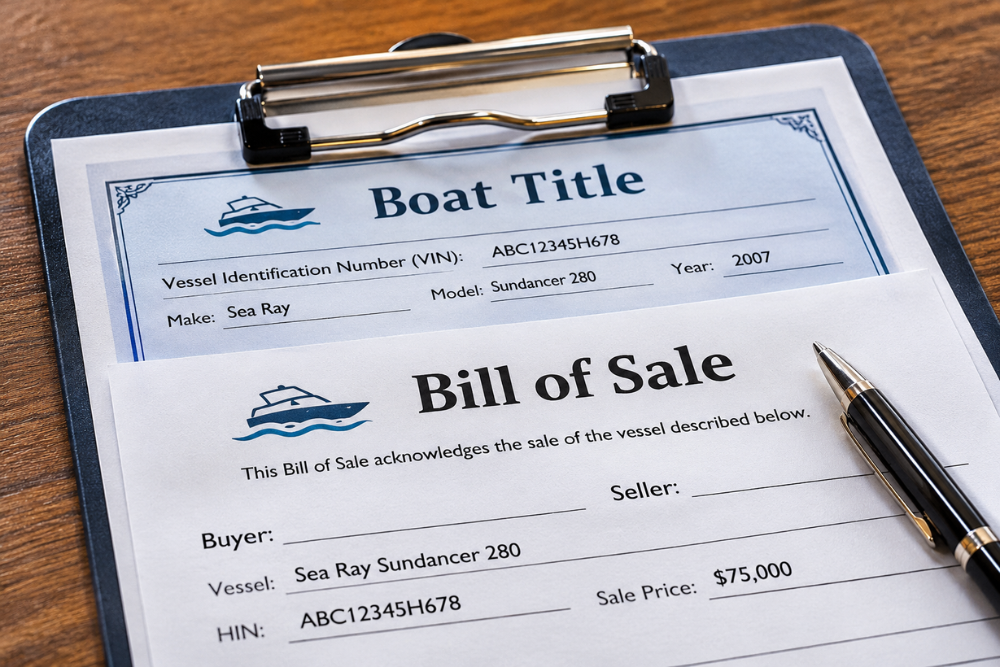
- Your payoff letter and, after payoff, the lien release or satisfaction of mortgage
- The title or Certificate of Documentation
- A bill of sale (many states have their own form)
- Current registration
- Maintenance and service records
- A marine survey, if you or the buyer want one
Buyers trust a seller who has the payoff letter and paperwork laid out before they ask. It shows you have done this right and that nothing will surprise them at closing.
What If You Owe More Than the Boat Is Worth?
Boats lose value over time, and loans often run long, so it is common to owe more than a buyer will pay. That is called being upside down, or having negative equity. You can still sell. You just need a plan to cover the gap at closing, because the lender will not release the lien until the full payoff is made.
Owners usually cover the gap one of these ways:
- Pay the difference from savings at closing
- Take out a small personal loan for the shortfall
- Keep making payments for a few months to shrink the gap, then list
- Ask your lender what options they offer for a short payoff
This is also where your sale price matters most. Every extra dollar you get from a buyer is a dollar you do not have to bring to the table. That is a big reason a private sale beats a trade-in for an upside down owner, which brings us to the next point.
Why a Private Sale Is the Smart Way to Sell a Boat With a Loan
When you still owe on your boat, the dealer down the road will happily offer a trade-in and handle the payoff for you. It sounds easy. But dealers need room to resell your boat at a profit, so trade-in offers typically come in well below what a private buyer would pay. When you have a loan to clear, that gap comes straight out of your pocket.
Consignment is not much better. You usually give up around 10 percent of the sale price in commission, hand over control of pricing and buyers, and lose the use of your boat while it waits on someone else’s lot.
A private sale through NationalVehicle.com keeps more money on your side of the ledger, which is exactly what you want when a lender gets paid first. Here is how we help:
- Pricing you can trust. Our experts help you set a price that attracts buyers and still covers your payoff.
- Five listing sites, one package. Your boat is advertised on Boat Trader, Boats.com, MotorKeel, BoatMart and NationalVehicle.com, so more serious buyers see it.
- Screened inquiries. We filter out spam and tire kickers so you spend your time on real buyers.
- Buyer financing options. Buyers can access financing, warranties, inspections and insurance through our partners, which widens your pool of qualified buyers.
- A prepared sales agreement. We provide a sales agreement and seller safety tips, so your payoff and closing terms are spelled out clearly.
- No commission. You pay a flat fee, not a cut of your sale price, and you can keep using your boat while it is listed.
Selling with a loan is not a reason to settle for less. It is a reason to make every dollar count. NationalVehicle.com has been helping private owners sell since 1999, and we help thousands of boat owners sell every year.
Ready to Sell Your Financed Boat?
A loan balance is a detail, not a dealbreaker. Get your payoff letter, know your boat’s true value, pick a closing method that protects you and your buyer, and you can sell a boat with a loan just as smoothly as one that is paid off.
The owners who come out ahead are the ones who sell privately and price it right. Start with a free boat valuation to see where you stand against your payoff, then let NationalVehicle.com put your boat in front of serious buyers on five top listing sites. Sell your boat with NationalVehicle.com or call 1-800-320-9557 to talk with our team today.
Frequently Asked Questions
Can I sell a boat with a loan still on it?
Yes. You can sell a boat with a loan or lien as long as the lender is paid in full at or before closing. Once the loan is paid, the lender releases the lien and the buyer can take ownership.
Who gets the title when I sell a boat with a lien?
It depends on your lender and state. Some lenders mail the title or lien release to you so you can sign it over. Others send it to the new owner. Ask your lender how they handle it when you request your payoff letter, and spell it out in your sales agreement.
Can I sell my financed boat to a buyer in another state?
Yes. NationalVehicle.com helps owners sell to buyers across the U.S. and Canada. For long-distance sales, an escrow service or a direct payment from the buyer to your lender keeps everyone protected while the lien is released.
How to Price your Boat With One Good Month of Season Left

The Role of Professional Sales Support in the Boat Market
How National Vehicle Simplifies the Boat Selling Process