
How to Plan Your First Family Boating Trip of 2026


Boating is a wonderful family activity. That said, as boating technology, regulations, and travel patterns change, so do planning processes. Planning a successful family boating trip in 2026 requires a bit more forethought than it once did.
If planning your 2026 boating trip is overwhelming to you, you’ve come to the right place! Here’s everything you need to know to ensure your trip out is a success.
Define What “Boating Trip” Means for Your Family
First things first, define exactly what you want your family “boating trip” to be. This term can mean a variety of things. Discuss the options with your spouse or any other adults in your boating party to ensure you’re all on the same page and to help planning go as smoothly as possible.
Ask yourselves:
- Is this a day trip or a multi-day adventure?
- Do you want to stay overnight on the boat, or return to shore each evening?
- Are you imagining relaxed cruising, fishing, watersports, or exploring new places?
- How much experience does the primary operator have?
My advice? If you’re a beginner boater, simple is better. Stick to calm waters and plan a short day trip out so you can get a feel for things. Once you have more experience under your belt, you can work toward longer adventures.

Choose the Right Boat
Choosing the right boat is crucial. After all, your boat will shape your experience in a number of ways. There are tons of options on the market these days, so make sure you know what you’re looking for going in so you come out with something that works well for you and your family.
Popular First-Time Family Boat Options
Pontoon Boats
Ideal for calm lakes and slow-moving rivers, pontoon boats offer stability, lots of seating, and space for kids to move around. They’re forgiving to operate and are perfect for picnics, swimming, and relaxed cruising.
Bowriders
These versatile boats work well for day trips, tubing, and short coastal outings in good weather. They’re faster than pontoons and great for active families, but offer less shade and storage.
Cabin Cruisers (Small)
For families considering overnight trips, a small cabin cruiser provides sleeping space, a basic galley, and a head (bathroom). They require more skill to operate but open the door to longer adventures.
Rental vs. Ownership
For a first trip, renting is often the smartest move. Rentals reduce maintenance concerns, upfront costs, and storage issues—and many marinas now offer brief orientation sessions to help new boaters get comfortable.
Pick the Right Destination
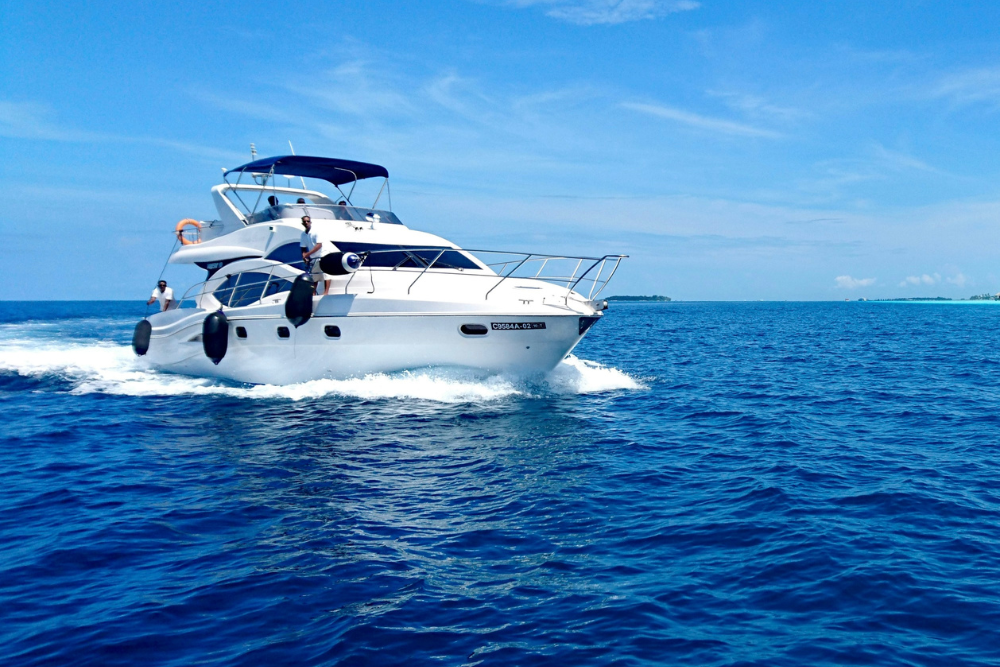
If this is your first boating trip ever, you’ll want to prioritize safety, accessibility, and predictable conditions. Some things you’ll want to look for include:
- Calm, protected waters (lakes, reservoirs, bays, intracoastal waterways)
- Minimal commercial traffic
- Easy launch ramps or staffed marinas
- Nearby amenities (restrooms, fuel docks, restaurants)
- Cell service or emergency access
You might consider large inland lakes, state-managed reservoirs, coastal sounds, and slow-flowing rivers. In my opinion, it is wise to avoid open ocean routes or unfamiliar tidal areas until you’ve gained experience.
Understand Boating Rules and Licensing
Boating laws vary by state and waterway. Not only that, but they change continuously, meaning you have to pay attention and stay up to date from one year to the next. Currently, many states require boating safety certifications for operators.
Some things you may want to check include:
- Operator licensing or certification requirements
- Age restrictions for drivers
- Life jacket laws (especially for children)
- Local speed limits and no-wake zones
- Environmental regulations (fueling, waste disposal)
I recommend looking for a boating safety course to help you understand the laws as well as the many important safety rules surrounding boating.
Build a Realistic Budget
Here’s the things about boating; it can be really expensive, but it’s also possible to go out and enjoy your boat on a budget. It’s all about the planning, and with the right planning, you can take many enjoyable family boating trips without breaking the bank.
As you create your boating trip budget, be sure to consider the following:
- Boat rental or fuel costs
- Marina or dock fees
- Safety equipment (if not included)
- Food and drinks
- Fishing licenses or activity permits
- Emergency or contingency funds
We have found that fuel prices and marina fees can fluctuate significantly by region. Additionally, we’ve learned that things like weather delays and route changes can come up unexpectedly and you need to include a buffer in your budget to cover them.
Plan Your Itinerary (But Keep It Flexible)
It’s important to go in with a plan of where you want to go, what you want to do, and where you plan to stay (if applicable). That said, it’s also key to understand that boating plans can and will change at the drop of a hat, so going with the flow is a must.
I like to create a loose plan that can be adjusted to accommodate delays, spontaneous plans, and problems.
Try these tricks:
- Choose one main destination or activity per day.
- Build in extra time for docking, swimming, or unexpected delays.
- Identify safe anchor spots or rest areas in advance.
- Have a Plan B for weather changes.
Consider Safety
Safety is obviously super important during any boating trip, and this is even more true when it comes to family boating trips. Make sure you gather all essential safety gear and stow everything in an easy-to-access location where it can be quickly grabbed and used in case of emergency.
My list of must-have safety gear includes…
- Properly sized life jackets for every passenger
- Throwable flotation device
- First aid kit
- Fire extinguisher
- Emergency whistle or horn
- Anchor and line
- Navigation lights (if boating near dusk)
Remember that babies and kids should wear life jackets at all times on deck, regardless of swimming ability. Make this rule clear before boarding and stick to it.
Pack Smart
Not sure what else you should pack? I like to keep a boating trip packing list on my phone that I check before every trip. This ensures I get everything we need every single time.
Some items on the list include:
- Sun-protective clothing
- Light jackets (even in warm weather)
- Non-slip shoes
- Swimsuits and towels
- Sunscreen (reef-safe if applicable)
- Hats and sunglasses
- Shade canopy or umbrella
- Plenty of water
- Easy, non-messy snacks
- Cooler with ice packs
- Waterproof card games
- Binoculars
- Fishing gear
- Downloaded music or audiobooks
Since space is limited, I do my best to avoid overpacking. I have found that clutter has a tendency to be a safety issue and it makes our trips less enjoyable.
Keep Kids Engaged
My kids have a really hard time sitting still for extended periods of time if they aren’t engaged. For this reason, I always take extra steps to ensure they are entertained as we explore the water. Not only does this make our trips safer and more fun for the kids, but it also gives our family a chance to connect.
Some of the things I do to keep them entertained and engaged include the following:
- Letting them help with simple tasks (spotting buoys, holding lines)
- Creating a “boat scavenger hunt”
- Planning swim or beach stops
- Bringing age-appropriate fishing gear
- Encouraging journaling or photography (my older son especially enjoys this)
Prepare for Weather
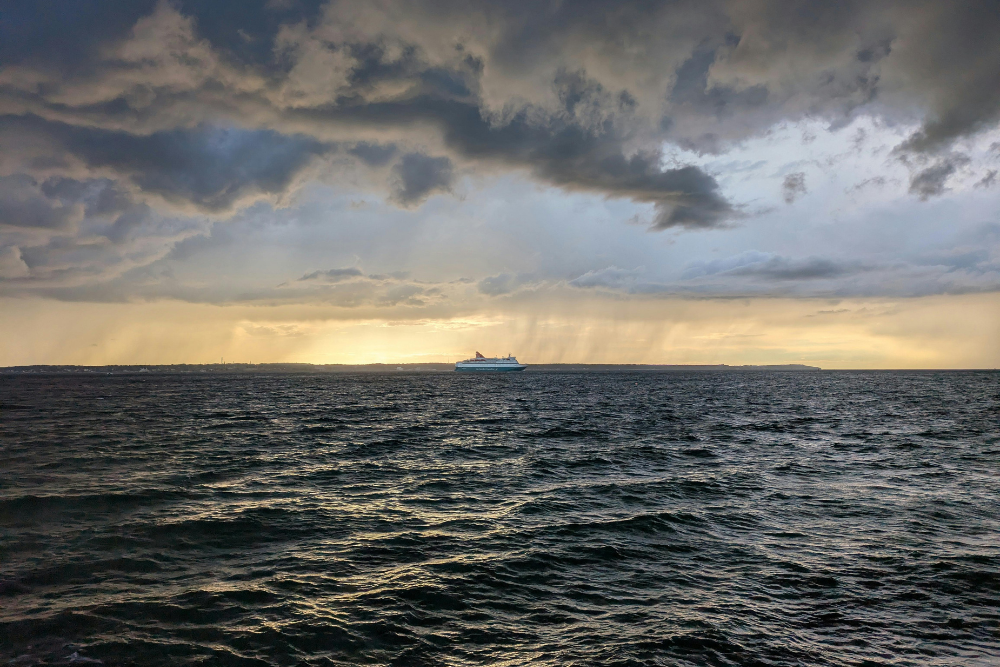
I mentioned planning a budget buffer for unexpected weather delays above. That said, this isn’t the only time you should consider the weather. Bad weather and boating don’t mix well, so staying weather-aware is crucial.
I always check forecasts multiple times leading up to departure. I have also learned basic cloud and wind indicators so I can see bad weather coming. Our family has firm weather-related “go/no-go” rules, and I always know where to shelter if conditions change.
Never hesitate to cut a trip short. A safe return is always a successful trip.
Practice Docking, Anchoring, and Communication
Many first-time boaters find docking and anchoring more stressful than open-water cruising. I know I did. If you’ve never gone out before, you might find it helpful to watch instructional videos on docking techniques, practice hand signals with your partner, and assign clear roles (such as, who handles lines and who watches surroundings). These simple things will help prevent accidents.
After the Trip
When the trip is over, talk with your crew about it and find out what they enjoyed, what they didn’t like, and what they’d change in the future. Their answers may surprise you, and they should definitely help shape future trips in order to ensure everyone has the best time possible.
Frequently Asked Questions
What is the most important safety rule to teach children before their first boat trip?
The single most important rule to teach children is, “Life jackets stay on whenever you’re on deck or near the water.” This rule is so, so important and should be framed as non-negotiable and explained before ever even boarding the boat.
In addition to wearing life jackets, my children know…
To stay seated while the boat is moving.
To keep hands and feet inside the boat.
To ask permission before standing or moving around.
Never to swim without an adult explicitly saying it’s safe.
I have found that turning safety rules into simple, repeatable phrases (“Jacket on, sit down, hold on”) makes them easier to remember and follow, especially for younger kids.
What specific life jacket features are required for infants and toddlers on a boat?
Wearing lifejackets is important, but really, it only keeps kids safe if the lifejacket they are wearing is correct. Infants and toddlers require U.S. Coast Guard–approved Type II or Type III life jackets specifically designed for their weight range. Adult or “one-size” flotation devices are unsafe for little boaters.
Key features to look for in kid lifejackets include:
Head support collar: A large padded collar helps keep the child’s head above water if they fall in face-up.
Crotch or leg straps: These prevent the life jacket from riding up or slipping off, which is a common failure point in ill-fitting vests.
Grab handle: Located at the top of the collar, this allows an adult to quickly lift a child out of the water.
Proper buoyancy rating: Infant life jackets typically provide higher buoyancy relative to body weight to ensure correct flotation position.
Secure closures: Zippers combined with buckles are preferable to buckles alone, which children can sometimes loosen.
Proper fit: When properly fitted, you should not be able to lift the jacket above the child’s ears when pulling up on the shoulders.
How much food and water should I pack for a one-day family boat trip?
For a one-day boating trip, a good baseline is at least one gallon of water per person, with additional water for hot weather, high activity, or younger children. Boating increases dehydration risk due to sun exposure, wind, and reflection off the water—even when temperatures feel mild.
For food, plan for at least one full meal per person and 2–3 snacks per person, focusing on easy-to-eat, non-messy options. Pack extra food in case of delays.
Some of my favorite foods to pack are:
Pre-cut fruit and vegetables
Sandwiches or wraps (avoid condiments that spoil quickly)
Protein bars or trail mix
Crackers or pretzels
Shelf-stable juice or electrolyte drinks for kids
I avoid foods that melt, require reheating, or create messes.
There you have it—everything you need to know to plan the perfect 2026 boating trip. Why not start planning now so you’re ready to go as soon as the weather allows? I know that’s what I’m doing!

Creative Boat Decor Ideas for a Cozy Onboard Space

Best Fall Fishing Trips You Can Take by Boat
Iconic Islands to Visit to in Summer 2026