
Winter Boat Storage Myths: What You Actually Need to Do
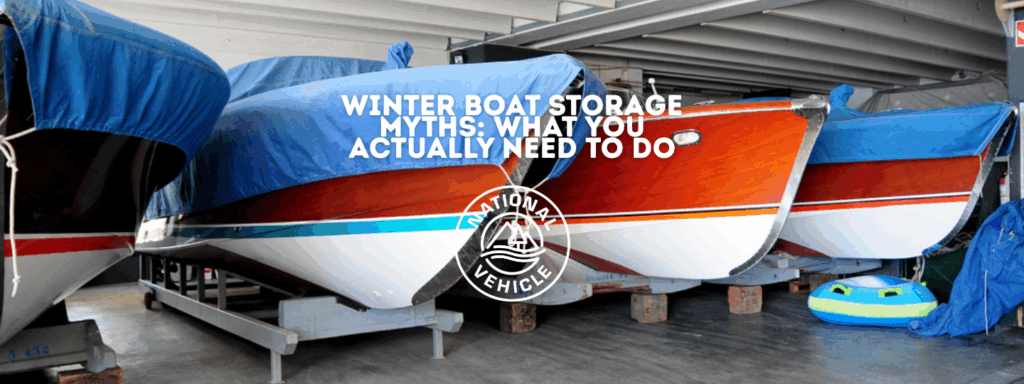

Winter is just around the corner, and if you haven’t already, you need to get ready for boat storage. The thing is, there is a lot of misinformation about winter storage floating around, and this can make it difficult to figure out what it is you should be doing to keep your boat in tip-top shape while you wait for the weather to get warm again.
Luckily for you, you’ve come to the right place. In this article, I plan to bust some myths and help you get a good grasp on what you need to be doing as you store your boat for the cold season.
“Indoor storage means you don’t need to winterize.”
Believe it or not, storing your boat in a climate-controlled or enclosed space doesn’t mean it’s immune to freezing, corrosion, or fuel degradation. This is because even indoors, temperatures can dip below freezing. This is especially true in unheated garages or barns, but can be true in climate-controlled spaces if the power happens to go out.
Not only that, but even if the space never sees freezing temperatures, moisture can condense in fuel systems and cooling lines, and untreated fuel can gum up injectors and carburetors.
This means you should always do all of the following, regardless of where you plan to store your vessel:
- Stabilize the fuel. Add a marine-grade fuel stabilizer to the tank, then run the engine for several minutes to circulate it through the system.
- Fog the engine. For gasoline engines, fogging oil coats internal parts and prevents corrosion.
- Drain and replace fluids. Change the oil and filter, flush and refill the coolant with marine antifreeze, and drain raw-water systems.
- Disconnect batteries. Store them separately in a cool, dry place and charge periodically.
“Shrink wrap traps moisture and ruins boats.”
We’ve all heard horror stories about boats turning into mildew factories under shrink wrap. The thing is, that really only happens when the job is done incorrectly. Shrink wrap has to be installed with proper ventilation to work correctly, but when it’s done right, the stuff is one of the best protections against snow, ice, UV damage, and rodents.
To do the job right, dry everything thoroughly before wrapping the boat, removing cushions, towels, and any items that could hold moisture. Use vents, making sure to install multiple along the top of the wrap to allow airflow.
It also helps to add moisture absorbers such as desiccant bags or dehumidifying products like DampRid to help control humidity.
“You can just leave the fuel tank empty for winter.”
Okay, I admit it, leaving the fuel tank empty sounds logical. After all, if there’s less fuel, there’s less to go bad, right? Unfortunately, emptying the tank can cause major condensation inside the tank. That moisture leads to rust, microbial growth, and water contamination come spring—all problems that are totally preventable.
To avoid this issue, always store your boat with a tank of treated fuel. Fill the tank to about 95% full to allow for expansion, and make sure you add a marine-specific fuel stabilizer (such as Sta-Bil Marine 360 or Star Tron). You’ll then want to run the engine for 10 minutes to circulate the treated fuel.
“Draining the engine is enough to prevent freezing.”
You can drain the water from the engine block and cooling system, but this isn’t always foolproof. Pockets of water tend to get trapped in nooks and crannies, and freezing weather will turn those pockets of water into problem-causing ice.
Go ahead and drain the water, but after draining, flush the system with marine-grade antifreeze (propylene glycol, not automotive antifreeze). Run it through until you see it exiting the exhaust ports. This ensures the entire system is filled and no water is left behind.
“You don’t need to worry about your batteries during storage.”
Batteries do not like sitting unused for long periods of time. They also don’t like cold weather. In fact, it’s not at all uncommon for boat owners to find dead boat batteries in the spring. This is because storing batteries without maintenance can cause them to sulfate, freeze, or lose capacity permanently.
You definitely want to avoid these problems, so you’ll want to be sure to disconnect and remove the batteries before putting your boat into storage. Clean the terminals and coat them with dielectric grease, store them in a cool, dry place, and charge the batteries monthly or put them on a trickle charger.
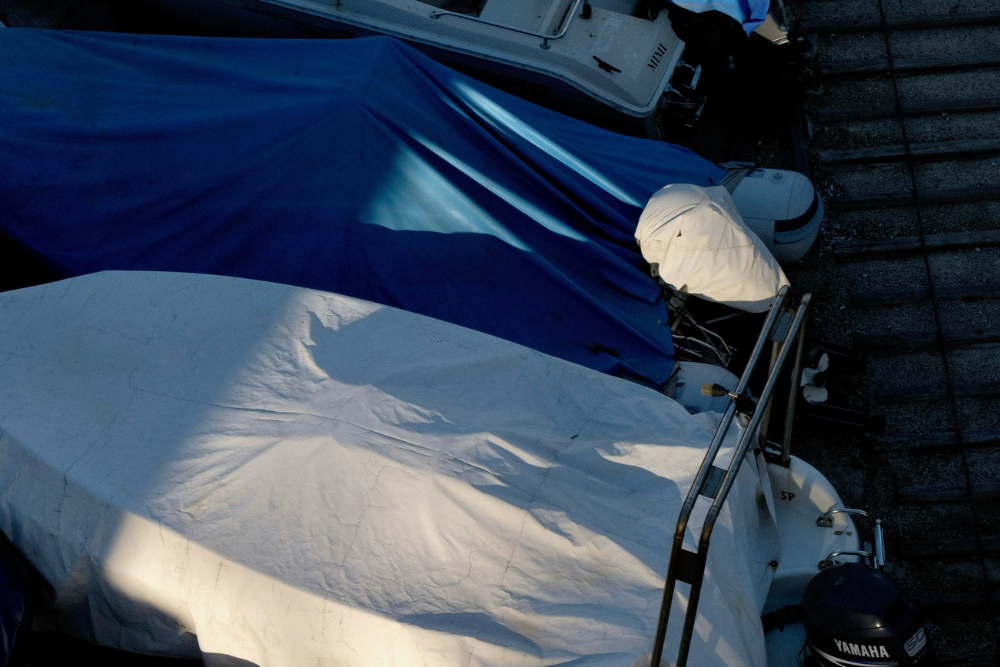
“A tarp is just as good as a proper boat cover.”
I’m all about keeping things budget-friendly, and a hardware-store tarp might seem like a cheap alternative to a boat cover, but really, a tarp often causes more harm than good. Tarps don’t breathe, can chafe your gel coat, and easily collapse under snow or wind.
Instead, I highly recommend investing in a fitted boat cover or custom storage cover designed for your model. These covers are water resistant, vented for breathability, UV resistant, and can be tensioned so rain and snow slide away.
“I don’t need to worry about the interior, it’s sealed up.”
Preparing the exterior of your boat for storage is important, but even the best exterior protection and preparation won’t protect the inside of your vessel. Moisture inside the cabin or storage compartments of your boat can lead to mildew, odor, and even wood rot—and no, sealing everything up tight does not prevent this.
These issues can be avoided by cleaning everything thoroughly and ensuring everything is dry before storage. You’ll also want to remove all soft goods (including cushions and linens) and use dehumidifiers or desiccants inside the cabin. It can be helpful to leave compartments slightly open to promote airflow.
“You can skip waxing before boat storage.”
Waxing is wonderful because it adds a nice shine to your boat, but that isn’t actually all waxing is good for. In winter storage, a wax coat acts as a barrier against oxidation, moisture, and UV damage. Because of this, I always make sure to wash and apply a quality marine wax or sealant before storing my boat.
Note: If your boat will be stored outdoors, waxing is especially important to protect against winter UV rays that can fade or crack finishes even in cold weather.
“It’s fine to leave your boat in the water all winter.”
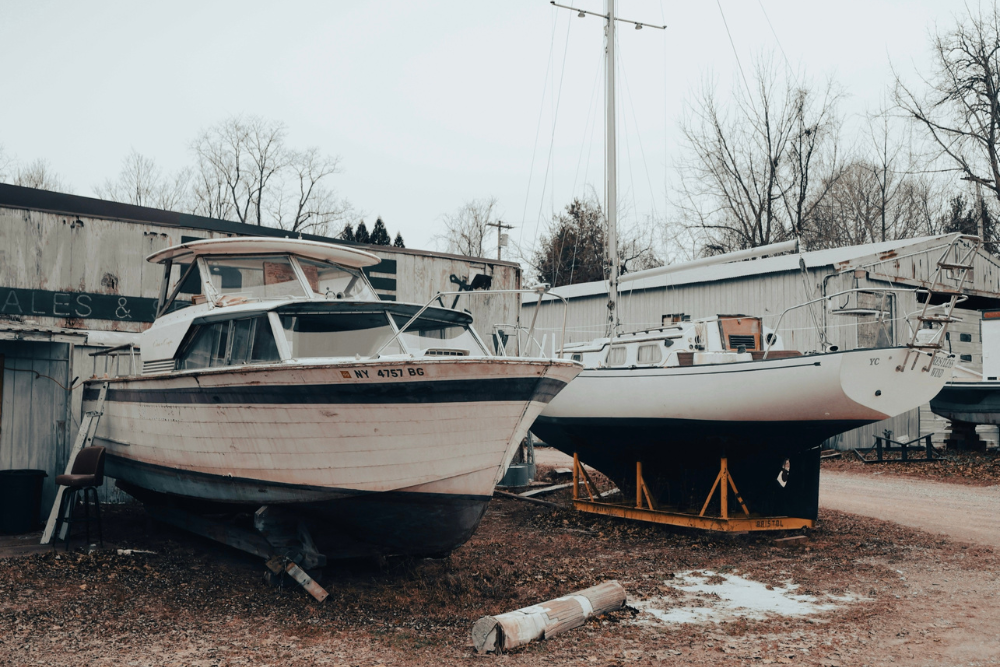
In some regions, marinas offer “in-water” winter storage, but really, this isn’t a safe thing to do everywhere. In fact, I’d recommend avoiding it if you can, no matter where you are. You see, ice expansion can damage hulls and docks, while fluctuating water levels may cause your boat to rub, shift, or even sink.
If you absolutely must store your boat in water:
- Install de-icers or bubblers to keep water circulating around the hull.
- Check dock lines frequently for chafing or slack.
- Inspect bilge pumps and float switches.
- Remove valuables and electronics.
Honestly, for most boaters, hauling out and blocking the boat on land is safer, easier to inspect, and more cost-effective in the long run.
“You can skip the trailer prep.”
Your boat is, of course, important to protect over the winter. That said, many boaters focus solely on the boat and forget that the trailer also needs attention. Sitting unused all winter, your trailer can develop flat spots on tires, rusted brakes, and wiring issues.
To make sure you don’t run into trailer problems when spring rolls around, wash and inspect the trailer before putting it into storage. Make sure to remove salt and grime, grease bearings and check seals, and loosen the winch strap slightly to reduce tension. You’ll also want to store tires on wood blocks or stands to prevent flat spots, and cover the tires to block UV rays.
“It’s too cold for pests to be a problem.”
You really don’t want to deal with mice and bugs in your boat. Unfortunately, these little critters love boats in the winter. The snug, dark spaces make perfect warm nesting areas. This is especially true when there’s leftover food, fabric, or wiring to chew on.
In order to ensure we don’t end up with unwanted “pets” in our vessel, I remove all food and trash before storing. I also seal entry points around cables, vents, and exhausts and use rodent deterrents like peppermint oil sachets or ultrasonic devices. For extra measure, check the boat periodically for droppings or gnaw marks.

“You can just leave the electronics onboard.”
It might be tempting to leave electronics onboard through the winter. That said, electronics are vulnerable to moisture and corrosion, especially during temperature swings. Even if you do an excellent job of prepping and sealing your boat, your electronics will be at risk if left onboard with no prep.
Instead, remove portable electronics (like GPS units or radios) and cover fixed units with protective sleeves. It’s also important to disconnect all power sources.
“Spring prep will catch anything you missed.”
Sure, you can sometimes catch a few skipped maintenance tasks in the spring, but in some cases, it will be too late by then. This is because some problems, like cracked manifolds or rotted upholstery, happen silently over the winter. Obviously, it’s much better to take steps to avoid these problems entirely rather than deal with them after they’ve become an issue.
For this reason, I like to create a storage checklist before storage and mark off each task. Tasks include:
- Engine and fuel system prep
- Bilge and hull cleaning
- Electrical system care
- Interior drying and ventilation
- Covering and securing procedures
“Professional storage isn’t worth the money.”
Some boaters balk at paying for marina or boatyard storage. As a budget-conscious person I totally get this, and in some cases, a DIY at-home setup is just as good. That said, you really need to have the right tools and know-how in order to store your boat properly at home.
Professional storage facilities often include things like temperature control or covered options, security monitoring, on-site winterization services, and proper blocking and cradling—all things you may not be able to get at home.
If you do decide to go the DIY route, make sure you have:
- A level, well-drained surface
- A solid frame and cover system
- Access to power for battery maintenance
- Protection from wind and precipitation

“It’s fine to skip midwinter checks.”
Once your boat is prepped, wrapped, and stored, it’s easy to forget about it until spring. Unfortunately, ignoring your vessel for several months can mean missing warning signs of leaks, pests, or snow load stress—all problems that will worsen quickly if left unaddressed.
For this reason, I make sure to perform monthly boat checks throughout the winter. At these checks, I brush off snow accumulation to prevent sagging, check the cover tension and repair small tears immediately, and peek inside to look for moisture or rodents. This is quick, easy, and well worth my time if it means catching issues early.
There you have it, all of the most common winter storage myths and what you should actually be doing to ensure your vessel is in tip-top shape when you pull it out in the spring. Why not start prepping your boat now so it’s ready to go before the first hard freeze?
Frequently Asked Questions:
Common Winter Boat Storage Questions
Should I cover my boat for the winter?
Yes! You should always cover your boat for winter, even if it’s stored indoors. A proper, fitted marine cover or professional shrink wrap protects against dust, UV rays, rodents, and moisture. Make sure to add vents and moisture absorbers to avoid mildew, and avoid relying on a tarp, as this can cause problems.
Do I need to remove my boat battery for storage?
I highly recommend removing all batteries for the winter. Cold weather and inactivity can damage batteries, and disconnecting the batteries and keeping them on a trickle charger is easy enough.
How do I protect my boat engine from freezing temperatures?
Freezing temperatures can cause major issue onboard your boat. Fortunately, you can avoid these problems by taking the following steps:
Drain all water from the engine and cooling system.
Flush the system with marine-grade antifreeze to prevent ice buildup.
Change the oil and filter to remove contaminants.
For gasoline engines, use fogging oil to coat internal components.

Boat Storage and the Common Mistakes to Avoid

19 Boat Cleaning Hacks for Saltwater vs Freshwater
Protecting Your Boat from Moisture and Mold in the Off Season