
Your 2025 RV Buying Guide: How to Pick the Right RV for you


Mistakes Lead to Disappointment
There are a few mistakes people make when they’re getting ready to buy an RV which can lead to, at best, a disappointment, and at worst, a disaster. Consider this. The most important part of the title of this article is …Right RV for You. And this is where most people veer off course when shopping for an RV. For some unknown reason most new RV shoppers focus all their energy and attention on the RVs themselves, what type, size, brand, cost, attributes, etc.. But the reality is none of that matters if you don’t first understand what you need in an RV.
In the 25 years that we’ve been enjoying our RV adventures, I can’t tell you how many people we’ve met along the way who were deeply disappointed in their first RV purchase. They quickly discovered that their first RV was the wrong type, size, age, floorplan or was so poorly built it led to unending mechanical problems. For some the RV was too small. For others it was too large. The complaints varied. But it was sad to see these folks who should have been enjoying their new RV adventure, were reduced to dealing with so frustration and disappointment.
How Do RV Shoppers End Up Buying the Wrong RV?
It begins when an RV shopper first starts thinking about buying an RV without developing a clear understanding of their own needs, preferences, camping style, recreational goals, and budget. A person, new to RVing, may have an inkling that they’re interested in RVing, so they immediately decide to go to an RV show just to look around. But from that point on their focus shifts toward the inventory (the various types, sizes, models, and appointments in all the RVs on display).
Yes new RVers need to understand the differences between a motorhome, a toy hauler fifth wheel, a travel trailer, and a van, but broad definitions are one thing, and getting lost in a maze of ‘this rig with these features for this much’ vs ‘that rig with these features for that much’ is a completely different issue. Focusing on the inventory before they understand their own preferences and needs will ultimately result in a disappointing outcome.
And the salespeople are more than happy to help RV shoppers continue thinking along those lines. Salespeople are experts at keeping the shopper’s focus on all the possibilities, not the realities. It’s sad to say that all this wrong thinking and misdirected focus is not an accident. After all, if a salesperson can sell an RV that doesn’t really match the shopper’s needs, then it will only be a short time before the buyer starts wishing they could replace the RV with a better fit.
This phenomenon works great for the industry but not much for the buyers. Every time a buyer decides to upgrade to a different model the original RV is then available to be resold, so the dealers get to make a deal on two RVs instead of just one, and both sales will generate profit. The dealers will happily take the misfit RV in trade (at a discount) and then mark it up to resell it.
This is not a rare occurrence. We have met many RVers that upgraded or traded in their RV for a better ‘fit’ within 6 months of the original purchase. We even know one couple who bought and sold 5 different RVs in the first 6 years of their marriage, and they admitted those upgrades cost them a small fortune.
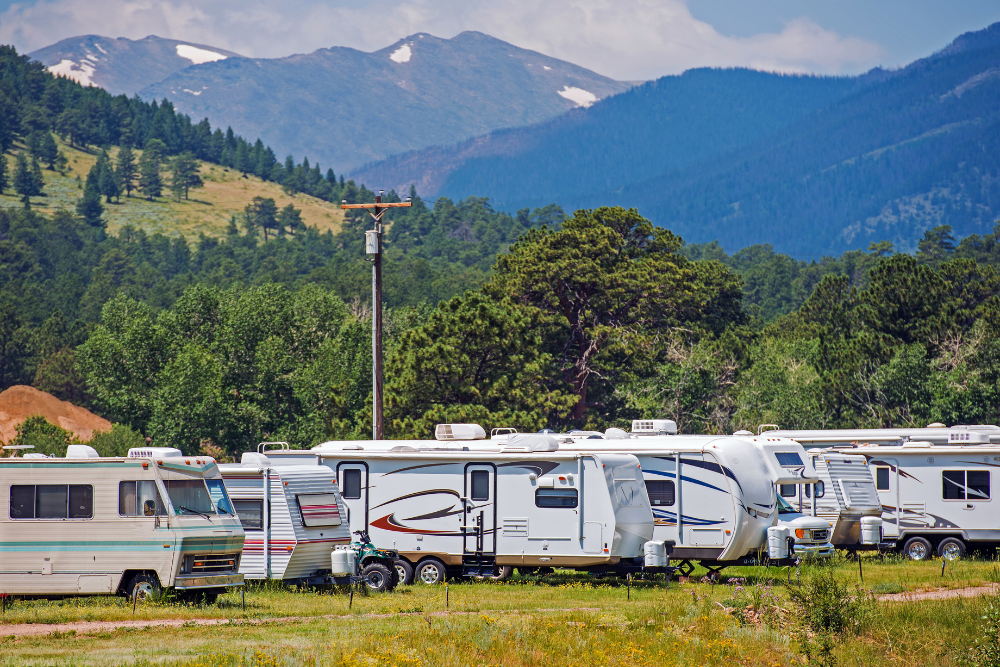
Change Your Focus to Avoid the Trap
All this can be avoided if you start your RV shopping experience with the right perspective.
But it must start with YOU!
To get this right you must carefully consider what you need in an RV. Ponder the following questions. Talk them over with all the people who will be using the RV. Take your time and come back to these questions often to see if anything has changed.
- How will you use your new RV?
- How many people will be camping in or using it?
- Will your family be growing in the years ahead while you own the RV?
- In your best estimation, how often will you be able to use it in a year?
- In what type of climate will you primarily be camping?
- Do you want to use the RV year around?
- Is a used RV an option or would you be more comfortable in a new one?
- Would you prefer to hang around a campfire, or would you be more comfortable lounging in a recliner in front of an indoor fireplace?
- Do you want to use your RV as a base camp for many different types of outdoor recreation, such as, hunting, fishing, hiking, climbing, birding, kayaking, whitewater rafting, biking, ATVing, or sand sports?
- Is having a TV and WIFI connection going to be important when you’re in your RV?
- Will you need extra space for recreational gear?
- Do you have a desire to dry camp (boondock)?
- Are you planning on using your RV as a full-timer, now, or in the future?
- What kind of RV will you be comfortable driving or towing?
- Can you back up a trailer or does that make you nervous?
- Will you need a separate vehicle when you’re camping?
- Would you be more comfortable towing a vehicle behind a motorhome or towing an RV behind a vehicle?
- What is your minimum and maximum budget for all RV expenses, including RV payments, insurance, extended warranty, camping fees, maintenance, recreation, and fuel costs?
These questions are about YOU, your needs, your preferences, your fears, your lifestyle, your dreams. They are not about features and amenities of any particular RV, and they are just a few sample questions you should be thinking about when you start the process of shopping for an RV. Add to the list of questions, as needed.
Of course, your budget is important, but it shouldn’t be the main criteria when shopping for an RV since prices vary widely. You can spend well over a million dollars or less than $10,000 on an RV, and the range of amenities is just as broad as the prices, so it’s vital that you know what you need and what you want within the upper and lower constraints of your budget. That’s why the issue of your budget is the last question on the list, not the first.
Real Life Purchasing Experience
As I mentioned above we have been RVing for over 25 years.
We bought our first RV in 1999 and we owned it for over 20 years. After driving it 120,000 miles over 20 years, we realized that we needed a newer RV for which we could purchase replacement parts. In contrast to many first time RVers, our first RV purchase was perfect for our needs, but that wasn’t just a happy accident! We did what I am advising you to do. We spent over a year shopping for it and during that time we carefully considered all the questions above plus many more. It was only after we had a clear understanding of what we wanted and needed that we turned our focus to the available inventory.
Initially we narrowed the choices down to the type and size of RV that we needed. We decided a 33’ motorhome best fit our needs. Then we developed a list of the features we thought were essential and those that were desirable but not essential. Our final point of consideration was brand integrity and engineering. We knew what we needed, so the final decision hinged on how well built were each of the RVs. Since we couldn’t tear them apart and look inside we had to rely on brand integrity. We never lost sight of our own personal preferences and never let the salespeople push us in a different direction.
Take Your Time to Determine What is the Right RV for You
So how do you buy the RV that is right for you. Slow Down. Take your time and spend that time thinking about all the questions listed at the beginning of this article. Talk to all the people with whom you will share your camping experiences. If that’s your spouse or kids, talk it out. Take a few trips to local campgrounds and walk through the RV campgrounds. Talk to RVers who are camping and ask them how they feel about their RVing experiences. Imagine yourself camping in an RV in that park.
What will your own campsite look like? Can you imagine your RV parked in a forest service campground, or state park, or private campground, or out on the open expanse of remote BLM land? Will you need room for outdoor cooking equipment, kayaks, bicycles, tricycles, folding tables, solar panels, or other paraphernalia? Visit campgrounds on extremely hot days and when it’s cold, windy, and raining. Imagine what it will be like camping in your RV when the weather is less than ideal. After all, you may need to take shelter in your RV for long periods of time. If so, how much room will you need to be comfortable?
Again, I urge you to take your time and really drill down on what you think you want to do while you’re using your RV. If you do this, the right RV for you will begin to take shape in your imagination. The best fit for you might be a motorhome, travel trailer, fifth wheel, van, or truck camper. But you won’t know until you use your imagination to envision all the possibilities. As the best type and size of RV begins to take shape in your thinking, I recommend that you rent one or more of these RVs and try them out to do a reality check.
Here are a few more considerations to stimulate your thought process.
- Will you camp with a large family and need many places for people to sleep? If so then you can probably rule out vans, tear drop and pop-up trailers, and truck campers.
- If you plan to dry camp or boon dock for many consecutive days then your RV’s power source and type of energy storage system should be an important consideration.
- If you want to camp in remote locations (far off the beaten path) then a large bus size RV won’t accommodate that preference because those RVs are too large for most small remote campgrounds and are difficult to drive on unimproved roads. A van or small trailer might be a better choice.
- If the bulk of your camping will be in the parts of the country with above average rainfall then having indoor options for cooking and recreating would be desirable. You don’t want to spend an entire rainy weekend taking shelter in a teardrop or alpine trailer.
- If you’re only going to use your RV a few times a year then an expensive high-end motorhome with two bathrooms, a washer and dryer, and heated tile floors, is probably not practical for your needs.
Learn from Other RVers About Their Experiences
Sometimes the best RV information can be gleaned from other RVers. So do your own research by talking to people who own RVs. Ask questions and listen to their responses. You can also read dozens of testimonials and online reviews. Log into brand forums to read what people are saying about their RVs and the dealer network that supports them. As stated earlier it’s important to take your time because you need to investigate both your own needs and desires as well as what the market has to say about all the different RV options.

Stories from Real Life
Some of the people we’ve met along the way had the following experiences with their first RVs and reading just these few stories may help you avoid a few pitfalls.
- One full-time family thought they would need a 45’ fifth wheel for their children’s school activities and play space but they quickly realized the RV was too large. It was difficult to tow, and difficult to park in many campgrounds. Their kids spent most of their time outdoors and didn’t need all the extra interior space. They wished they had purchased a smaller RV.
- Another full-time couple had the same complaint about their large fifth wheel trailer which they purchased after selling their home and everything in it. They had never even been in an RV before they bought the one in which they planned to live. One of the very first things they did was wreck it when they drove under a low obstacle. They said they always felt unsafe on the road and were terrified when towing it. They were stressed every time they had to park it. And the uncertainty of where to safely camp 365 days a year weighed heavily on both of them, to the point of nearly causing a nervous breakdown. They deeply regretted selling their home and personal effects and were two of the most miserable campers we have ever met.
- Another single woman regretted buying a brand new van conversion. The bathroom was wholly inadequate as was the galley (kitchen). She complained that the sink was so small that she couldn’t even rinse out her dog’s bowl and the refrigerator was also too small. The black and gray holding tanks were virtually useless and there wasn’t enough room on the inside of the van for her and her dog to be comfortable on rainy days. We met this woman on the Oregon Coast (where there are many rainy days).
- Another couple had just purchased a small class C motorhome and they had two relatively large dogs. I asked them how they liked their new motorhome and they both said simultaneously that they wished they had gotten a bigger one.
- Additionally, a couple with two traveling cats were unhappy with their brand new van because once they got all the gear for the cats (food, litter, cage, litter pan, and playthings) there wasn’t enough room for them. Additionally, they said it was awkward crawling over the cats and one another to get in and out of bed. They wished they had purchased an RV that was larger with a fixed bed they could access from both sides.
- Most of these complaints were related to people buying the wrong size RV for their personal needs, but other complaints about inferior workmanship, no customer support, poor construction, and defective equipment are ubiquitous. One man only had his RV for a few months before he knew the long list of problems were never going to be corrected by either the manufacturer or the dealer and he needed to just trade it in for a better built RV. He said, “the fight and hassle weren’t worth it.”
- Another full-time family almost perished in a fire started by faulty furnace wiring in their brand new fifth wheel. Both the dealer and manufacturer refused to take responsibility for the defective workmanship and the needed repairs. Multiple attempts to get the problem corrected were unsuccessful. The family eventually purchased a different RV since they couldn’t feel safe in the original one.
- Our personal friends traded in their brand new 36’ motorhome in less than six months because the toilet clogged immediately on every camping trip. The dealer and manufacturer both acknowledged that it was a design flaw with no work-around or fix and it was a known defect at the time of their purchase. They lost over $20,000 in that transaction.
- We talked to a service tech who was trying to help a couple who had paid over $500,000 for a brand new hi-end motorhome which had a defective water heater. The manufacturer refused to send a replacement water heater to the service tech, telling him the owners had to take the RV to an authorized dealer for the repair, but there were no authorized dealers within hundreds of miles of where this couple lived full-time in their RV. The manufacturer alternatively suggested the owners could bring it back to the factory to get the part replaced. Unfortunately, the manufacturer was in Alabama and the owners of the RV were on the Oregon Coast and had no desire to drive across the country to get a replacement water heater.
Conclusion
In summary the Best Way for you to Buy the Right RV for you is to …
- not get distracted by all the shiny new inventory
- slow down, visit campgrounds, and use your imagination to see yourself in those settings
- honestly search your heart for what you need and want
- talk to everyone who will be using your RV to also reveal what they want
- come to a consensus of what’s essential and what’s just desirable
- then aggressively do your due diligence by searching the marketplace for candid information
If you follow this advice you have a very good chance that you’ll make a thoughtful and informed decision about what RV is right for you. And I hope and pray you will be thrilled with your purchase and ready for all your new RV adventures. We look forward to you joining us in the RV community. Hope to see you on the road.

Upsizing or Downsizing: Should You Sell Your RV Before Buying the Next One?

RV Buyer vs RV Seller Market: How the Difference Can Affect Your Situation

Wise Investments: 9 Tips For Choosing the Right RV for You