
How to Remove Hard Water Spots and Salt Build-up from Your Boat


Hard water spots and salt build-up are common issues for boat owners, especially after outings in lakes, rivers, or saltwater environments. These deposits not only affect the appearance of your boat but can also lead to long-term surface damage if not addressed. This guide will walk you through safe and effective methods to remove hard water spots and salt build-up from your boat, ensuring it stays in top condition.
What Causes Hard Water Spots and Salt Build-up?
Hard water spots are caused by minerals such as calcium and magnesium left behind after water evaporates from your boat’s surfaces. Salt build-up occurs when saltwater dries on the hull, deck, or fittings, leaving a white, crusty residue. Both can become stubborn over time, so regular cleaning is essential.
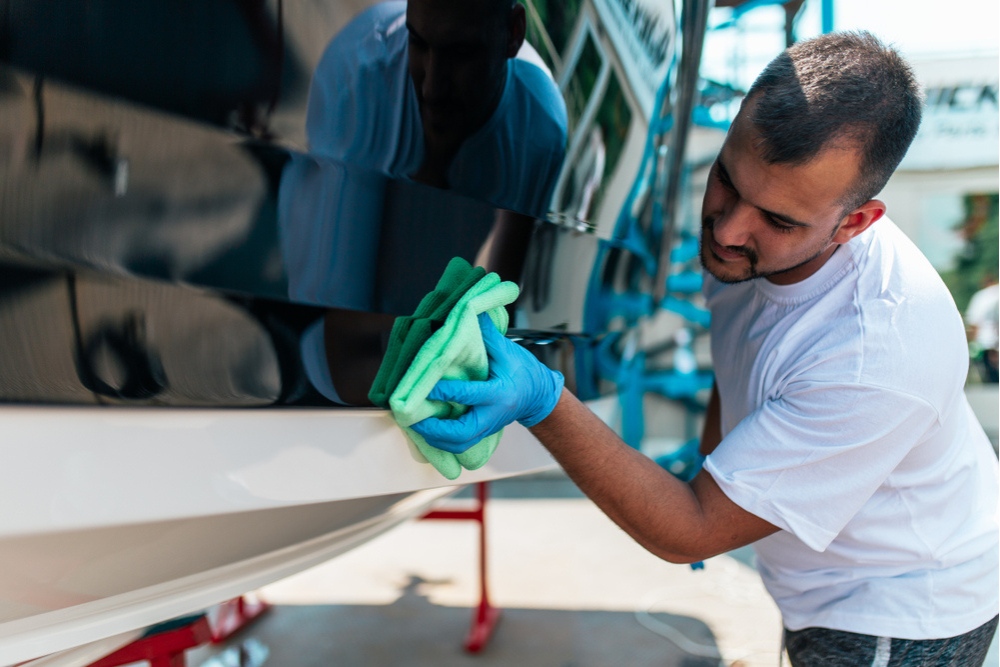
Materials You Will Need
- Freshwater hose
- Soft microfiber or cotton towels
- Marine-safe boat soap
- White vinegar
- Spray bottle
- Non-abrasive sponge or soft brush
- Protective gloves (optional)
- Marine wax or polish (for finishing)
Step-by-Step Cleaning Process
- 1. Rinse with freshwater
Immediately after taking your boat out of the water, rinse all exposed surfaces thoroughly with a freshwater hose. This helps remove loose salt and mineral deposits before they dry and harden.
2. Wash with boat soap
Mix a marine-safe boat soap with water according to the manufacturer’s instructions. Using a microfiber towel or soft sponge, wash the boat’s surfaces to remove dirt, grime, and any remaining loose deposits. Rinse thoroughly with freshwater.
3. Apply vinegar solution
For stubborn hard water spots and salt build-up, fill a spray bottle with a 50/50 solution of white vinegar and water. Spray the affected areas generously and let the solution sit for 5–10 minutes. Vinegar helps dissolve mineral and salt deposits without damaging boat finishes.
4. Scrub gently
After allowing the vinegar solution to work, use a non-abrasive sponge or soft brush to gently scrub the spots. Avoid using harsh pads or brushes that might scratch the gelcoat or paint.
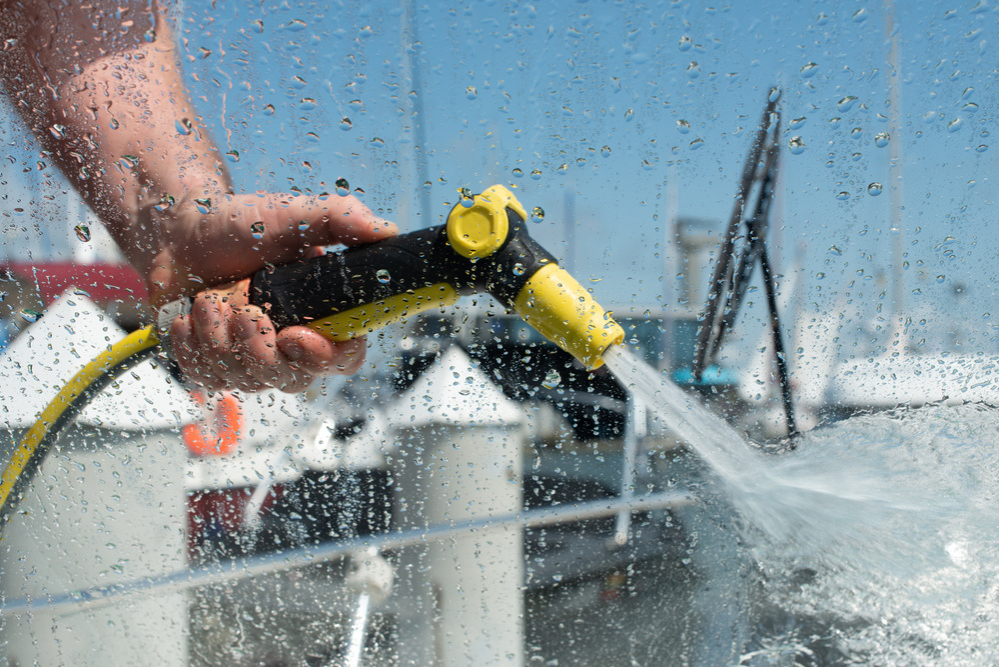
5. Rinse and dry
Rinse the boat thoroughly with freshwater to remove all residue. Immediately dry the surfaces with a clean, soft microfiber towel to prevent new spots from forming as the water evaporates.
6. Apply marine wax or polish (Optional)
For added protection and shine, consider applying a marine wax or polish to the cleaned areas. This creates a barrier that helps repel water, making future cleanups easier and protecting your boat’s finish.
Preventative Tips
- Rinse your boat with freshwater after every use, especially when boating in saltwater.
- Dry all surfaces promptly to prevent new spots from developing.
- Complete a deep clean on a weekly, or bi-weekly basis, depending on outing frequency
- Apply wax or protective coatings regularly as part of your maintenance routine.
- Store your boat under cover or with a boat cover when not in use to minimize exposure.
When to use a professional detailer
Sometimes the salt or hard water build-up is severe enough that you will need in a professional detailer. This out-of-pocket expense can save you money in the long run and hiring a professional detailer is beneficial for a handful of reasons.
Select a professional detailer with numerous years of experience and one with a good online reputation. These experienced detailers bring along tools, expertise and specialized cleaning products that will safely remove stubborn build-up and mineral deposits without causing damage to the boat’s surface. These professionals also apply a protective coating meant to stop future buildups from occurring, while preserving the boat’s value and shiny finish. Another key benefit is the improvement to the boat’s performance by reducing drag.
Regular cleaning and proper maintenance are crucial to keeping your boat looking great and avoiding long-term damage from hard water spots and salt build-up. By following these steps, you can ensure your boat remains in excellent condition for years to come.
Frequently Asked Questions:
What causes hard water spots and salt build-up on boats?
The cause of hard water spots on boats occurs when water, especially hard water, evaporates, leaving behind dissolved minerals such as magnesium, calcium, etc., in a chalky, solid residue.
Salt build-up on boats occurs in nearly the same way. Saltwater evaporates, leaving behind salt crystals as well as hygroscopic nature of salt, which acts as a magnet for moisture. Salt build-up can occur on both interior and exterior boat sections.
The engine components, crevices, and cooling passages can all be affected by salt build-up. Clogged drainage, broken-down sealings, and corrosion to metal parts, damages to finishes and also the potential damage to the electrical systems can all stem from salt build-up.
Can you remove salt build-up yourself or should you get a professional detailer?
For light salt build-up, there are some DIY processes you can try. Practice regularly rinsing the boat with fresh water, followed by a purchased boat soap or a handmade solution that is equal parts water and vinegar.
For a heavier build-up, consider a specialized salt remover and similar products to help chip away at the built-up, caked-on salt.
However, if the build-up is severe, yielding to a professional detailer would be the best bet. They can safely and completely rid the boat of any and all salt build-up occurrences. By utilizing a professional detailer, they can identify the severity of the spots and correctly apply the correct materials or removers for an effective and safe result. Their professional-grade products and buffers can provide a better, longer-lasting finish than many of the DIY methods.
A few long-term benefits and protection from utilizing a professional detailer include damage protection, a higher resale or trade-in for the well-maintained and detailed boat. Additionally, a clean, smooth hull will provide improved efficiency, as there will be less drag in the water, also leading to improved fuel usage.
How often should you wash and rinse your boat after saltwater use to prevent build-up?
Honestly, after each trip made in saltwater, a freshwater bath is in order. After every trip, rinse the entire boat with freshwater, including the deck, hull, and all metal fittings. Flush the engine with freshwater after each saltwater outing as well. The last step after each saltwater outing is to rinse the trailer.
On a weekly or even bi-weekly basis, depending on how often the boat is run through saltwater waves, it is best to do a more detailed cleaning. This consists of washing the exterior with a boat-specific soap and a long-handled brush and while working in sections, begin washing from the top of the boat and moving downward, then following up with a thoroughly good fresh water rinse.
Wipe down the consoles and seats, and other interior surfaces to get rid of any lingering salt and grime. Lastly, you will want to wax the hull every three to four months, as a way to make future cleanings easier and to provide a protective gelcoat barrier.
Mid-Season Boat Maintenance: Keep Things Running Smoothly All Summer

How to Handle Paperwork When Selling Your Boat Privately
How to Detect Early Signs of Boat Engine Wear