
Night Boating Basics: What Changes After Sunset
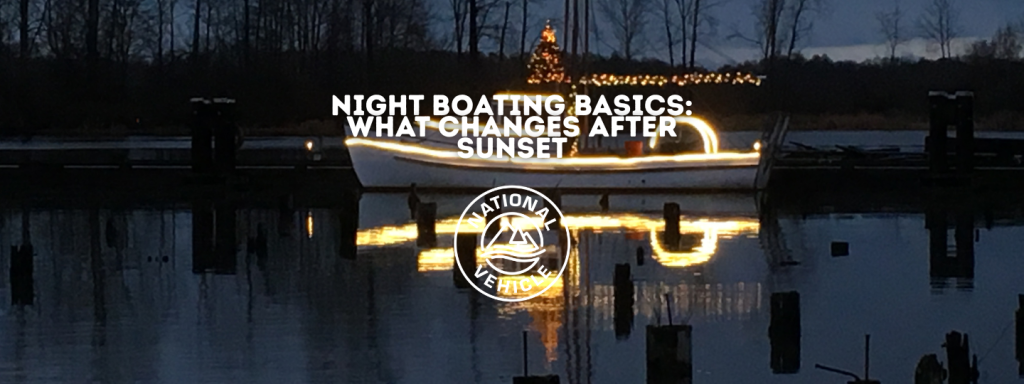

Night boating offers a completely different experience than daytime cruising. The glare of the sun is replaced by the cool evening air, the shimmer of moonlight on the water, and a profound silence. However, this serene environment hides unique risks.
When the sun dips below the horizon, the marine environment undergoes a massive transformation. Navigating safely requires a shift in mindset, specialized equipment, and a strict adherence to night boating regulations.
The Optical Illusion of the Dark
The most dramatic shift at night is the loss of visual cues. Human eyes are poorly adapted to the dark, especially when surrounded by reflective, flat surfaces like open water.
Night Boating and Depth Perception Failures
During the day, your brain uses shorelines, waves, and other boats to judge distance. At night, these reference points vanish. A distant shore light can appear miles away when it is actually just a few hundred yards ahead. Conversely, a small unlit hazard, like a kayak or a floating log, might only become visible when it is right in front of your bow.
Vanishing Shorelines and Horizons
Familiar daytime landmarks like docks, distinct trees, and rock formations blend into a solid black silhouette. Without a clear horizon line, keeping your bearings becomes difficult. It is remarkably easy to become disoriented, even on a lake or river you have boated on for years.
Background Light Confusion
If you operate near urban areas, coastal cities, or well-lit docks, you will experience background light interference. The bright streetlights, neon signs, and house lights ashore blend with the navigation lights of other vessels. Discerning a boat’s moving lights from the stationary lights on the shore takes practice and extreme focus.
What Changes Logically: Operational Adaptations
Because your vision is severely compromised, your standard operating procedures must change. Safe daytime habits can quickly lead to accidents after dark.
Drastically Reduce Speed
Speed is your enemy when it comes to night boating. Because your field of view shrinks to the reach of your bow lights, you must travel at a pace that allows you to stop or turn the moment a hazard appears. Many waterways enforce strict “Slow-No Wake” speed limits between sunset and sunrise for this exact reason.
Preserve Night Vision
It takes human eyes about 20 to 30 minutes to fully adjust to the dark. A single flash of bright white light instantly resets this clock. Dim your GPS screens, chart plotters, and radio displays to their lowest settings.
Utilize Red Interior Lighting
If you need to read a chart or find gear on deck, use red-tinted lights or headlamps. Red wavelengths do not disrupt your eyes’ night adaptation.
Scan the Horizon Correctly
Human night vision relies on rod cells, which are concentrated around the edges of the retina. To spot objects in the dark, do not stare directly at them. Instead, use your peripheral vision by scanning your eyes slightly to the left and right of your target area.
Understanding the Language of Boat Lights
At night, boats communicate their size, direction, and status through a universal system of navigation lights. Knowing how to read these lights prevents collisions.
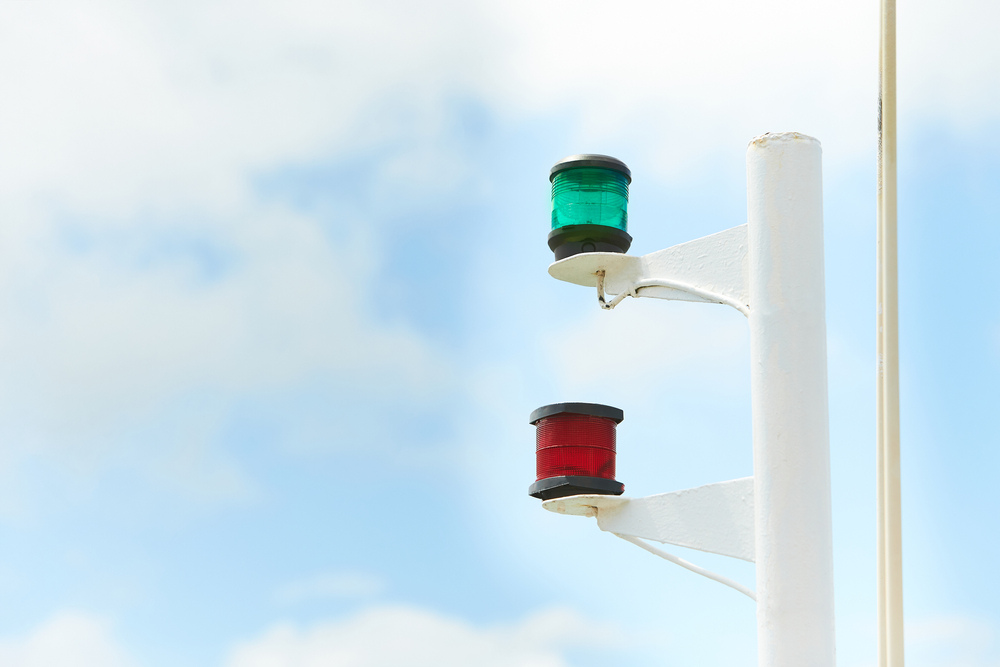
Port Side
A solid red light indicates the left side of a vessel.
Starboard Side
A solid green light indicates the right side of a vessel.
Stern and Masthead
A solid white light indicates the rear of the vessel or a powerboat under way.
Common Navigation Scenarios
Meeting Head-On
If you see both a red and a green light directly ahead, you are approaching another boat head-on. Both captains must alter course to starboard (right) to pass each other safely.
Crossing Situations
If you see a lone red light crossing your path, the other boat has the right-of-way, and you must yield or slow down. If you see a lone green light, you have the right-of-way, but you must maintain your course and speed cautiously.
An Anchored Vessel
If you see a single, elevated white light visible from all 360 degrees without any red or green lights, you are approaching a stationary boat at anchor. Give it a wide berth.
Required Safety Equipment Checklist
Daytime gear list must expand to include night-signaling devices.
| Equipment Type | Night Operational Requirement |
| Navigation Lights | Red and green sidelights, along with a white masthead and stern light, must be displayed from sunset to sunrise. |
| Visual Distress Signals | You must carry USCG-approved night signals, such as pyrotechnic aerial flares or an electronic SOS distress light. |
| Sound Signaling Device | A mechanical whistle or an electric horn capable of a distinct four-second blast is required to signal intentions or warning. |
| Life Jackets (PFDs) | While legally required to be on board at all times, wearing them at night is highly recommended due to the difficulty of dark rescue operations. |
Legal Restrictions and Curfews
Night boating is generally legal, but major restrictions apply to specific vessel types and activities.
First, operating personal watercraft (PWCs) like Jet Skis or Sea-Doos after dark is strictly illegal in almost every jurisdiction. These vessels are small, highly maneuverable, and lack the required physical space for compliant navigation light arrays.
Second, towing activities—such as water skiing, wakeboarding, and tubing—are universally prohibited at night. If a rider falls into black water, it is nearly impossible for the tow boat or passing vessels to see them in time to avoid a catastrophic accident.
Step-by-Step Night Boating Preparation
Before you unmoor your boat for an evening cruise, follow this quick checklist to ensure a safe voyage.
Test the Lights on the Dock
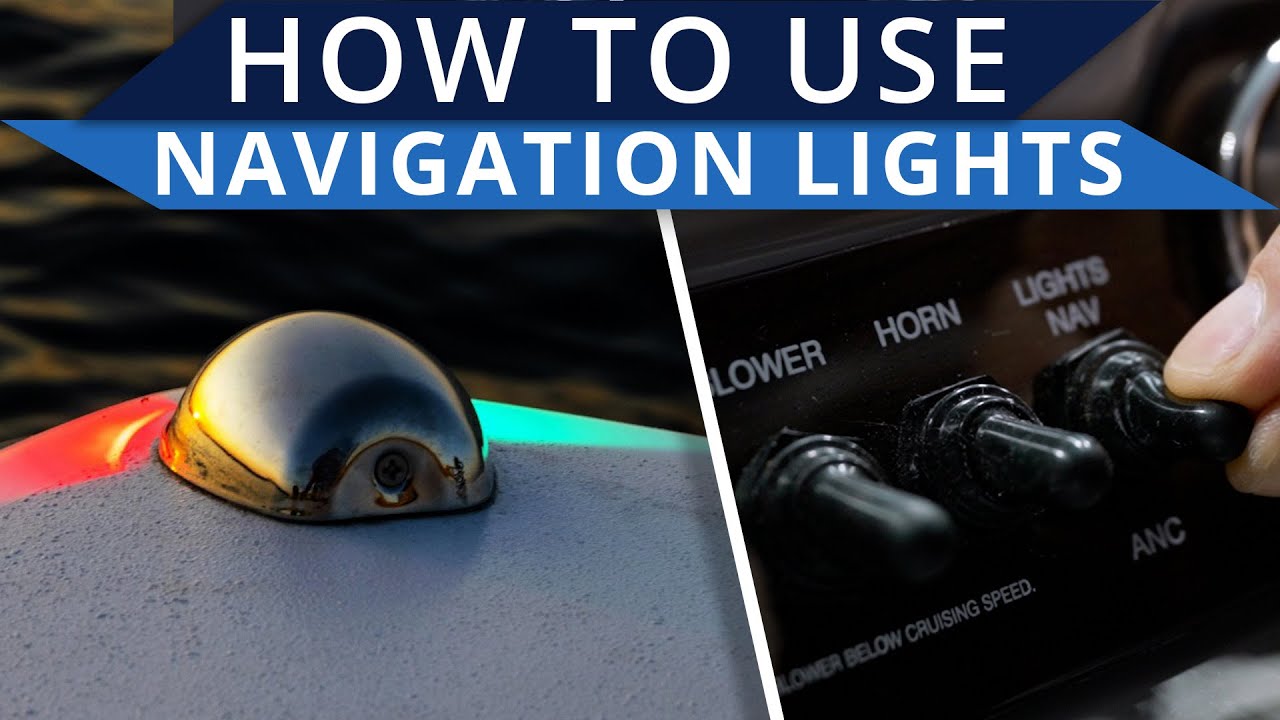
Turn on your navigation lights before leaving the slip. Walk around the boat to confirm the red, green, and white bulbs are bright and clean.
Assign a Dedicated Lookout
Never boat alone at night if you can avoid it. Designate a co-captain or a passenger to stand near the bow or helm to scan for unlit hazards and oncoming traffic.
Check the Weather and Tides
Rapid temperature drops over the water can create sudden, thick marine fog. Ensure your local forecast is completely clear.
Organizing Supplies
Tie down loose lines, clear away tripping hazards from the deck, and make sure life jackets and flashlights are easily accessible without turning on bright overhead lights.
Night boating reveals a peaceful, beautiful side of the water that daytime boaters never get to see. By simply slowing down, ensuring your lighting equipment is completely operational, and learning to interpret the glowing markers around you, you can confidently turn an evening cruise into a safe, unforgettable tradition.
Frequently Asked Questions:
Is night boating legal?
Yes, it is legal to boat at night in most places, provided your vessel complies with strict federal and state safety and lighting regulations. However, exceptions are strictly enforced, making it universally illegal to operate personal watercraft like Jet Skis or to tow water skiers and tubers after sunset.
Additionally, many local waterways enforce mandatory “Slow-No Wake” speed limits and evening curfews. To remain fully legal on the water after dark, your boat must be equipped with functioning red, green, and white navigation lights, night-approved visual distress flares, and an audible sound-signaling device like a horn or whistle.
What lights do I need for night boating?
For night boating, powerboats under 65 feet must legally display a red light on the port side, a green light on the starboard side, and a white masthead light that shines forward, alongside an all-round white stern or anchor light.
Sailboats operating under sail alone require the same red and green sidelights and a white stern light, but they must not illuminate a forward-facing white masthead light.
If you are operating a manually powered craft like a kayak or canoe, you are not required to have permanent fixtures but must carry a working white flashlight or lantern to flash in time to prevent a collision.
What other equipment is required for nighttime boating?
Beyond standard daytime safety gear, operating a boat after dark legally requires USCG-approved night-signaling visual distress equipment, such as pyrotechnic flares or an electronic SOS distress light.
You must also carry a sound-signaling device, like a mechanical whistle or power horn, to audibly broadcast your position in low-visibility conditions. While standard safety gear like life jackets, fire extinguishers, and a throwable flotation device are required at all times, having them readily accessible becomes a strict operational necessity at night due to the increased difficulty of dark rescues.
Boat Storage and the Common Mistakes to Avoid

Island-Hopping by Boat: Destinations You Can Only Reach By Water

Iconic Islands to Visit to in Summer 2026