
How to Research Boat Models Before the Summer Buying Frenzy

As temperatures rise, so does demand for boats. By late spring, popular boat models sell quickly, prices firm up, and buyers often feel pressured to make fast decisions.
The smartest way to avoid overpaying—or ending up with the wrong boat—is to do your complete research well before the summer rush begins. If you’ve ever tried to buy a boat in late spring or early summer, you already know how it goes. Inventories become less and less while prices climb higher and higher, and then all of a sudden, every decent boat seems to sell before you’ve had time to think about it. That’s exactly why doing your homework long before the summer buying frenzy hits can make all the difference.
A little early spring research now can save you money, stress, and regret later. Here’s how to research boat models efficiently and confidently before competition heats up.
Start With How You’ll Actually Use the Boat
Before comparing brands or models, clarify your boating lifestyle. Don’t get distracted by shiny features and brand names; instead, consider the practical side of purchasing options. Think about how, where, and how often you plan to use the boat. Weekend cruising with family? Fishing trips with friends? Pulling kids on tubes? Quiet sunset rides?
Be honest about how often you’ll use it, and how many people will usually be on board. Casual day cruising, fishing, watersports, overnight trips, and entertaining small groups of friends and family all favor different designs. Also consider whether you’ll boat on lakes, rivers, or coastal waters, as water conditions influence hull type, size, and power needs.
Being honest and very specific about your intended use will immediately narrow down the field and will prevent needless distractions from boats that look appealing but don’t truly fit your needs.
Research Boat Types Before Specific Brand Models
Once you know which type of boat will best suit your water needs, comparing all the different brands and model types will become so much easier and will be far less confusing.
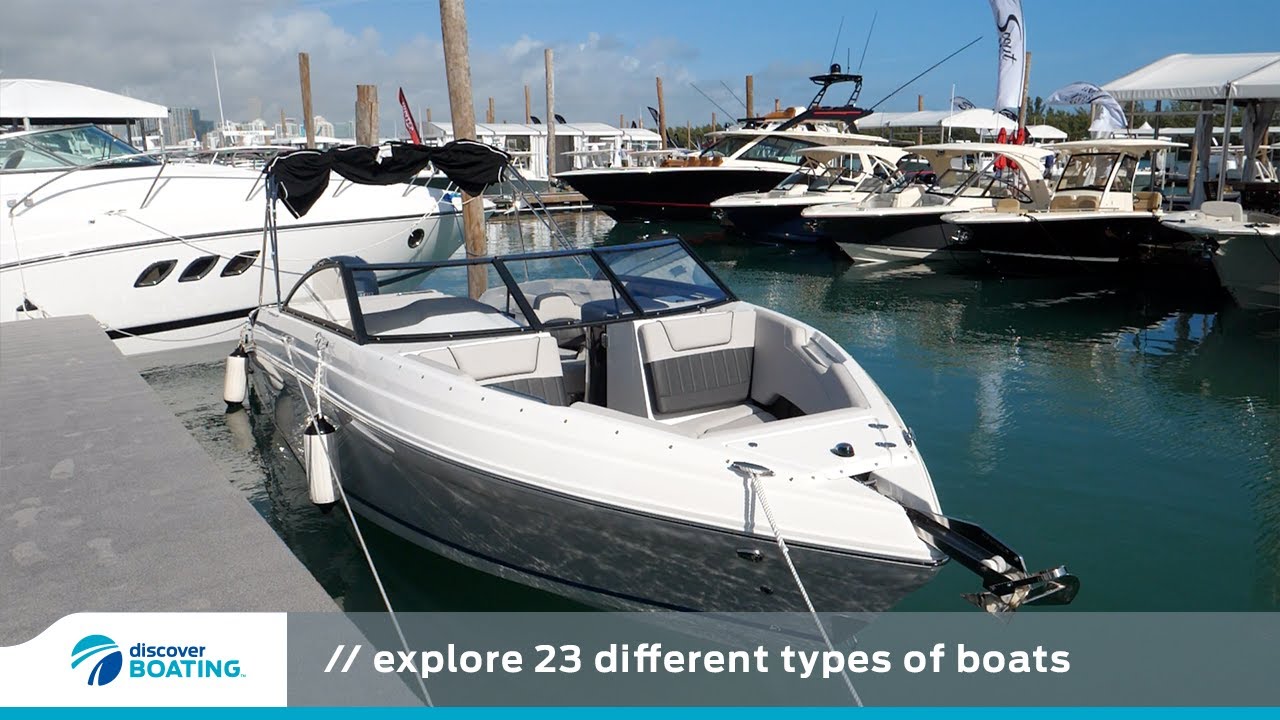
It’s tempting to jump straight into brand comparisons, but keep in mind that specific step usually comes later. First, get comfortable with the main boat categories—bowriders, pontoons, fishing boats, center consoles, deck boats, and cruisers. Each one is designed with a specific purpose in mind and serves a distinct purpose.
Understanding the strengths and tradeoffs of each type helps you evaluate models more critically later. At this stage, you’re not picking a winner—you’re learning what design concepts align best with your priorities.
Compare Specifications That Matter Most
When you start looking at individual models, go beyond surface-level features. Pay attention to specifications that affect usability, ownership, and long-term satisfaction. Length, beam, draft, passenger capacity, fuel capacity, and engine options all influence performance, storage, and operating costs.
Create a short comparison list of models that meet your core requirements and review their specs side by side. This makes meaningful differences easier to spot and keeps emotion from driving decisions.
Decide Early: New or Used?
Researching early gives you time to weigh the pros and cons of buying new versus used—without pressure. New boats offer warranties and the latest technology, while used boats can stretch your budget further if they’re well cared for.
If you’re considering used, pay attention to models that have been around for a while. Boats with long production runs tend to have better parts availability, more owner feedback, and fewer surprises.
Read Owner Reviews and Long-Term Feedback
Manufacturer descriptions highlight best-case scenarios. Owner reviews reveal how boats perform in real-world conditions. Look for feedback on ride quality, build durability, maintenance issues, storage layout, and customer support.
Patterns matter more than individual complaints. Repeated praise—or recurring problems—across multiple reviews is far more informative than one glowing or negative comment.
Research Typical Pricing Before Shopping
Get a feel for real-world pricing. Boat prices can vary widely depending on season, location, condition, and demand. Start looking at listings now—even if you’re not ready to buy—to understand what certain models typically sell for.
When summer rolls around, and prices begin to rise, you’ll be able to spot a fair deal (or an overpriced one) instantly.
One of the biggest mistakes buyers make during peak season is not knowing what a fair price looks like. Before contacting sellers, research recent listings for the same model and similar year ranges. This gives you a realistic sense of market value and helps you recognize overpriced listings quickly.
Understanding pricing trends early also strengthens your negotiating position if you encounter motivated sellers before summer demand peaks.
Watch Inventory Early, Even If You’re Not Ready to Buy
Tracking listings weeks or months ahead of time builds market awareness. You’ll start noticing how often certain models appear, how quickly they sell, and which features command higher prices. This context is invaluable once you’re ready to move quickly.
Early research also reduces stress. When the right boat appears, you’ll recognize it immediately instead of scrambling to decide under pressure.
Listen to Owners, Not Just Brochures
Manufacturer specs tell you what a boat should do. Owners tell you what it’s actually like to live with. Online forums, boating groups, and long-term reviews are gold when it comes to learning about ride quality, maintenance quirks, fuel use, and overall satisfaction.
If you see the same complaint pop up over and over, take it seriously—especially when competition heats up, and the decisions might become rushed.
Factor in Ownership Costs, Not Just Purchase Price
A boat’s sticker price is only part of the equation. Fuel, insurance, maintenance, storage, registration, and accessories all contribute to total ownership cost. Researching these expenses ahead of time helps you set a realistic budget and avoid surprises after purchase.
Some boats are affordable to buy but expensive to own, while others are easier on your wallet long term. Models with strong reliability records and efficient power options often cost less to own over a period of time, even if their upfront price is higher.
Factoring in these costs early helps you set a realistic budget and avoids unpleasant surprises after the purchase. Rule of thumb: Plan to spend about 10% of the boat’s purchase price per year on ownership costs.
Narrow to a Shortlist Before Peak Season Hits
By late spring, your goal should be a short list of two or three models you fully understand. At that point, you’re not researching from scratch—you’re simply waiting for the right example at the right price.
Watch the Market Before You Jump In
One of the smartest things you can do is simply watch the market. See how fast certain models sell. Notice which ones linger. Pay attention to price drops.
By the time summer arrives, you won’t be guessing—you’ll be informed and ready to move quickly when the right boat shows up.
Be Prepared Before Everyone Else Is
The best boat deals don’t usually go to the most impulsive buyers—they go to the prepared ones. When you’ve done your research ahead of time, you can shop confidently even during the busiest season.
Instead of scrambling in the summer rush, you’ll already know what you want, what it’s worth, and when to say yes.
Pre-Summer Boat Research Checklist
Use this checklist to stay focused and avoid rushed decisions as peak season approaches.
✅ Define Your Needs
- ☐ Primary use (cruising, fishing, watersports, entertaining, overnighting)
- ☐ Typical water conditions (lake, river, coastal, offshore)
- ☐ Number of passengers you’ll regularly carry
- ☐ Storage plan (trailer, marina slip, dry storage)
- ☐ Experience level and comfort handling larger boats
✅ Narrow the Boat Type
- ☐ Identify 1–2 boat categories that fit your use case
- ☐ Understand tradeoffs (space vs. performance, comfort vs. fuel efficiency)
- ☐ Eliminate types that don’t match how you’ll actually boat
✅ Compare Key Specifications
- ☐ Length, beam, and draft
- ☐ Passenger capacity
- ☐ Engine options and horsepower range
- ☐ Fuel capacity and expected range
- ☐ Storage layout and seating configuration
✅ Research Real-World Ownership
- ☐ Read owner reviews and forum discussions
- ☐ Look for recurring praise or repeated issues
- ☐ Research reliability history for engines and components
- ☐ Note manufacturer reputation and dealer support
✅ Understand Market Pricing
- ☐ Track asking prices for the same model and year range
- ☐ Note how quickly listings sell
- ☐ Identify features that raise or lower resale value
- ☐ Set a realistic target price before contacting sellers
✅ Account for Total Ownership Cost
- ☐ Insurance and registration
- ☐ Fuel and routine maintenance
- ☐ Storage and winterization
- ☐ Accessories and upgrades
- ☐ Survey and inspection costs (for used boats)
✅ Final Prep Before Peak Season
- ☐ Narrow your search to 2–3 well-researched models
- ☐ Be ready to move quickly when the right listing appears
- ☐ Avoid impulse decisions driven by limited availability
Summary
Researching boat models before the summer buying frenzy helps buyers avoid rushed decisions, limited inventory, and inflated prices. The article emphasizes starting with a clear understanding of how the boat will actually be used, then narrowing choices by boat type before comparing specific models.
Buyers are encouraged to focus on meaningful specifications, read real-world owner reviews, and understand typical market pricing well ahead of peak season. Tracking inventory early builds confidence and reduces pressure, while factoring in total ownership costs prevents budget surprises. By late spring, the goal is to have a short list of well-researched models so buyers can act decisively when the right opportunity appears.
Frequently Asked Questions:
What is the best way to research a boat before buying?
The best way to research a boat before buying is to start with how you’ll actually use it, then take your time comparing real-world info. Figure out what type of boating you want to do first, look at multiple listings to understand pricing, and read owner reviews to see how the boat performs day to day—not just on paper. Watching the market for a while and factoring in ownership costs helps you avoid rushing into a bad (or overpriced) decision.
How do I find out the market value of a boat I want to buy?
The easiest way to find a boat’s current market value is to compare it to similar boat models that are actually listed for sale right now. Browse through multiple listings-both online and in newspaper classifieds- for the same make, model, and year of boat you are interested in, and then take note of how the price changes based on the condition, engine hours, and extras.
Don’t rely on just one price—when you see the same numbers pop up over and over, you’ve found the real market range. Using that range helps you spot fair deals and avoid overpaying.
What hidden costs should I factor in when budgeting for a new boat?
When budgeting for a new boat, don’t forget the costs that show up after the purchase. Flat rate monthly expenses such as insurance, storage or slip fees, and gasoline refills can’t be avoided. Routine maintenance is a variable, however, and can vary from month to month. Also, the cost of registration and annual taxes are two expenses to keep in mind.
Additional costs can include gear for the boat, sporting items such as skis and inner tubes, as well as electronic devices for navigation and fish spotting. Upgrades in your chosen model are readily available for an extra cost. On-board and below-deck furniture and accessories will also be purchases that will add to additional costs above and beyond the final sales price. Bedding, towels, life jackets, and a stocked first aid kit will be things needed prior to the first outing.
Even brand-new boats will likely need a quick, occasional repair and there will also be an annual expense of winterization. Planning for these expenses upfront helps make sure the boat stays fun, not stressful.Rule of thumb:Plan to spend about 10% of the boat’s purchase price per year on ownership costs.

Where to Find the Best Boat Deals at the End of Season
Navigating the Boat Buying Process: A Buyer’s Guide
Which Boat Type do you Need?