
Fall Care for Boat Canvas, Snaps, and Zippers


Fall is a good time to give your boat a slower, closer look. Not the shiny parts everyone notices first, but the little hardworking pieces that quietly take a beating all season: boat canvas, snaps, and zippers. These are the parts you depend on when cold weather rolls in, when you cover the boat after a long day, or when you want the bimini to open without a wrestling match. They are also the parts most likely to fail first if they go into winter dirty, damp, stiff, or under tension.
Canvas 101
Canvas might look tough, and in many ways, it is, but marine fabric has a hard job. It sits in sun, wind, rain, bird droppings, pollen, fish grime, sunscreen, salt, lake minerals, and whatever else the season throws at it. By fall, even a cover that still looks “fine” can be holding moisture and debris in seams, folds, and tight corners. That is where mildew starts. It is also where stitching can weaken, coatings can wear down, and stains can settle in for good.
Start with a simple rinse. Fresh water does more than make canvas look better; it helps remove salt, sand, and everyday dirt that can grind into the weave and wear the fabric down. Use a gentle stream from a hose, not a pressure washer. High pressure can drive grime deeper and may damage water-repellent treatments. After rinsing, wash with a mild soap or a cleaner made for marine canvas. A soft brush is usually enough. Scrubbing harder is not the same as cleaning better, especially around older stitching.
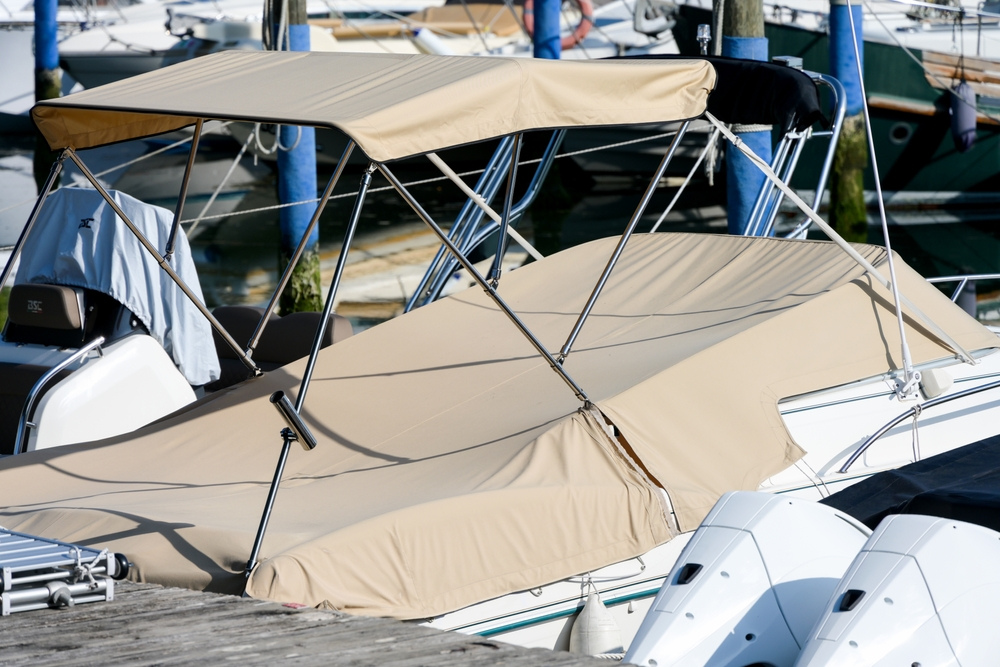
Rinse Like You Mean it
Once the canvas is clean, rinse it like you mean it. Leftover soap can attract dirt and may make the fabric feel sticky later. Then let everything dry completely before you fold, store, or cover the boat again. This step is easy to rush, especially when the weather is cooling off and daylight is shorter, but damp canvas in a dark storage space is basically an invitation for mildew. If you can, spread the material out in open air and give seams, hems, and window edges extra time.
Waterproofing is another fall chore worth doing before the boat is tucked away. If rain no longer beads on the surface, or if the fabric darkens quickly when wet, the water-repellent finish is probably tiring. Apply a marine fabric guard only after the canvas is clean and dry. Light, even coats are better than soaking one area. Pay attention to seams, high spots on bimini tops, corners, and places that rub against rails or hardware. Let the treatment cure before the canvas gets wet again.
Snaps, Snaps, Snaps
Snaps deserve the same kind of attention because they are tiny troublemakers when ignored. A snap that worked smoothly in July can be stiff by October after weeks of moisture, dirt, and oxidation. Before forcing a tight snap, clean around it with fresh water and a soft cloth or small brush. Look for green corrosion, crusty buildup, bent studs, or canvas tabs that are pulling at a strange angle. If the snap is fighting you, something is usually wrong. Pulling harder can rip the canvas before it solves the problem.
Next steps
After the snaps are clean and dry, use a small amount of snap lubricant, silicone, or even a beeswax-style product made for marine hardware. The goal is smooth movement, not greasy hardware. A little dab on the snap socket and stud is usually enough. Open and close the snap a few times to spread it around, then wipe away any extra so it does not smear onto the fabric or attract dirt. It also helps to fasten and unfasten snaps in order instead of stretching one corner across the boat like a stubborn bedsheet.

Zig and Zag Zippers
Zippers can be even more frustrating. They collect dirt in the teeth, they get sunscreen and grit in the slider, and they often sit unused until you really need them. That is when someone gives the pull a hard yank and suddenly the zipper separates, the teeth bend, or the canvas tears beside the seam. Fall is the perfect time to take steps to prevent any of these disasters.
Rinse the zipper teeth with fresh water, brush away grit, and let everything dry. Then apply a zipper lubricant made for marine use, paraffin, or a clear wax product. Work the zipper back and forth gently so the lubricant spreads evenly.
Stock up on Correct Products
Try not to use oily shortcuts that leave residue behind. Products that feel handy in the garage can attract more dirt on a boat, and some can stain fabric or affect plastic zipper materials. Clean first, lubricate second, and never force a stuck zipper. If it will not move, check for trapped fabric, misaligned teeth, corrosion, or a slider that has spread open. Sometimes a small repair now saves a much bigger canvas bill in spring.
Fall is also the right time to inspect stitching and stress points. Look along seams, corners, window panels, straps, and places where snaps or zippers are sewn into the canvas. Frayed thread, tiny tears, stretched holes, cloudy clear vinyl, and loose binding are all signs that the cover has been working hard. Do not ignore small issues just because the season is ending. Winter storage can make weak spots worse, especially if the cover is folded tightly or pressed under other gear.
Optimum Storage Places
Storage matters more than many boat owners think. Clean and dry canvas should be folded or rolled loosely, not crushed into a damp compartment. If the canvas has clear vinyl windows, avoid sharp creases, because they can leave permanent marks or cracks. Store pieces somewhere dry, ventilated, and away from fuel, solvents, rodents, sharp tools, and heavy objects. If the frame stays on the boat, make sure it is secure and not rubbing against the fabric. If the bimini comes down, strap it so wind cannot rattle it all winter.
The bigger point is simple: these parts fail first because they move, flex, stretch, and hold tension. Canvas protects the boat, but snaps and zippers are what make that protection usable. When one small piece sticks or breaks, the whole cover becomes harder to use, and people start forcing things. That is where avoidable damage begins. A quiet afternoon of cleaning, drying, lubricating, and inspecting can add seasons of life to your canvas and save a lot of spring frustration.
In Conclusion…
So, before you call the boat “winterized,” give the canvas system its own little checklist. Rinse the fabric. Wash gently. Dry it fully. Re-treat it if water no longer beads. Clean and lightly lubricate every snap and zipper. Look for weak seams and worn hardware. Store everything with room to breathe. It is not glamorous work, but it is the kind of maintenance you will be glad you did when spring arrives, and the cover opens smoothly instead of fighting you from the first warm weekend.
Frequently Asked Questions:
How do you remove mildew from boat canvas?
Start by taking the canvas off the boat if you can, then shake or brush away any loose dirt, leaves, and dry mildew outside so you are not spreading spores around the cockpit. Mix a mild marine canvas cleaner with lukewarm water, or use a mildew remover that is labeled safe for boat canvas. Work it in gently with a soft brush, paying extra attention to seams, folds, and snap areas where moisture likes to hide. Let the cleaner sit just long enough to do its job, but do not let it dry on the fabric. Rinse thoroughly with clean water, because leftover cleaner can attract dirt and help mildew come back. Avoid strong household bleach unless the canvas maker specifically allows it, since it can weaken stitching, fade color, and damage water-repellent coatings. Once it is clean, spread the canvas out and let it dry completely in fresh air before folding, reinstalling, or storing it. Damp storage is mildew’s favorite invitation.
How do you waterproof boat canvas?
Waterproofing works best after the canvas is clean, rinsed, and completely dry. If you spray protectant over dirt, salt, or mildew stains, you are basically sealing the problem in place. Start with a gentle wash using a marine-safe canvas cleaner, rinse well, and let the fabric dry all the way through, including seams and folded edges. Then choose a fabric guard or water-repellent treatment made for marine canvas, not a random household waterproofing spray. Apply it outdoors or in a well-ventilated area, using light, even coats instead of soaking one spot. Pay close attention to high-wear areas like the top ridge of a bimini, corners, seams, and places where the cover rubs against rails or hardware. Let the treatment cure fully before the canvas gets wet or goes back into heavy use. If water beads up and rolls off, you are in good shape. If it darkens the fabric and soaks in quickly, it is probably time for another treatment.
How do you lubricate snaps on a boat cover?
Boat cover snaps get stiff because they live in a tough little world: moisture, salt, sunscreen, dirt, and pressure from stretched canvas. Before adding lubricant, clean around each snap with fresh water and a soft cloth or small brush. If there is green corrosion or sandy grit, remove as much as you can first so you do not grind it deeper into the metal. Once the snaps are clean and dry, use a small amount of marine snap lubricant, silicone spray, or beeswax-style snap stick. The key phrase is small amount. You want enough to help the snap release smoothly, not so much that it smears across the canvas and attracts grime. Dab or spray the lubricant on the snap socket and stud, then open and close the snap a few times to spread it around. Wipe away any extra. If a snap still will not close without force, do not yank it. Check alignment, canvas tension, or bent hardware before something tears.
Should you leave your bimini top up over the winter?
In most cases, no, you should not leave your bimini top up all winter. A bimini is great for shade and light weather during the season, but it is not meant to carry snow, ice, or months of wind. Leaving it stretched open can strain the frame, loosen fittings, wear out seams, and create pockets where moisture sits. Before winter storage, take the fabric down if possible, clean it, rinse it well, and let it dry completely.
Then fold or roll it loosely so it is not creased hard in the same spots for months. Store it somewhere dry with good airflow, away from rodents, sharp tools, fuel cans, and anything that could stain it. The frame can usually stay on the boat if it is secure, but many owners fold it down and strap it so it cannot rattle or bend in wind. If you must leave canvas installed, make sure it is supported, tight enough to shed water, and checked regularly.

How to Get Kids Involved in Pre-Season Boat Prep

Boat Cleaning Hacks for Saltwater vs. Freshwater Boaters

Smart Storage Ideas to Maximize Boat Deck Space Before Summer