
Which Boat Type do you Need?


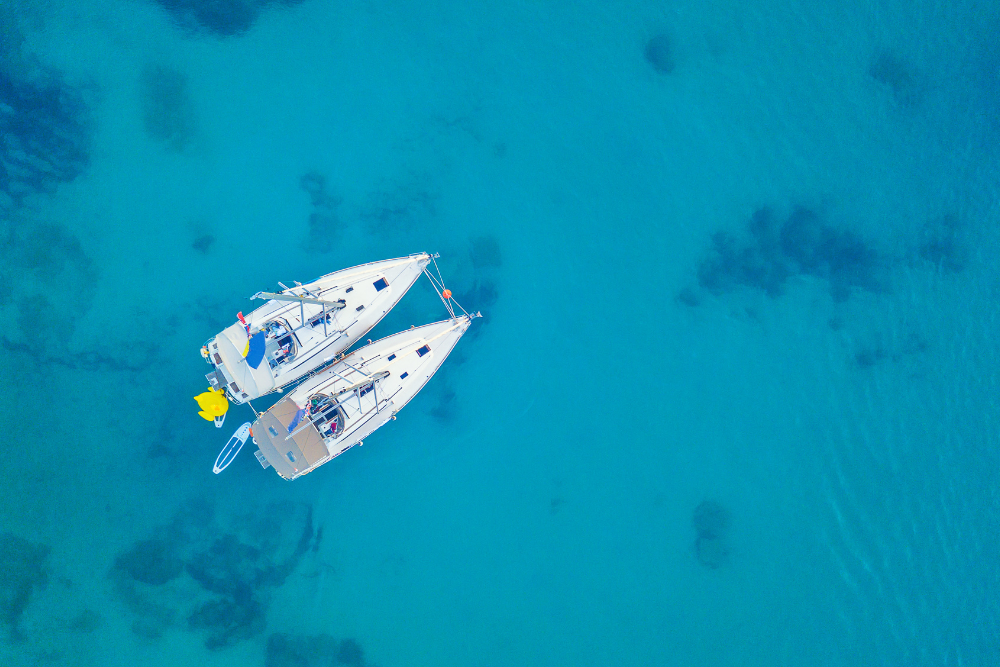
We decided to go out on the boat for the day. We had a small catamaran. It was the perfect boat type for sailing from beach to beach across calm ocean waters with the family. We wanted shade, we wanted a place to sit down and eat together, and we wanted to swim directly off the boat. Choosing the right boat will affect your entire boating experience.
To choose the right boat, you need to do an honest assessment of how you will actually spend your time on the water. Granted, there may be different ways you plan on using it, but you should focus on how you will use your boat the largest percentage of the time. The worst thing you can do is choose the boat you need based on how you dream of using it instead of how you will really use it.
How Will You Use Your Boat?
- Cruising and Entertaining – If you want to host friends for sunset drinks or dockside dinners, prioritize deck space and seating. Pontoon boats and deck boats are the gold standard for social flexibility.
- Fishing – Dedicated anglers need “fishability.” This means 360-degree deck access, livewells, rod holders, and easy-to-clean fiberglass liners. Center consoles are the preferred choice for both inshore and offshore fishing.
- Overnighting – If you plan to sleep on the boat, you require a cabin with “amenities”—a galley (kitchen), a head (bathroom), and berths (beds).
- Propulsion – Do you want an outboard, inboard, or electric motor? Outboards are easier to maintain, while inboards offer a clean platform for swimming. Electric motors may not go as far but will be easy to repower.
- Watersports – If skiing, wakeboarding, or wakesurfing is the goal, you need a boat with a specialized hull, a ballast system to create wakes, and a towing tower.
Where Will You Boat? (Hull design is important!)
- Inland Lakes/Rivers – Flat-bottom or shallow-V hulls work well on potential shallow waters or where you are closer to the water and debris.
- Coastal/Offshore – You need a deep-V hull to slice through chop and higher gunwales (sides) to keep the “wet” out.
What Size Boat Do You Need?
The size of the boat will dictate the number of seats you can have. Of course, feeling spacious and having room to move around with family is important. Don’t forget to include all the safety items you will need to store onboard for the number of people you have. You will also need space for ice chests, possibly food and drinks, etc.
- Couples or Small Families (2-4 People) – A boat in the 16 to 20-foot range is manageable. These are easy to trailer, fit in most garages, and are fuel-efficient.
- Average Families (4-6 People) – The 21 to 24-foot range is the “sweet spot.” Boats of this size handle rougher water better and offer enough storage for a full day of gear.
- Large Groups (7-10+ People) – You will need 25 feet or more. In this category, pontoons offer the best value for passenger capacity, while large dual consoles or cruisers provide the necessary comfort for long days.
The best rule of thumb is to look for a boat that fits your size needs and look for a boat that will actually handle two extra people. That will ensure your boat isn’t too low in the water for all the people and supplies.
Looking for Low Maintenance Boats?
The cost of ownership for boaters is always important. If you want to be able to spend more time on the water, you should consider low-maintenance boats. These will also help you spend less time working on the boat versus enjoying the water. Here are some good boat types for less maintenance.
Aluminum Fishing Boats or Pontoons
Aluminum is incredibly durable and resistant to the minor dings and scrapes that would crack fiberglass. Unlike fiberglass, aluminum doesn’t require waxing to maintain its structural integrity. Pontoons, specifically, have simple systems and open layouts that are easy to hose down.
Electric Outboard Powered Boats
As of 2026, electric propulsion has matured significantly. Electric motors have a fraction of the moving parts of an internal combustion engine. There are no oil changes, no fuel filters to clog, and no winterization of the engine block required. While the initial battery cost is higher, the annual maintenance is the lowest in the industry.
Rigid Inflatable Boats (RIBs)
RIBs are the “SUVs of the sea.” They are lightweight, which puts less strain on the engine and reduces fuel costs. Because they are bouncy and forgiving, you are less likely to incur expensive hull repairs from docking mishaps.
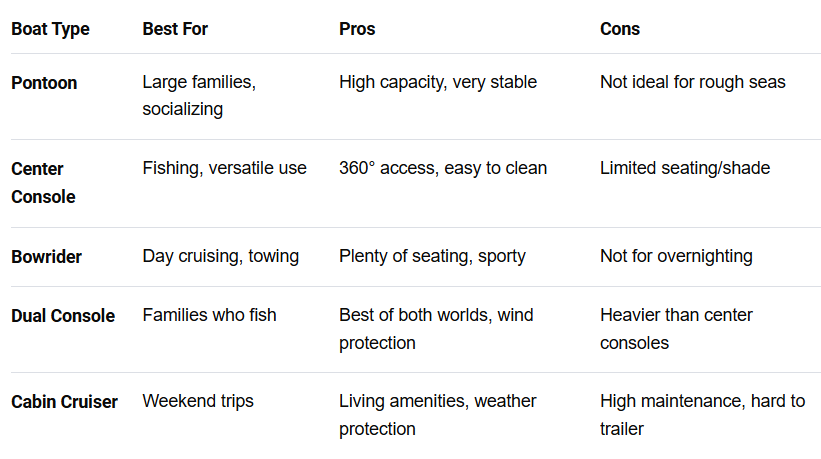
Boat Types Comparison Chart*
Deciding on Your Boat Choice
Before you choose the boat that will meet most of your boating needs, don’t forget to use a final checklist before your purchase.
- Insurance – Get a quote on the model you are considering and the extra coverage you may want, depending on how you will store and transport it.
- Sea Trial – Never buy a boat without taking it out on the water. You need to know how it handles and how it sits in the water.
- Storage – Know where your boat will stay when not in use. Dry storage, a trailer, a marina slip? And what will be the costs?
- Tow Vehicle – Will the vehicle you have safely pull the weight of the boat and trailer, or will you need a different tow vehicle? Don’t forget to figure in the cost of fuel for each outing.
By matching your boat choice to your main boating activities and being realistic about the number of people that will be using it, you can enjoy a day on the ocean, river, lake, or even a pond so that it is a fun day and not a chore.
Navigating the Boat Buying Process: A Buyer’s Guide
Buying a Used Boat: The Real Story on Freshwater vs. Saltwater History
How to Spot a Well-Maintained Used Boat in 60 Seconds