
The Top Questions to Ask Before Buying a Used RV

You might think I will start listing questions about the age, mileage, maintenance, condition, and prior uses, of the RV you intend to purchase but as important as all that is, it’s not the right starting point when deciding which used RV to purchase. The only rational starting point is an introspective inquiry. Ask yourself:
- Why do you want to buy an RV?.
- What do you want to do with the RV?
- Who will be using it?
- When and where do you want to use the RV?
Understanding Your Needs and RV Lifestyle
Fully understanding your own needs and desires will inform your decisions about the style, brand, make, model, floorplan, and amenities of your future RV. A person who wants to travel extensively while living in the RV will have different needs than someone who just wants a warm base camp for fall and winter hunting excursions, or someone who wants to park the RV in an RV park and use it as a vacation destination. RVs are homes away from home on wheels.
Why Self-Analysis Matters
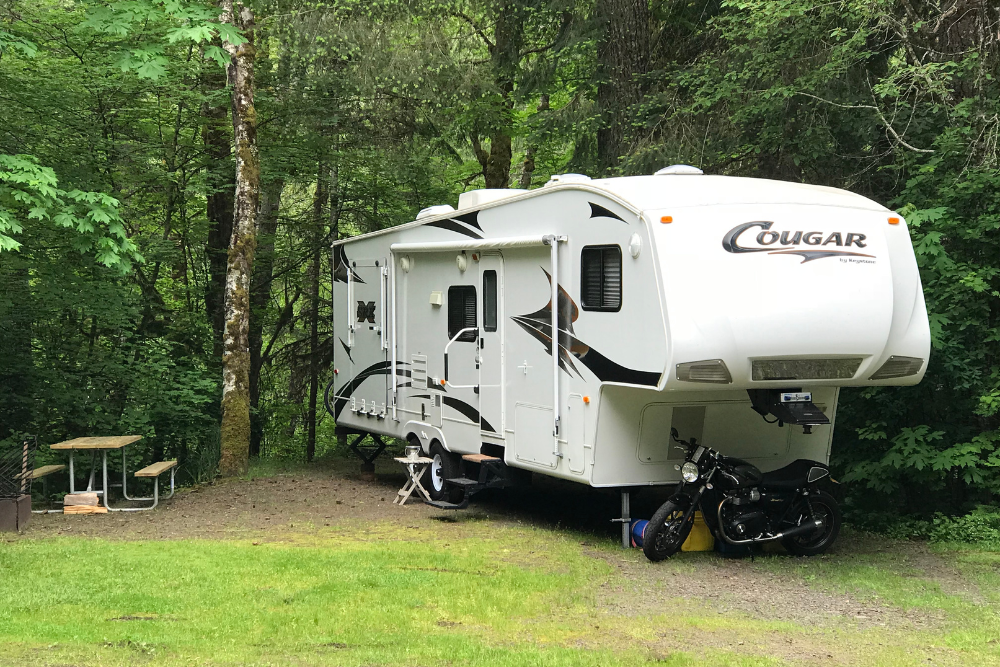
Don’t blow this off the self-analysis as a waste of time. We know a couple who bought and sold 5 different RVs in the first 6 years of their marriage. They started out thinking that a truck camper would satisfy their needs. They soon realized that it was too small, so they traded it in on a van conversion. Again, it didn’t have the bathroom features they needed in their RV. They traded it in for a trailer, then a fifth wheel trailer, and finally swapped it out for a full-size motorhome. If they had taken the time to examine their style, preferences, needs and usage they could have saved a lot of aggravation and expense.
A Real-World Example: Van Conversion Challenges
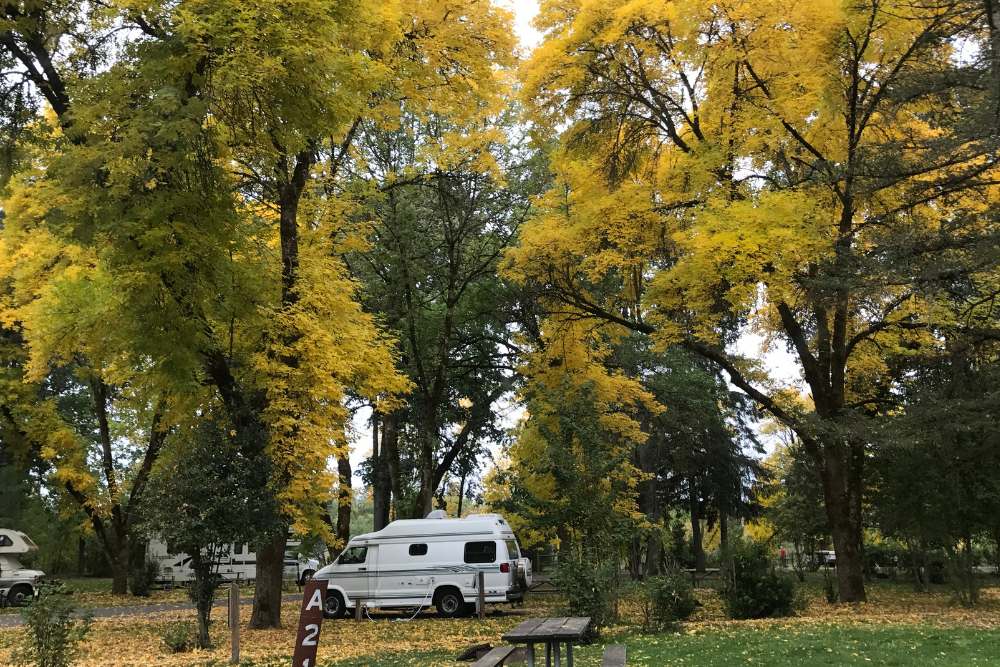
Additionally, we met a woman who had just purchased a van conversion for herself and her dog. She intended to live in the van and travel extensively. It seemed like the perfect fit, small, mobile, and easy to drive and park in any campground or RV park.
It was raining hard in the park where we met her. She was frustrated because the van was great for supporting an outdoor lifestyle (fireside lounging, outdoor cooking and dining, etc.). but the weather was not cooperating. She and her dog were confined to a very small living space. She also discovered that the black and grey holding tanks were so small they had to be emptied nearly every day.
She also complained that the sink was so small she couldn’t even wash her dog’s bowl and the refrigerator would not hold enough frozen and unfrozen food to get her through a long weekend and certainly not a full week of camping without going to the store. But going to the store was not an easy task.
In a van conversion, you need to break down your camp, just to go to the store. She also discovered on this trip that she couldn’t really carry any of the outdoor toys she needed to fully experience the traveling full-time lifestyle she was seeking. There was no room for an E-bike, or kayak unless she wrestled those toys onto the top of her van, which is very difficult for one person (male or female) to do.
Now if this van conversion had been purchased by a couple instead of as single woman with a dog, they might have been able to lift the bikes and kayaks onto the roof, but the refrigerator, sink, and holding tank size might still have been a problem for the couple. These issues and problems could have been avoided if the RV buyers had taken the time to really think through the introspective questions listed above.
Where and when do you plan to use your RV? if you’re planning to travel and camp in rainy locations like the Pacific NW or in the winter months, buying an RV that is intended to enhance an outdoor lifestyle may not make sense.
Mobility and Travel Flexibility
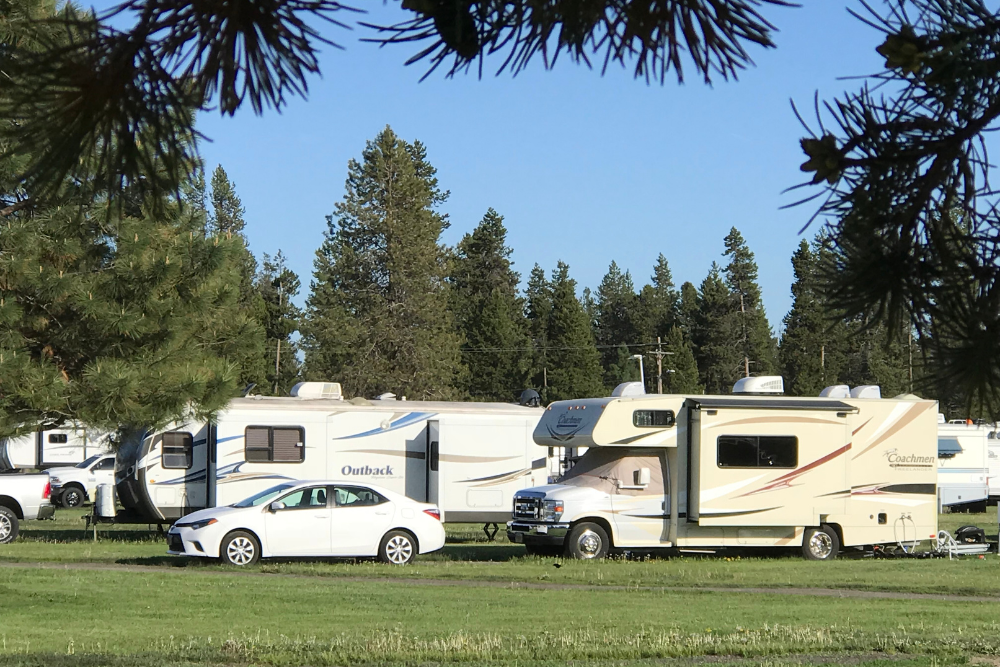
If you want to carry extra gear and or be able to take side trips (go to the store, or go sightseeing) then having a separate vehicle with your RV is ideal. That might be a truck you use to tow a trailer or 5th wheel, or a tow car you haul behind a motorhome. Either way you have mobility even when your RV is all set up for camping.
Thinking about how you want to use your RV and what you will be doing while using it will help you decide if you need a self-propelled RV, (truck camper, van, or motorhome) or a towed RV, (trailer or fifth wheel).
Who Will Be Using the RV?
Asking yourself who will be using it will help you decide on the size and features. For example, if you want to take your grand kids on several extended camping trip getting a larger RV with a couple of bunk beds might make the most sense. You can overdue the size, in the same way as the women and her dog did, with the smallness of her RV.
We have met several people who traveled with their kids and pet, while towing an extremely large 5th wheel trailers. The children were home schooled in the RV and needed space for their school supplies, toys and play time.
The parents told me they regretted getting such large trailers. They really didn’t use or need all that space and the large size made towing and parking it so much more difficult and stressful. They had to plan ahead for the right type of campground where they could safely maneuver the trailer in and around the other campers and obstacles in the parks.
These folks knew they needed space for their children but they misjudged how much time their kids would be in the trailer, as opposed to exploring and playing outdoors. The question of who will be using the RV and how it will be used are critical questions, and the answers should guide you to the right style, size, and floorplan.
Maintenance and Skill Level
Other questions you should ask yourself are how do you feel about DIY projects and maintaining the RV yourself. If you are really handy, this aspect of RV ownership might not be a barrier to buying an older RV. On the other hand, if you struggle to replace a light bulb then buying a late model used RV might make more sense than buying an older one that might have more maintenance issues.
The age and wear of any used RV should match your tolerance for maintenance concerns. A very old and worn-out RV should be very affordable, and it would give a skilled handyman an opportunity to increase its value by fixing and upgrading the systems and functionality but that cheap purchase would be a headache for most people who don’t have the skills to bring the systems back to fully functional.
Be honest. Can you tolerate systems that do not function at peak performance levels. If you have to trouble shoot a problem and get out your toolbox on a regular basis are you stressed or excited by the challenge?
The Buying Process
When buying a used RV knowing exactly what you want and need is the most important concern in the process. There are always hundreds of used RVs for sale in the peer-to-peer marketplace and you can always find sellers for any make, model, age, size, and floorplan that meets your needs, so don’t rush through your thorough introspective analysis.
First of all, know what you need and want, then determine what your budget is, then check out all the available inventory (here on National Vehicle’s website is a great place to start) to find a few good candidates for your further investigation.
After you have identified a used RV that fits your needs and you think you want to buy it, you’ll need to connect with the seller to set up a time to inspect the RV and to learn more about it. The best questions to ask at that time are open ended questions that elicit candid responses. You should be more interested in the integrity and candor of the seller than the specific answers to questions about the age and condition of the RV. If you get the sense that the seller is guarded and a little deceptive it should raise some red flags.
If the sellers are truthful and transparent then don’t be afraid to delve deeper into the questions you have about the RV. In either case I recommend a professional inspection before you make your final decision, because your perceptions of the seller’s honesty could be wrong. The guarded seller might just be clinging to their privacy while the charismatic seller is in reality nothing more than a scammer. Try to assess the personality of the seller but rely on the professional opinion of the inspector as the final arbiter of your decision.
More Questions:
What should I inspect before buying a used RV?
Of course, you will need to inspect everything to make sure there are no hidden problems that are not disclosed by the seller. Test all the water lines, both hot and cold water to make sure the water heater works and the water pressure is good throughout the RV. Don’t forget to check the shower and toilets during the water test. Also, fire up the air conditioners and furnace to test those systems.
These out-of-sight systems can be the source of future costly problems. And you don’t want to take your new RV on a camping trip and then find out the air conditioners don’t work or you can’t flush the toilet. I would encourage you to hire a professional RV inspector before you commit to buying it and exchange your hard earned money for a load of future problems.
How many miles is too many on a used RV?
This question might be answered by your lender. Many RV finance companies will not finance motorhomes older than 10 years with milage over 100,000 miles for gas and 150,000 miles for diesel engines. We traded in a used motorhome with 120,000 miles on the odometer and frankly that RV was in better shape than many new ones I had encountered since.
Yes, that’s a lot of miles on a 20 year old RV but the miles are not the only determinant of the condition, function, or reliability of an RV. Perhaps the mileage is very low on an RV that is many years old and it seems like a mismatch of age and mileage. In that case, the RV was either sitting and not in use for long periods of time or it was lived in for long periods of time and either one of those situations can significantly impact the functionality of the used RV.
Therefore, the miles alone don’t show you the whole picture. There should be a reasonable match between the age, miles, and visible condition of the RV. If one of these criteria seems to be skewed it might be a red flag that needs further explanation.
What documents should a seller provide when buying a used RV?
The seller will need to give you a bill of sale, the vehicle registration, and the title. However, the title might be retained by the seller’s finance company. If the seller does not own the RV outright, you will probably need to directly interact with the seller’s lender so your payment goes to them to satisfy any outstanding debt on the RV. The lender will release the title once they are paid. This transaction could take several days or weeks.
The seller should also provide any service records they have retained for the RV. If they have the operator’s manuals for the various systems in the RV, like the jacks, microwave, or air conditioners you should get all of those documents at the time of the sale.
Finally, if the RV has a transferrable extended warranty you will need the documentation for that warranty and the contact information for the insurer. Before buying the RV you should check on the limits and liabilities of this extended warranty.
How do I know if a used RV has water damage?
One way to check for water damage is to visually inspect the roof liner on the interior of the RV and inspect the roof for signs of excessive caulking. Look carefully at the shower surround and under the sinks for signs of water damage. Another place where water can penetrate and damage an RV is around the slide outs or around the water pump and/or the hot water heater. These areas should also be carefully inspected.
Be preceptive of the smell of mold or mildew inside the RV this might be an indicator there is or has been previous intrusion of water. Another way to confirm the RV does not have any water damage is to hire a professional RV inspector to go over all the systems and surfaces before you buy it.

Why FSBO is a Better Way to Buy or Sell an RV

Fall RV Sales: What Buyers Are Looking For Right Now

Driving Down Value: Weathering the RV Depreciation Storm