
Summer RV Storm Prep: What You Should Do Now

Summer is here, and that means it’s camping season! I adore the long daylight hours and warm nights, and as such I absolutely love RVing during this time of year. That said, summer is also RV storm season in many parts of the country. This means severe thunderstorms, high winds, hail, flash flooding, and even tornadoes in some regions. When you’re in an RV, these weather events can get dangerous very quickly.
No, I’m not saying you should avoid RVing during the summer entirely. Instead, I’m saying you should go in prepared. With the right preparation, you can definitely RV safely during storm season. Here’s what you need to know.
Why Summer RV Storm Prep Matters for RVers
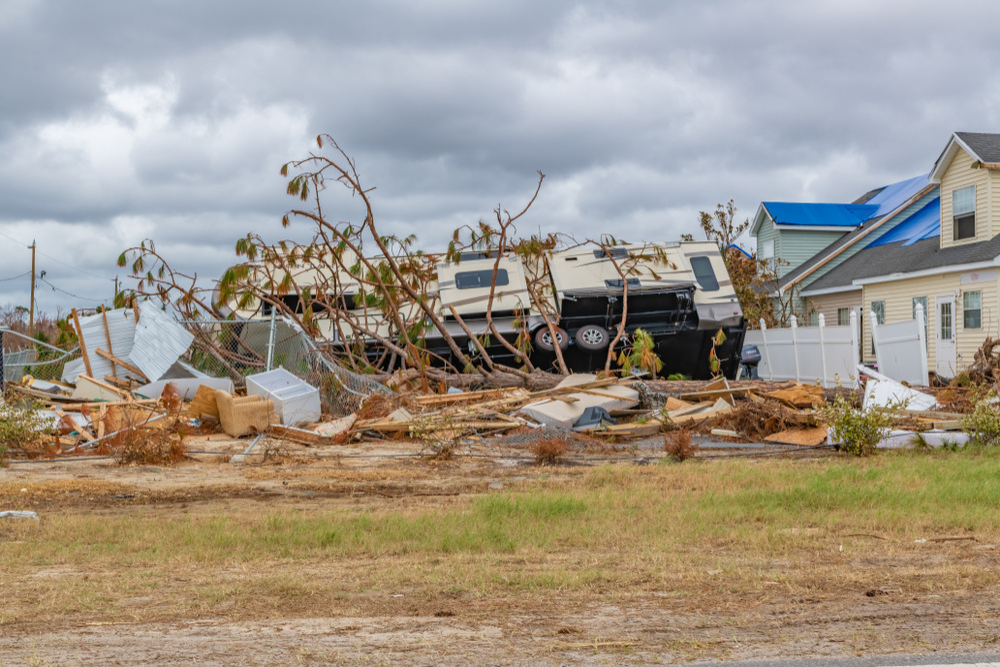
As you probably already know, RVs are much less structurally sound than a traditional building or house. This makes these tiny-homes-on-wheels much more vulnerable to wind damage, flooding, and more.
Summer storms can bring…
- High winds that can tip or shift RVs.
- Large hail that can damage roofs, windows, and slide-outs.
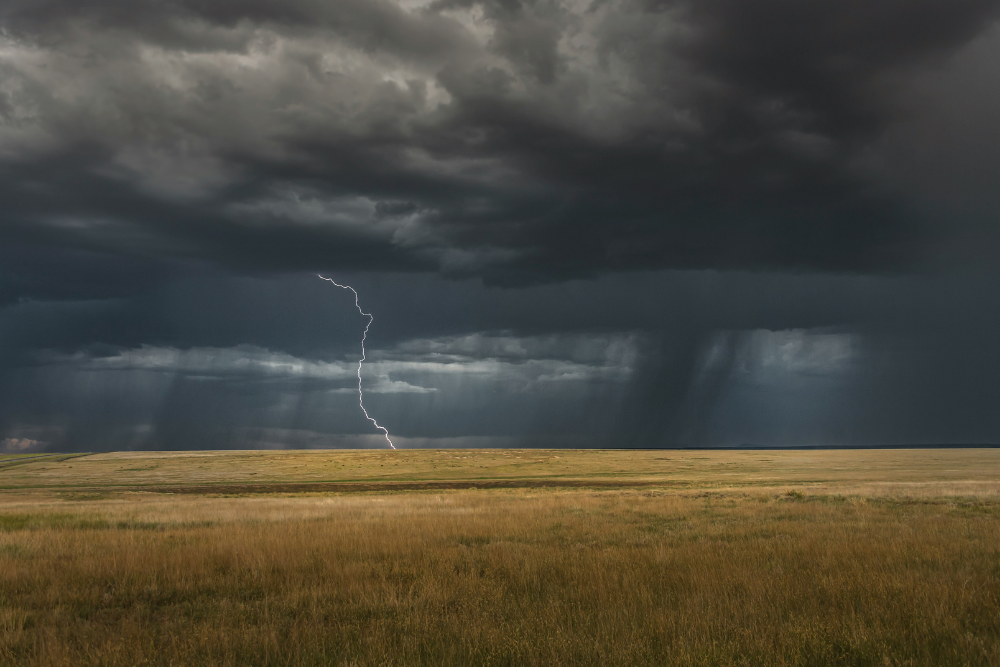
- Lightning strikes that can affect electrical systems.
- Flash flooding in low-lying campgrounds.
- Falling tree branches in wooded campsites.
- Power outages at RV parks.
The key to staying safe? Being prepared and aware.
Inspect and Reinforce Your RV Exterior
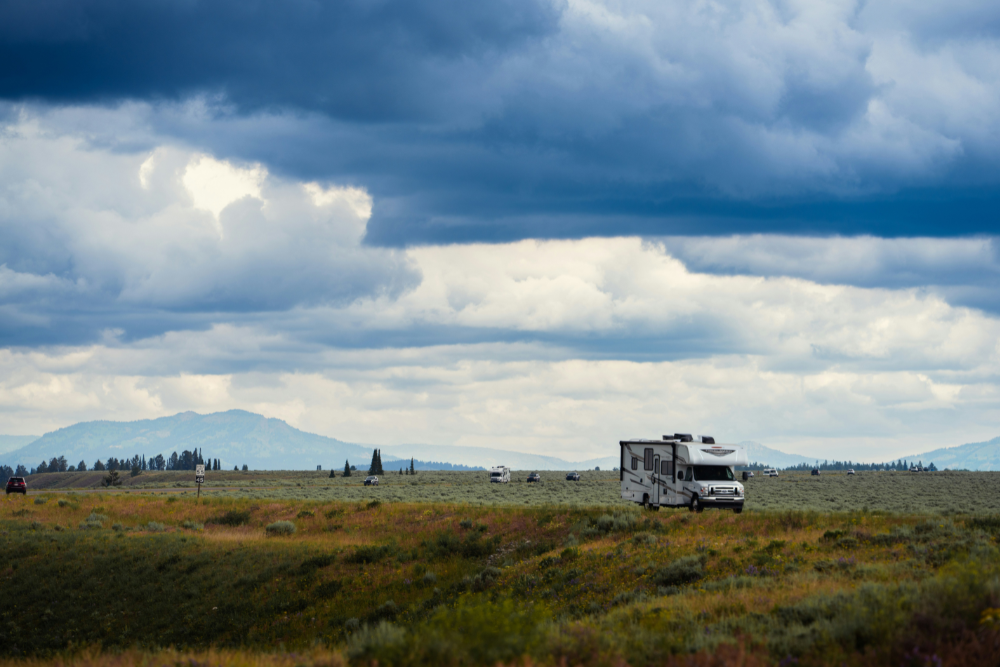
First, you will want to prepare the outside of your RV for summer storm season. Before storm season is in full swing, head up to your RV roof to give it a thorough inspection.
Look for:
- Cracks in sealant around vents and seams
- Soft spots or signs of water intrusion
- Loose antennas or solar mounts
- Debris buildup around edges
Remove loose sealant and replace it with RV-specific lap sealant, repair any and all damage to the roof, and clean all debris from the top of the RV and the gutters.
You’ll also want to walk around the outside of the RV, looking for damaged sealant and replacing it as necessary with RV-specific sealant. Make sure to check your slide seals and window seals and replace any that seem cracked or damaged.
Prepare for High Winds and Severe Weather
Wind is one of the most dangerous elements for RVers because it can arrive suddenly and escalate quickly.
Avoid Driving in High Winds
Driving in high winds is dangerous, as the wind can make a big rig difficult to control and may even tip the RV.
- Travel trailers: more susceptible to sway
- Fifth wheels: more stable but still vulnerable
- Class A motorhomes: heavy but high profile
- Class B/C: more maneuverable but still affected by gusts
Regardless of RV type, winds above 35–45 mph can become hazardous, especially in open or exposed areas. I personally avoid driving in high winds and will reschedule travel days if I have to.
Choose your Campsite Wisely
If storms are in the forecast, you can protect your RV and yourself by choosing your campsite accordingly. Avoid parking in open fields with no windbreaks, on ridge tops or exposed hills, or near dead trees or debris. Aim for lower elevation sites with natural windbreaks. When possible, park with the front or back or your RV to the wind rather than the sides.
If tornadoes are possible, it’s best to choose RV parks with storm shelters.
Practice Fast Breakdown Procedures
In a storm situation, time matters. Generally, we take a good 45 minutes to break camp, but in an emergency, we can be packed up and out of the campsite in 15 minutes.
You should be able to:
- Retract awnings within minutes
- Disconnect utilities quickly
- Secure loose outdoor items
- Hook up and leave if necessary
If you can’t break camp in 10–15 minutes in an emergency situation, you may need to simplify your setup.
Know When to Secure Slide-outs and Awnings
We’ve seen so many awnings damaged by storms. Always, always make sure your awning is pulled in before a storm hits. It’s also a good idea to pull your slides in, lock your exterior compartments, and latch your windows during high winds.
Protect Your RV From Water Damage
Summer storms can also bring heavy rain. Unfortunately, this is usually when we find leaks in our RV, and when the rain won’t stop, it’s difficult to do much about the leaks right away. This is why it’s so important to look for damaged seals before the summer storm season hits. The tips below will also help.
Maintain Proper Leveling
We learned the hard way that an unlevel RV can cause water pooling on the roof or around seals, which can then lead to leaks. Make sure your RV is properly leveled to allow water to run off efficiently.
Clear Drainage Paths
Another thing that can cause pooling and leaks? A lack of drainage.
Make sure that:
- Roof gutters are not clogged
- A/C drip channels are clean
- Slide-out awnings drain properly
Use Moisture Protection Inside
Even with good maintenance, storms can sometimes cause leaks. You can help protect your RV and your belongings by doing the following:
- Place moisture absorbers in storage areas.
- Keep towels or absorbent mats near known trouble spots.
- Store electronics and valuables off the floor.
Electrical and Power Safety
Another thing to consider is that summer storms frequently cause power surges and outages in RV parks. Protecting your RV electrical system is essential.
Use a Surge Protector
A high-quality RV surge protector is one of the most important investments you can make and is one of the first things I purchased after buying our RV. It protects against power spikes, faulty campground wiring, and lighting-induced power surges.
Always, always plug your RV into the surge protector before connecting to shore power.
Keep Backup Power Options Ready
If the campground does lose power, it’s good to have backup options. We have a small solar setup we can use in a pinch, but that isn’t the only option. Some RVers use portable power stations or generators, or even a combination of things to cover all their bases.
Create a Storm Emergency Kit
Another thing you should do before you hit the road this summer? Make a storm emergency kit. This kit should include everything you might need should a storm hit the campground you’re staying in.
Essential items include:
- Flashlights and headlamps
- Extra batteries
- First aid kit
- Portable phone chargers or power banks
- Battery-powered weather radio
- Multi-tool or basic repair kit
- Waterproof matches or lighter
- Emergency blankets
- Bottled water and non-perishable food
Weather awareness tools
You’ll also need to make sure you stay informed. I recommend:
- NOAA weather radio alerts
- Weather apps with push notifications
- RV park emergency alert systems (if available)
Keep in mind, the earlier you know about a storm, the more options you have. I like to check the weather multiple times a day when we’re in storm-prone areas.
Plan for Safe Shelter Options
One of the biggest RV safety mistakes is assuming you can simply “ride out” every storm inside your rig. I grew up in Oklahoma and big storms don’t scare me much, but I’d never attempt to stay in my trailer for a big wind storm, tornado, or tropical storm.
Identify Nearby Shelter
When I choose campgrounds in storm-prone areas during storm season, I try to pick options with dedicated storm shelters. If that isn’t possible, I look for sturdy bathhouses or a well-built clubhouse. If all else fails, many communities do offer communal storm shelters in churches, schools, or community centers.
Before settling into any campground, I like to locate the best possible storm shelter so I know where I’m going if a bad storm does hit.
Know When to Seek Shelter
Of course, it’s good to know when to leave the RV and head to the shelter you locate. Generally speaking, you should seek shelter if:
- A tornado warning is issued nearby
- Severe hail is imminent
- Flooding is expected at your campsite
- Winds exceed safe limits for your RV type
If you know about the storm with enough warning, you might choose to replicate your RV entirely. That said, you never want to drive in a big storm and you certainly wouldn’t want to be moving your RV in conditions that involve hail, high winds, heavy rain, or least of all tornadoes, so be sure to time you move right.
Parking and Positioning Strategy
I briefly mentioned this earlier, but I think it’s worth diving into a bit deeper. Where and how you park your RV matters more than many travelers realize.
Position your RV for Wind Resistance
- Park so the front or rear faces prevailing winds when possible.
- Avoid broadside exposure during storms.
- Use stabilizers and wheel chocks properly.
Increase Stability
- Lower leveling jacks fully.
- Tighten stabilizer bars.
- Store heavy items low inside the RV.
- Fill the water tanks for extra weight.
- Connect your travel trailer to your tow vehicle.
Prepare Your Tow Vehicle (If Applicable)
Sometimes the best thing to do is get out of the way of the storm, that said, it might not always be possible to get your RV ready and get out in time. In these cases, having a tow vehicle that is ready to go can make all the difference.
Make sure it is:
- Fueled and ready for quick departure
- Parked facing an exit route
- Loaded with emergency supplies
- Equipped with functioning headlights and wipers
Develop a Storm Action Plan
Having a solid plan for what to do should a storm hit—and when you plan to do it—is crucial. Trying to make decisions in the midst of panic is never a good idea, and having a solid plan that everyone in your travel party understands will eliminate the need to do so.
Your plan should include:
- How will you receive weather alerts?
- What conditions trigger evacuation?
- Who is responsible for securing what items?
- Where will you go if you must leave?
- How will you communicate if separated?
Stay Calm, Flexible, and Ready to Move
If there is one thing I have learned from RVing, it is flexibility—and storm season calls for a lot of it. Storms can change direction, intensity, and timing quickly and we have changed our plans to bypass a storm on more than one occasion. We’ve left campgrounds early, postponed trips, changed routes, and even skipped destinations entirely in order to stay safe.
Frequently Asked Questions:
How do you get ready for storm season?
Getting ready for storm season is mostly about preparation before you ever leave the driveway. I always start with a full RV inspection, focusing on the roof, seals, windows, and exterior compartments. Small leaks or cracks that seem minor in dry weather can become major problems in heavy rain or high winds.
I create an emergency kit, make a plan in case storms do hit, research campgrounds and choose options with storm shelters, and practice breaking camp and leaving our campsite in a hurry.
How do you protect an RV during a storm?
Really, protecting an RV during a storm comes down to reducing exposure and securing everything that can move or fail under pressure. You’ll want to pull awnings and slides in, close and lock exterior compartments and windows, and stow loose items. Avoid parking under dead trees and try to face the front of your RV toward the wind if possible. Keep tires chocked and stabilizers deployed.
In the case of flash flooding or tornados, head to a designated shelter or sturdy building.
How do surge protectors help during storms?
Surge protectors are one of the most important pieces of safety equipment for RVers. This should be used all the time, but especially during storm season. Surge protectors act as a barrier between your RV’s electrical system and appliances, along with unpredictable campground power or lightning-related surges.
RV Travel on a Budget

What Everyone ought to know about Boondocking!

Keep you and your RV Safe While on the Road