
RV Tires: 9 Critical Things to Know Before Purchasing


There’s More to Consider than Brand and Price
What do you know about RV tires? To most people they are just round, black, expensive, and necessary. And most of the time when you engage in an RV tires discussion it quickly degrades into just a dialog about brands and price to the exclusion of everything else. But there are many other facts to consider when you dig into the real nature of this important RV component. After all, every RV (except truck campers) needs a set of reliable tires to provide a safe, stable interface with many different roadway surfaces.
Tires need to perform in all kinds of weather and roadway conditions from extreme heat to extremely cold climates. Don’t get bogged down with brand and price until you understand all the complex issues associated with RV tires. Tires are complex compounds, with intricate construction, and varying footprints, all of which impact the tire’s stability, friction, abrasion, load capacity, and durability, and once you comprehend all that, then you can start thinking about brand and price.
RV Tires Have Complex Construction
Tires (RV, truck, and passenger tires) are made up of over 60 raw components. There are approximately 15 different blended rubber compounds, plus polymers, tire cords, nylon, fillers, antidegradents, steel, and curatives to make them strong, elastic, and durable. The purpose of every tire is to provide a stable interface between a vehicle and the road surface. Therefore, they need to give you optimal traction for turning and stopping, provide a comfortable ride by absorbing roadway anomalies and defects, reduce roadway noise, and to accomplish all that with complex, long lasting, and slowly abrading material.
We Underestimate Tire Stress
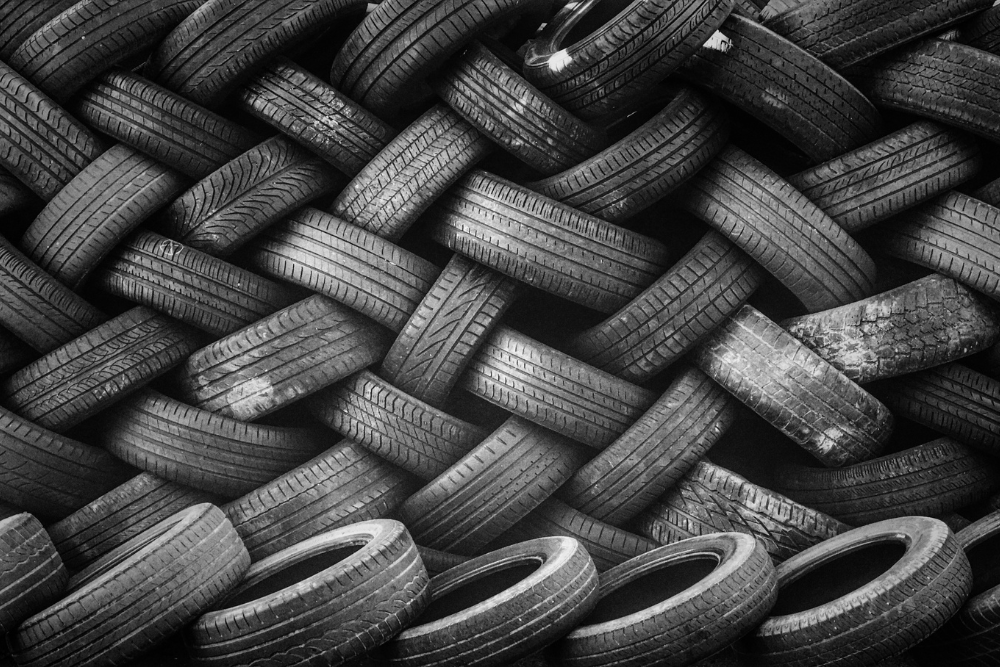
To illustrate what we as consumers take for granted, the average passenger vehicle tire’s footprint (the combined roadway contact area of all 4 tires) is smaller than a single piece of typing paper (8.5 x 11 inches). Additionally, a passenger car tire rotates approximately 800 times for every mile traveled, so if the tire is rated for 50,000 miles, it will rotate over 40 million times in its lifespan. Plus, we take for granted that our tires will perform in all kinds of weather, with temperatures over 100 degrees melting the roadways or in the opposite extreme on icy rock-hard, frozen surfaces. We never even give it another thought.
But consider this. Every time a tire rotates all the components that make up the tire (which incidentally do not all age at the same rate) and all the joints and interfaces are continually flexed then relaxed as each area of the tire takes its share of the total load then passes it on to the next section and on and on it goes…. Load, unload, load, unload… Stress, relax, stress, relax, stress, relax… 40 million times before the tire is worn out. It’s a mind boggling process if you stop and think about it.
Therefore, there’s a national agency that monitors and tests all these issues, measuring tire performance, fatigue, and failure, and keeping watch over the tire industry. And if you ever need any more information about tires you will find it in this 200+ page comprehensive PDF from the NHTSA (National Highway Traffic Safety Administration).
Causes of Tire Failure
So, what are the primary reasons RV tires fail? There are three main causes for tire failure. The first is component deterioration (think about the old rubber band in the back of your desk drawer). In the same way, but over a much longer time frame the rubber inside your tires will begin to break down. The second is low air pressure or overloaded tires. And the third is prolonged heat.
Component Degradation
The complex components of RV tires break down, just like the rubber bands in your desk become brittle over time. Huge amounts of time and money have been invested in tire technology to develop compounds that resist deterioration and prolong tire life, but the reality is, it only slows the process, because all tires eventually degrade. This is particularly true for RV tires which are often exposed to long periods of extreme heat and direct sunlight (see point #3).
So, even if your tires still have a lot of tread on them they could be dangerously worn out on the inside due to age and exposure. Over time, RV tires rot on the inside and the sidewalls, where tiny cracks begin to develop. Cracks in the rubber and the delamination of internal components gets progressively worse. The cracks enlarge and join together like beads of water running down a window which merge to form larger and larger streams of water. The cracks just keep expanding until eventually the air pressure explodes through the weakened portion of the tire causing a catastrophic failure.
Under Inflation and Overloaded Tires
Another reason RV tires fail is because they are under inflated and/or overloaded. The perfect footprint for a set of tires is determined by the weight of the vehicle (the load). Those standards are set by NHTSA (National Highway Traffic Safety Administration) and every RV comes with a maximum load capacity which in turn determines the ideal tire size for that RV. Therefore, the correct footprint (that portion of the tire that contacts the road) for any RV is determined by the total load of the RV. The lighter the load the less footprint is needed to keep the vehicle safely interacting with the roadway.
In contrast, a heavy load, like a large fifth wheel trailer or motorhome will require a larger footprint and the only way to increase the footprint is with additional tires or larger tires. Driving on under inflated tires does not provide a safe way to increase the tire’s footprint. The only way to safely increase the footprint is to get larger wheels and tires or add additional axles and tires. Additionally, driving on under inflated tires or overloading your RV creates unnatural stress within the tire’s construction.
Every time the vehicle accelerates, decelerates, or turns a corner that construction is stressed which begins to show up as microscopic gaps between the tire’s internal components. And like the cracks caused by degradation, these defects continue to grow until the tire has a blowout. Be forewarned, under inflated or overloaded tires are a disaster going somewhere to happen.
Heat Damage
Another cause of RV tire failure is excessive heat and when you think about how and where most RVs are used here in the USA, it’s easy to understand the aggregate impact of heat damage on RV tires. Per the NHTSA, the heat damage and deterioration of a tire doubles with every increase of 18 degrees Fahrenheit. So, if the temperature increased 18 degrees the tire deterioration would increase by a factor of 4, and at 36 degrees it’s a factor of 8. You can do the math.
When you think about the daily temperatures in the sunbelt states and how many, and how often RVers spend most of their time recreating in these zones, it’s easy to understand that RV tires will wear out much more quickly in those climates. For this reason, tires on an RV that is predominately used in Phoenix may wear out twice as fast as the same tires on the same RV in Seattle. The only evidence you need of the impact of excessive heat on tires is to drive across the sunbelt states during the summer and observe all the rubber debris left from blowout after blowout on and in the roadway.
Along Interstate 10 in Texas, New Mexico, and Arizona in 2019 it was like driving through an obstacle course. Of course, most of those blowouts were from 18 wheelers, but I believe that was only because there were more trucks than RVs on the road. Regardless of what type of vehicle the blow out came from, the evidence of heat related tire failure was obvious. Of course, you could have a blowout anywhere but the more your tires are exposed to extreme heat over an extended period of time the more likely it will happen to you.
Tire Wear Increases on Trailers
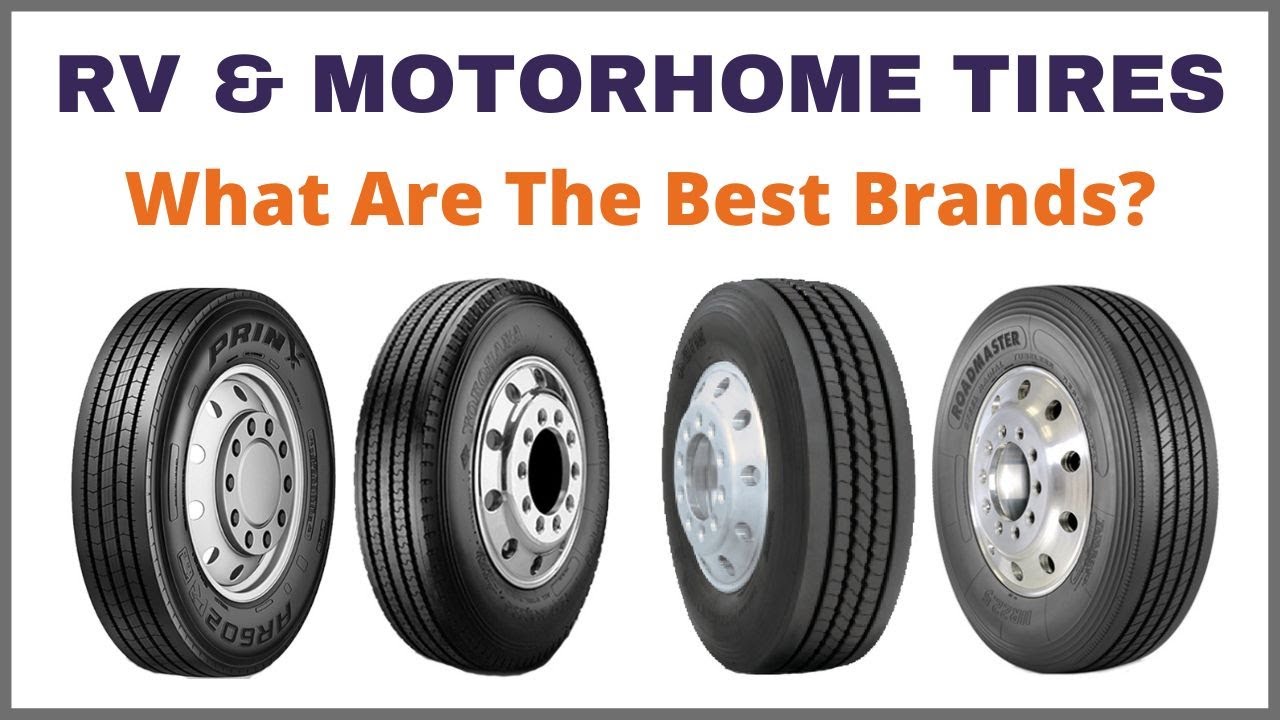
Furthermore, the author of this blog who worked for 50 years in the field of forensic tire failure pointed out that most RVers don’t have any idea what to reasonably expect from their tires. To illustrate this, he explained that 4 tires mounted on a travel trailer with tandem axles will fail 25% to 50% sooner than the exact same tires mounted on a pick-up truck with the exact same load, tire pressure, and travel history.
The reason is that with every turn, one of the trailer tires will be forced to the right while the one behind it will be forced to the left during the turn (or vice versa when turning in the opposite direction) since both axles are rigid and do not turn that slight movement must take place within the tire.
This right and left stress happens because the tires on rigid axles are never pointed directly at the apex of the turn, like the tires on the pick-up truck. Even though the movement is slight it begins a process of slowly delaminating the internal components of the trailer tires which causes them to wear out much sooner than the truck tires, as much as 50% sooner!
Preventing RV Tire Failure
The best way to prevent RV tire failure is to have your tires removed and inspected regularly by professionals. Then, replace them as soon as any signs of cracking or component separation is detected. Also keep your tires properly inflated and never overload your RV. Finally, drive in the cooler parts of the day if you are in the sun belt and shield your tires from direct sunlight, whenever possible. There are a host of products available to cover RV tires when the vehicle is parked. They are relatively easy to mount and reasonably priced, especially when you compare them to the cost of replacing a set of RV tires, or worse having a blowout.
More Essential Tire Knowledge
Balancing, Siping, and Tire Pressure Management System (TPMS) are other RV tire issues you should understand before you get bogged down in brand and price issues.
Balancing Beads
There are two primary ways to balance your tires and when you buy new tires you will need to have them mounted and balanced. But if you want to do that work yourself there is a way to balance the tires that does not require the large piece of balancing equipment used by tire dealers. That method is to use balancing beads inside the tire.
These are literally free moving beads that reposition themselves through centrifugal force to equalize the weight of the tire. They are constantly readjusting as opposed to metal weights affixed to the rim of the tire. If you are mounting and balancing tires yourself these beads give you the confidence that your tires are well balanced, but you must use the correct size of beads and the right quantity of them for your specific tire. You can buy kits online for various tire sizes. The reports on the ir2.com forums from RVers who have opted for balancing beads are very positive. The one drawback of balancing beads is that they might interfere with your TPMS if you have one.
Tire Pressure Management System (TPMS)
A tire pressure management system is exactly what it sounds like. It’s a system attached to each tire to provide real time data to the driver (of either a towed vehicle or motorhome) as to the tire pressure in each tire. These systems will reveal an under inflated tire, or one that has developed a leak, but they are not useful for predicting a catastrophic tire failure, such as a blowout. However, if you’re towing a large RV with tandem axles and you had a blowout on one tire you might not even be aware of it until you stop. You might not feel it or hear it. So, a TPMS would alert you that a tire has failed.
Siping
Tire siping is a process of cutting hundreds of small slits in the surface of each tire. It is intended to release excess heat, siphon off excess water, and increase traction. Many tire dealers offer siping as an aftermarket service but aftermarket siping is illegal in many states so be aware of this potential problem.
Also, many new tires are sold with siping already done and the manufacturers cut the tread in specific locations and patterns to achieve the greatest benefit. Plus, all tires manufactured in the USA must conform to the standards set forth by the NHTSA so if your new tires have siping then you know they were tested and evaluated for maximum efficiency and durability and will not need aftermarket siping.
Brands and Deals
Brands
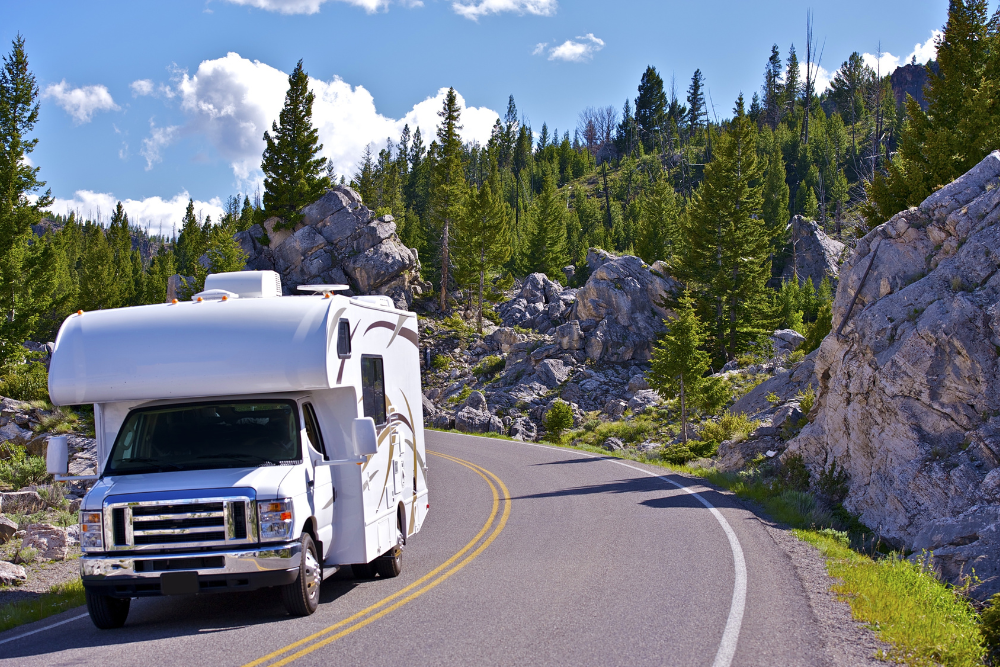
Now that you have a better appreciation of how complex and important your RV tires are we can discuss brands and deals, although after reading the ir2.com forum on this subject I’m confident there is no consensus among RV owners. What I did learn, however, was that there are only a few manufacturers who make tires specifically for RVs. On the forum, there was a consensus that there are just two manufacturers with RV specific tires: Michelin, and Goodyear, but one ir2.com contributor also suggested that Continental (a German based company with manufacturing facilities in South Carolina) also has a line of tires for RVs.
However, my additional research on various tire company websites like Yokohama, Bridgestone, and Goodrich, all list specific lines of tires for RVs. Therefore, like most topics on a forum the debate continues. Additionally, the discussions include whether a tire made specifically for RVs actually performs better than a set of truck or auto tires.
The one thing that seems to transcend these arguments is that the top brands, Michelin, and Goodyear, are more expensive than other brands like Bridgestone, Yokohama, Falken, Hankook, or General tires. Regardless of the brand you choose, it’s important to understand as much as you can about your RV tires so you can ask intelligent questions when it’s time to replace them. And for that reason, I hope this information has piqued your interest so you can do your own research to make sure your tires are the right fit for your needs.
Deals
Many people on the forums reported getting better prices when they shopped for less well known brands and most people were happy with the tires they bought. Also, one RVer testified that his FMCA (Family Motor Coach Association) membership saved him a couple hundred dollars per tire and the FMCA membership is only $50 per year. Also, Good Sam is currently offering a 65% saving on their tire and wheel replacement insurance. So, it might be worth it to explore some third party options.
Summary
The issues of RV tires are much more complex than just deciding to buy a domestic brand versus a foreign brand, and how much each tire is going to cost. When you consider how important RV tires are you’ll start thinking about them differently and hopefully will never just take them for granted. After all, you and your family are traveling down the road on less than 150 square inches of rubber. Wouldn’t it be prudent to understand all you can about this dynamic interface between your RV and the road?

9 Valuable Upgrades for Boosting Your RV’s Market Value
How To Safely Store Your RV

Winterizing Your RV: All-in-One Checklist