
Protecting Your RV From Pests in the Cooler Months

Before we do a deep dive into ways to protect your RV from pests in the cooler months, we need to determine what types of pests could damage your RV and hinder your enjoyment in it’s use. There are pests that can penetrate the interior of the RV as well as pests that can damage the outside or even pests that just hang around the outside limiting your enjoyment of the whole RVing experience.
Pests that Threaten your RV Life
It’s not just rodents you need to worry about! The threat also includes but is not limited to:
- Insects
- Birds
- Bears
- Alligators
- Raccoons
- Skunks
- Possoms
- Snakes
Protect the RV Interior from pests
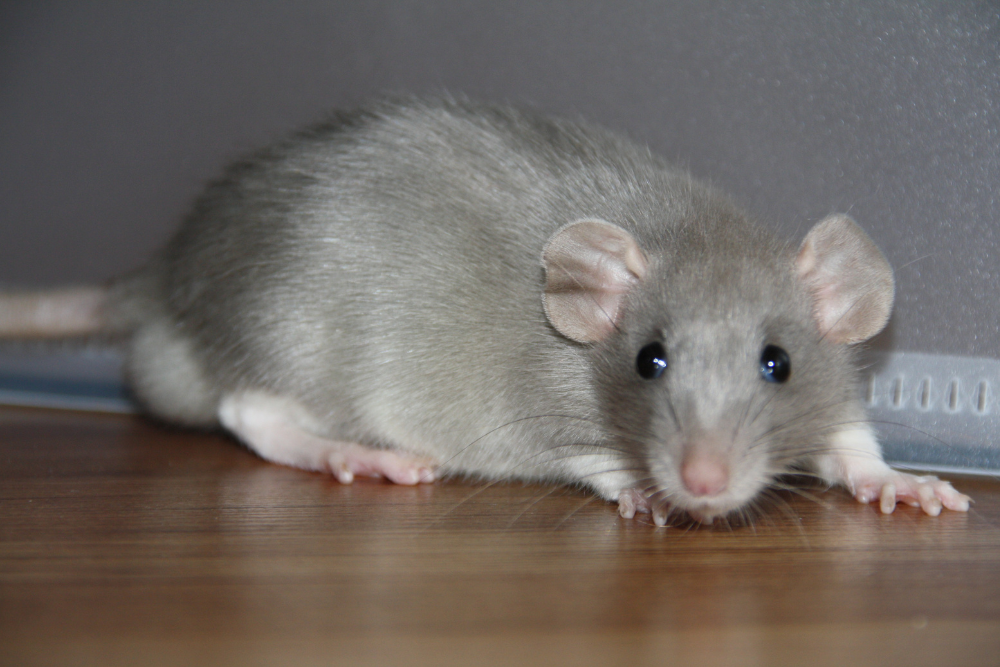
Some pests can reach the interior of your RV. These include rodents and insects. To reduce this risk, plug holes into your RV and gaps around all plumbing and electrical connections. As a guideline, a mouse can enter through a hole no larger than a US quarter and that opening doesn’t need to be round. They can flatten themselves out to fit through ridiculously small gaps. And insects need even less space to become a problem.
One recommended material to plug rodent access points is steel wool. It is flexible and can easily be pressed in between ridged surfaces to fill the gap and rodents won’t try to bypass the steel wool because they don’t like the feel of it on their teeth or faces. Expandable foam is another method for preventing rodent intrusion, but I’m not sure if some persistent mice or rats might not be able to gnaw away the hardened foam to re-establish a known entry point. The foam would work best before any intruders establish a habit of entering your RV, then after applying the foam try to park in a less infested area.
Use DE (Diatomaceous Earth) or an electronic pest repeller to get rid of insects. DE is safe for humans and pets but deadly to insects because the super fine grains of this powder jam up the joints in the insect’s exoskeletal anatomy. You can spread a thin layer of DE on the floor or walls around any known point of entry.
DE is very effective on fleas, ticks, and ants. It can safely be rubbed into pet fur where it will come in contact with any bugs and ultimately kill them. I have personally spread DE on the floors and carpets in my entire RV to kill ants and fleas. It is an extremely fine powder which becomes airborne during application, so use a mask to facilitate better breathing when using DE. It only works indoors because it must remain bone dry to have any effect on the pests but it is an effective insect repeller that is harmless to humans and pets.
Use a combined (ultrasonic and electromagnetic) repeller to eliminate pests. These electrical devices repel insects and rodents, prevent nesting, and discourage pests from returning. Some of these repellers cover spaces from 800 to 1900 sq ft.. Most ultrasonic repellers are silent or nearly silent, and some use random strobe LEDs to further disrupt and confuse pests.
One product, Bye Critter, from The Pest Defence, got a 9.9 rating from CTR (Consumer Tested Reviews) and the only negative criteria reported by this independent review organization was value to price as compared with similar repellers in the market. However, a pack of 4 of these slim hi-tech repellers sells for under $130 and 4 of them should easily cover even the largest fifth wheel, motorhome, or trailer. You might even have one left over for your garage.
Protect the RV Roof and Exterior from pests
Birds (nests and feces) threaten the exterior of your RV. Bird feces is not only unsightly, it can also damage or stain your RV’s paint. And bird nests can impede the customary workings of outdoor systems, like air conditioning units and exterior mirror adjustment functionality.
Bees are an annoying pest that pose a significant and unique hazard. They can create nests (hives) virtually anywhere, like in decayed trees, stumps, or logs around your RV site. They also can establish hives in the ground, or in your mirror housing, or in the RV’s engine compartment, or under your air conditioner covers, or inside the furnace cabinet, or dryer duct.
The unique danger of these pests is in you unexpectantly disrupting the beehive then trying to deal with a swarm of stinging insects while you are in a compromised setting, like on the roof of your RV or while doing some repair work under the RV. No matter where you are these is never a convenient location for warding off an angry swarm of bees.
You could be on the roof, lying on your back under the RV, or working on the furnace or engine. In the frenzy of the battle (which you are not going to win) you are in jeopardy of falling off the roof or slamming you head into a hard surface under the RV or in some other way you could suffer secondary injuries beyond the multiple bee stings from the swarming insects. And multiple bee stings can also be life threatening depending on your sensitivity to the venom.
There are limited preventions for the threat of birds and bees, but regularly inspecting the roof, mirrors, dryer vent, water heater, and furnace cabinet to make sure there are no pests trying to establish nests in any of the recessed areas is helpful in reducing the number of unwelcome pests you may encounter while RVing. If you detect early signs of nests or hives remove the early structures, i.e. honeycomb, or bird nests, before any of these structures turn into full blown habitats. This could dissuade birds from returning and removing honeycomb hive structures plus using a repellent spray may keep the bees from returning.
Protect the RV Under Carriage from pests
Rodents are not the only annoying pest you might find under your RV or trying to create a nest in the undercarriage. Rabbits, possums, raccoons, skunks, snakes and insects, such as Black Widow spiders, or Fire ants may also be unwanted invaders under your RV.
To reduce the risk of attracting a host of pests, avoid creating the perfect hideout for them, by putting a skirt around the bottom of your RV.
- RV Skirts will help you reduce your power bill by insulating your RV but they are bot recommended because they create the perfect warm, dry, out-of-the-wind, habitat for pests.
- RV Skirts do not keep unwanted pests from hiding and nesting under your RV. the skirt may seem complete and secure but mice, rats, snakes, racoons, bunnies, and insects will all find a way under or around the RV skirt.
- Skirts also limits your view and ability to detect any nesting activity that might be developing under there.
- You certainly don’t want a family of skunks or rattlesnakes creating a nest under your RV.
- Some rodents and even rabbits can gnaw their way through any exposed wiring under an RV which can create real problems and expensive repairs and they will not easily be repelled by a skirt.
- An RV skirt may save you a little money but this feature enhances the livability of the under-vehicle environment for pests.
Most pests that are attracted to the under carriage of your RV are looking for an out of the way place to nest.
The darkened environment is also an attractant, so placing lights under your RV at night can help you reduce unwanted visitors.
Some new RVs are equipped with under RV lighting to make this simpler.
But if your RV is not so equipped you can string a strand or two of white or blue Christmas lights from one end of your coach to the other. This does not need to be complicated. You can just lay the lights right on the ground to produce enough illumination to discourage rodents and bunnies from camping out under your camper. Snakes, ants, roaches, and other insects might also be repelled by the lights.
We were in one park in Florida that had signs throughout the campground that read…
DANGER: Alligators and Snakes In This Area
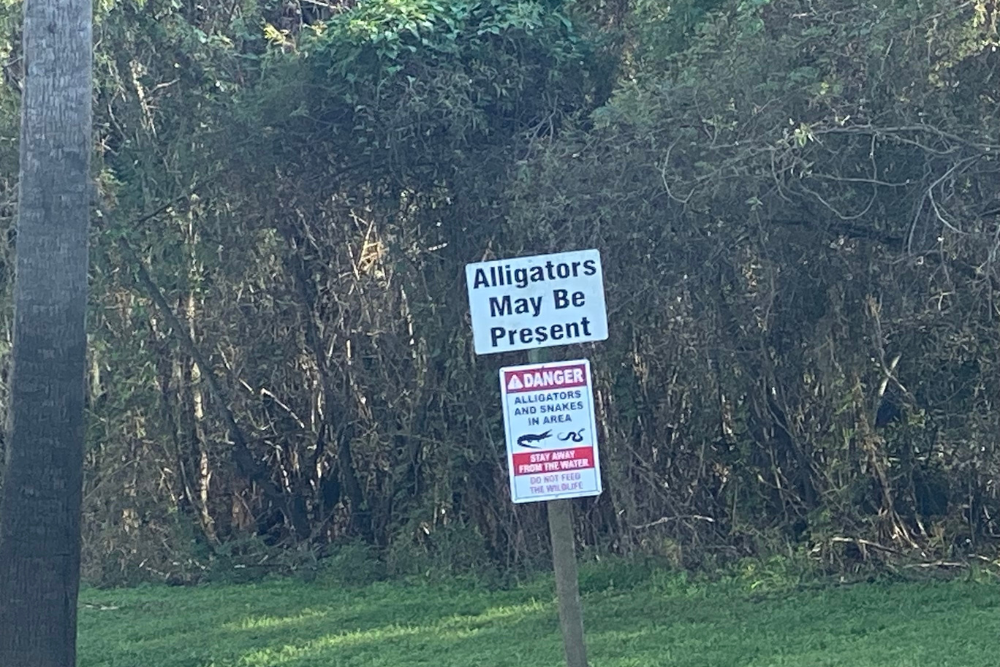
I didn’t see either of these two pests in that campground, but the fire ants were ubiquitous and troublesome. The park management routinely sprayed the fire anthills but those harsh chemicals posed an even bigger threat to us and our pets then the presence of the ants. Using any type of repellant must be evaluated to make sure it doesn’t also pose a threat or damage the environment.
Awareness helps
The bottom line is that you have to be aware of all the pests and all the dangers. The birds and bunnies in the park may be lovely but they can wreak havoc with your paint and wiring, or they can make damaging nests in places not engineered for large chunks of debris. Venomous snakes and bees can pose a very real health threat and other pests are annoying and/or may cause real damage to your RV. All of these marauding invaders are to be avoided like poison ivy.
They may be part of the natural environment (which we, as campers, are invading) but that doesn’t mean I want a snake wrapped around my ankle, or ants in my sandwich, or a mouse in my kitchen cabinets. Awareness is your best defense. Look around. Talk to other campers. Be Alert. Keep a close eye on all the outdoor surfaces in and around your RV. Use all your senses, use sound, smell, vision, even touch, to detect the presence of pests. However, I don’t recommend ever using the sense of taste to detect unwelcome pests. That’s just a bridge too far.
Frequently Asked Questions:
Do ultrasonic pest repellers work in RVs?
Yes, electrical repellers do work in an RV especially since RVs are generally smaller and more confined spaces than the average home for which the repellers were originally designed. Smaller spaces gives invading pests less territory in which to forage, hide, and nest. And smaller spaces allows for more direct exposure to the effects of the repeller.
Additionally, if you can string a power cord under your RV, I believe electronic repellers would be effective in removing the appeal of the under the RV habitats for a variety of RV pests.
Many repellers create both ultrasonic waves and electromagnetic fields to disrupt the behavioral patterns of insects and rodents. The waves and fields from the repellers makes the environment unattractive to invading pests. Some repellers also use LED strobe lights for more disruption.
What is the best rodent repellent for campers?
My research led me to this ultrasonic repeller. Which is effective for both insects and rodents. It is silent and odor free, uses no harsh chemicals, and is safe for pets. Bye Critter from Pest Defence.
There are many electronic pest repellers. They all work on pretty much the same strategy, however some add optional LED strobe light to the repeller’s face so getting it placed where the LED could have an impact on the pests might be a logistical challenge, but the strobe light is an added feature for some devices but the primary function of all electronic repeller is to create ultrasonic and electromagnetic fields which disrupt the patterns and rhythms of individual and group activities of invading pests.
If you have particularly entrenched pests in your RV you might want to use different brands of repellers simultaneously. The function and frequencies of these different devices might provide a broader scope of deterrence. One invading species might be more susceptible to one frequency while other creatures respond to a different frequency.
Pests, like people, are all different, and they respond differently to unique stimuli, just as we do. Some people are allergic to peanuts while others gobble them down by the handful. Rodents and insects are unique by species, or subsets thereof, and they can be unique at the individual level, as well. So, bombarding them with a broader range of deterrence will repel the largest number of unwanted pests.
Don’t Let Summer Fry Your RV: 5 Must-Do RV Electrical System Checks
20 Road Trip Games and Activities for the Whole Family
Weathering the Storm: RVing Safely in Severe Weather