
How to Safely Accept Payment When Selling an RV Privately
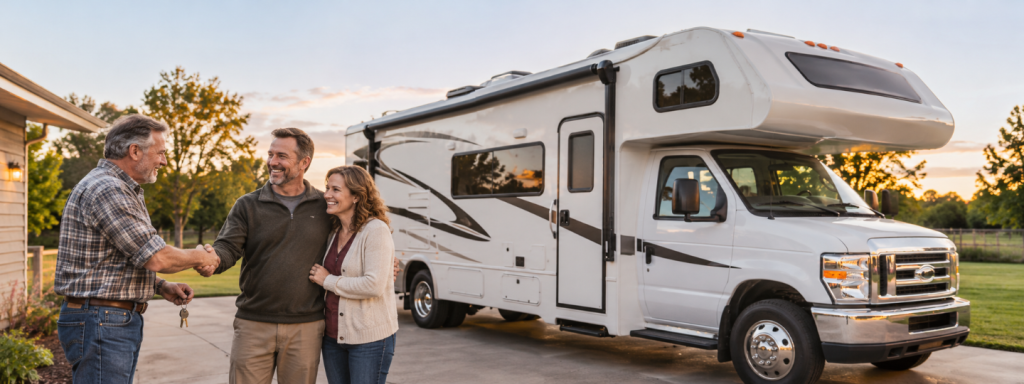

Selling your RV privately is one of the best ways to get full value for it. You set the price, you talk with real buyers, and the money goes to you instead of a dealer’s margin. Getting paid is usually the easiest part of the whole sale when you walk into closing day with a plan.
Here’s the good news: most RV buyers are honest people who want a smooth, clean handoff just as much as you do. A clear payment process protects both of you and makes the final handshake feel like a celebration instead of a worry.
This guide covers how to safely accept payment when selling an RV privately: which payment methods give you the most confidence, how to verify funds before the title changes hands, what to do if you still owe on a loan, and how to spot the rare buyer who isn’t who they say they are.
The Best Ways to Accept Payment for an RV
The safest ways to accept payment for an RV all have one thing in common: a bank confirms the money is real before the title and keys change hands. Any of the options below can work well. Pick the one you and your buyer are both comfortable with, and agree on it before closing day.
Meet at the buyer’s bank
This is a favorite among private sellers for good reason. You meet the buyer at their bank, the teller issues a cashier’s check or starts a wire while you watch, and there’s no question about whether the funds are real. Many banks also have a notary on staff, which is handy if your state requires a notarized title or bill of sale.
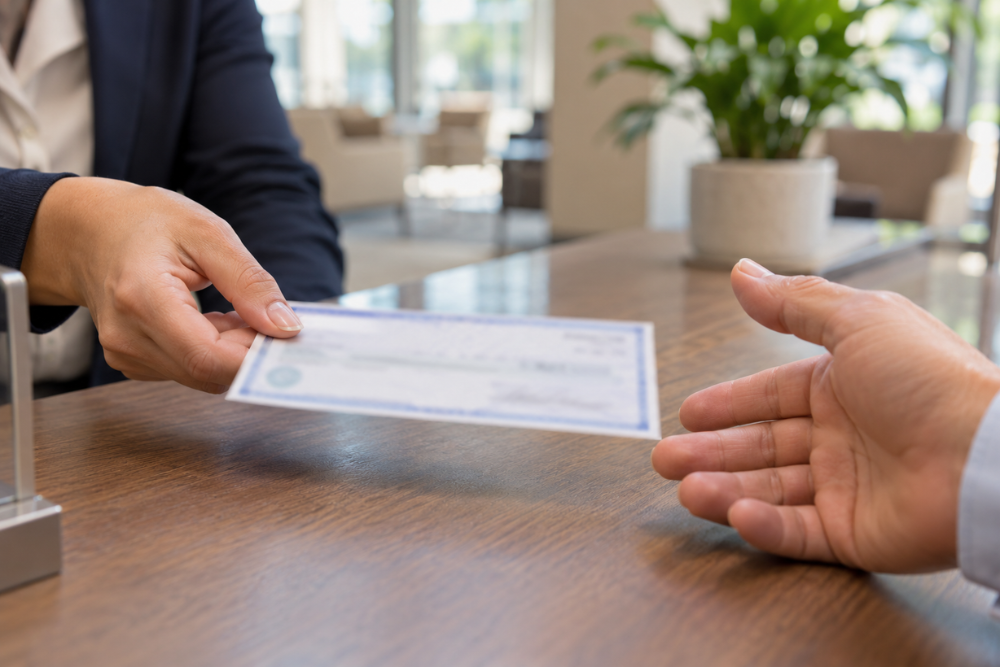
Cashier’s check, verified with the issuing bank
A cashier’s check is backed by the bank, not the buyer’s personal account, which makes it a popular choice. The key is verification. Look up the issuing bank’s phone number yourself instead of using the number printed on the check, call to confirm the check is valid, and deposit it before you sign anything over. Counterfeit cashier’s checks can look completely real, so that phone call is worth the five minutes.
Bank wire transfer
A wire moves money directly from the buyer’s bank to yours, and it’s hard to reverse once it lands. Give the buyer your wire instructions straight from your bank, then confirm the funds have posted by logging into your account or calling your bank. An email or screenshot saying the wire was sent is not the same as money in your account.
Cash, counted at your bank
Cash works well for smaller RVs and towables. To keep it simple and safe, close the deal at your own bank, let the teller count and check the bills, and deposit it on the spot. That way you’re never driving home with a large sum.
Buyer financing paid by the lender
If your buyer is financing, their lender typically pays you directly or pays off your lien. Confirm the loan approval by contacting the lender through a phone number you look up yourself, and wait until the funds arrive before handing over the title.
A licensed escrow service
For long-distance sales, a licensed escrow company can hold the buyer’s money until both sides have done their part. Choose the service yourself and look up its website directly. If a buyer insists on an escrow site you’ve never heard of and sends you a link, that’s a reason to pause.
Payment Methods to Skip on a Big-Ticket Sale
Some payment methods are great for splitting a dinner bill but aren’t built for a sale this size. When you accept payment for something as valuable as an RV, it pays to stick with bank-verified funds and pass on these:
- Personal checks. A personal check can bounce days or even weeks after the funds look available in your account.
- Peer-to-peer payment apps. Most have transfer limits well below an RV’s price, and they’re designed for paying people you already know.
- Money orders. They come in small amounts, so an RV sale would take a stack of them, and they’re easy to counterfeit.
- Any overpayment. If a buyer sends more than your asking price and asks you to refund the difference, that’s a classic fake check scam. The Federal Trade Commission explains how these scams work and why a check that has “cleared” can still turn out to be fake.
The simple rule: only accept payment for the exact sale price, and only once your bank confirms the money is yours.
A Simple Closing Day Plan: Confirm Funds First, Then Title and Keys
The order of operations is what makes a private sale feel safe. Follow these steps and you’ll accept payment with confidence every time.
- Agree on the payment method in writing. Settle it by text or email before the buyer travels, so there are no surprises at the meeting.
- Pick a bank as your meeting spot. The buyer’s bank or yours both work, ideally on a weekday during business hours so you can verify funds on the spot.
- Verify the funds. Call the issuing bank on a number you looked up, or confirm a wire has posted to your account.
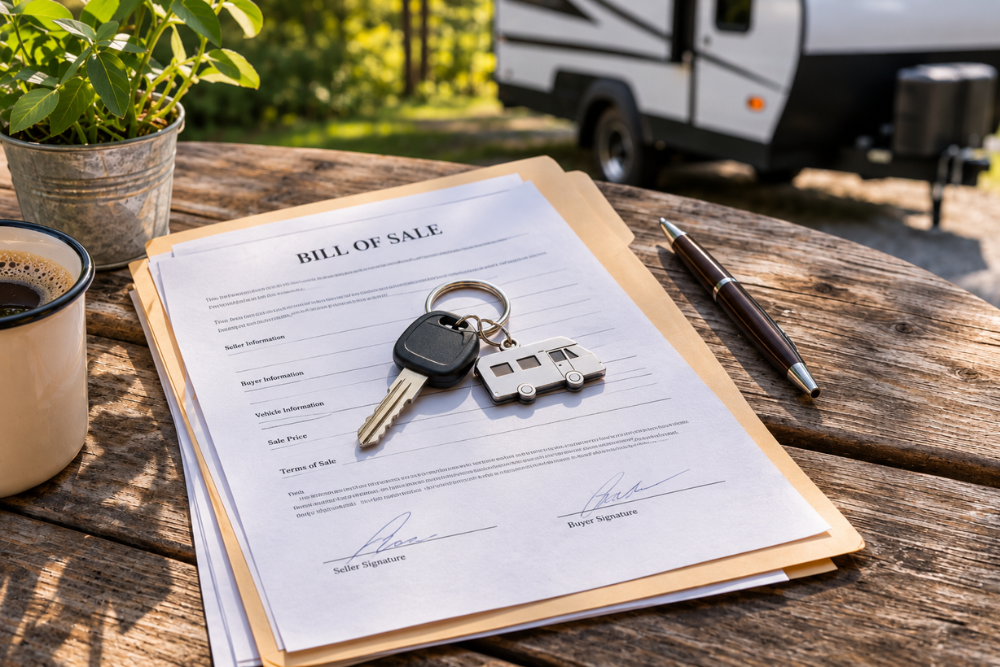
- Sign a bill of sale. Include the sale price, date, VIN, both names and signatures, and “sold as-is” if that’s your agreement. Make a copy for each of you.
- Sign over the title. Only after the money is confirmed. Follow your state’s rules for where to sign and whether a notary is needed.
- Hand over the keys. Include spare keys, manuals, and any maintenance records. Buyers love a tidy folder of paperwork.
- Wrap up the details. Remove your plates if your state requires it, file a notice of sale or release of liability if your state offers one, and cancel your insurance once the transfer is complete.
How to Accept Payment When You Still Owe on Your RV
Owing money on your RV doesn’t stop a private sale. It just adds your lender to the closing. Plenty of sellers do this every day, and it goes smoothly with a little coordination.
- Get a payoff letter. Ask your lender for the exact payoff amount and how they accept payment from a third party.
- Close at your lender if you can. If your lender has a local branch, meeting there keeps everything in one room. The buyer pays the lender the payoff amount and pays you the rest.
- Lender out of town? The buyer’s funds can go to the lender first, with the remaining balance sent to you once the loan is paid off. A licensed escrow service can also manage this step.
- Explain the title timeline. Your lender holds the title until the lien is released. Note in the bill of sale that the title will be mailed to the buyer once the lender releases it, so everyone knows what to expect.
Payment Red Flags Worth Knowing
Real buyers ask about the RV: the floorplan, the slides, the maintenance history. Payment scams tend to skip the RV and focus on the money. Keep an eye out for:
- A buyer who offers more than your asking price, or wants to add extra for a “shipping agent” you’re supposed to pay
- Someone who wants to buy sight unseen, pay first by check, and send a transporter to pick it up
- Pressure to sign the title before the funds are confirmed
- Proof of payment that’s only an email, text, or screenshot
- A buyer who insists on a specific escrow site and sends you the link
- Any request for your online banking login or a verification code
A genuine buyer won’t mind you taking a few minutes to verify. If someone pushes back when you want to accept payment the safe way, you’ve learned what you needed to know, and the right buyer is still out there.
Sell Your RV With Confidence at NationalVehicle.com
Knowing how to accept payment safely is one piece of a great private sale. The other piece is finding the right buyer in the first place, and that’s where NationalVehicle.com comes in.
Since 1999, NationalVehicle.com has helped RV owners sell privately and keep the full sale price. When you list with us, your RV is featured on six top RV marketplaces, so it reaches serious shoppers across the country. Our team screens buyers before they reach you, so your time goes to people who are ready to move forward. And our sales team supports you from the first inquiry through the handover, so closing day feels like the finish line it should be.
Curious what your RV could bring? See what yours is worth with a free valuation, then list yours today and get ready to hand over the keys to a happy new owner.
Frequently Asked Questions
What is the safest way to accept payment for an RV?
Meeting the buyer at their bank is one of the safest options, because you watch the teller issue a cashier’s check or send a wire. There’s no guesswork about whether the money is real, and many branches have a notary on hand if your state requires one for the title or bill of sale.
A wire transfer you’ve confirmed in your own account is another strong choice, especially when the buyer lives out of state. Whichever method you pick, agree on it ahead of time so closing day runs smoothly for both of you.
What is the safest way to accept payment for an RV?
No. Sign the title and hand over the keys only after your bank confirms the funds are real and in your account. Once the title is signed, the buyer can register the RV in their name, so the title should always be the last step, never the first.
A genuine buyer will understand this and expect it. Most are happy to meet at a bank or wait while you make a quick verification call, because a clean process protects them too.
How long should I wait before trusting a cashier’s check?
Banks often make check funds available within a few days, but a fake check can take weeks to be discovered. If the check turns out to be counterfeit, the bank takes the money back out of your account, even if you’ve already handed over the RV.
Instead of waiting it out, call the issuing bank on a number you looked up yourself to confirm the check is valid. Even better, meet at the buyer’s bank so the check is issued and verified in front of you before you accept payment.

Avoid Getting Scammed When Selling An RV
Winterize First or List First? A Straight Answer for Fall Sellers
End of Summer, Peak Interest: How to Price Your RV for the Fall Buyer Rush