
How Much Is My RV Worth? A Practical Guide to Determining Private-Party Value
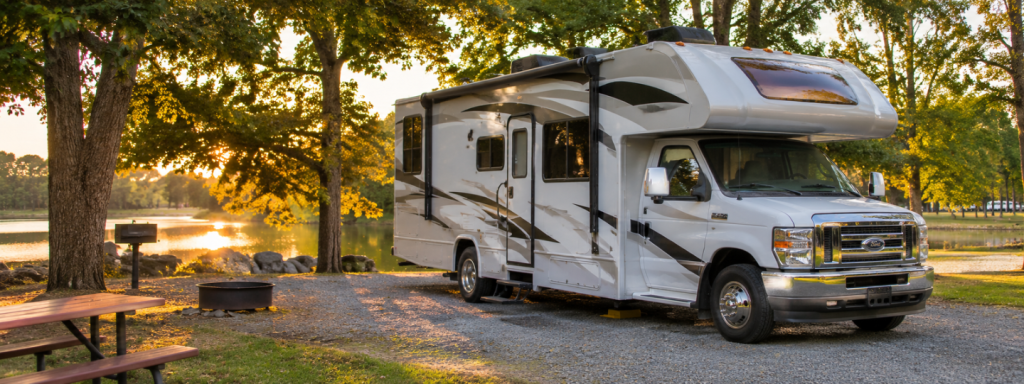

Sooner or later every RV owner asks it: “How much is my RV worth?” Maybe you’re ready to upsize, downsize, or hang up the keys for good. Whatever the reason, the number you put on your rig decides how fast it sells and how much money you walk away with. Price it too high and it sits while the calendar does the depreciating for you. Price it too low and you hand thousands of dollars to the buyer.
This guide is the long, practical version. We’ll show you how private-party RV value differs from trade-in and retail, how fast each type of RV depreciates, what’s happening in the 2026 used RV market, every factor that pushes your value up or down, and a step-by-step method for setting an asking price that’s both realistic and profitable. If you just want a number now, skip ahead and request a free RV valuation from National Vehicle. It costs nothing and there’s no obligation.
What “Private-Party RV Value” Actually Means
Before you can answer “what is my RV worth,” you need to know which kind of “worth” you mean. The same RV can have several different values depending on who is buying it and how.
The Four Values Every RV Has
- Dealer retail value: What a dealer asks for a comparable used RV on the lot. It includes the dealer’s reconditioning costs, overhead, warranty offerings, and profit.
- Private-party value: What a buyer pays you directly, owner to owner. It’s typically below dealer retail (the buyer isn’t paying for dealer overhead) but well above trade-in.
- Trade-in value: What a dealer credits you toward another purchase. National Vehicle’s seller FAQ notes that a dealership will typically offer you 20 to 25% below retail, which can cost you thousands of dollars. nationalvehicle
- Wholesale or auction value: What dealers pay each other or at auction. This is the floor of the market. Black Book’s wholesale auction data showed average motorhome auction prices of $54,848 and average towable prices of $15,203 in its late-2025 report, values that reflect what the trade pays, not what a private buyer pays.
Why the Gap Matters to You
Here’s a simple illustration. If your RV’s average retail value is $50,000, a trade-in offer 20 to 25% below that is $37,500 to $40,000. A well-prepared private sale might land in the $44,000 to $47,000 range depending on condition and negotiation. That spread of $5,000 or more is real money, and it’s the main reason selling for-sale-by-owner remains the best way to capture your RV’s full value. It’s also why National Vehicle exists: we help private owners sell their RVs themselves, without giving the margin away.
How Fast RVs Depreciate, by Class
Depreciation is the single biggest force acting on your RV’s value. The biggest drop happens in the first year or two, then the curve flattens. How steep the curve is depends on what you own.
Typical Depreciation and Selling Speed by RV Type
The depreciation ranges below are industry estimates compiled from multiple RV valuation guides, and published figures vary by source, so treat them as a general picture rather than a precise number for your rig. The days-to-sale figures come from National Vehicle’s own study of customer-confirmed private-party sales from October 2024 through September 2026.
| RV Type | Typical First-Year Drop (est.) | Approx. Value Lost by Year 5 (est.) | Median Days to Confirmed Private Sale (National Vehicle study) | Resale Notes |
|---|---|---|---|---|
| Class A (gas and diesel) | 20 to 30% | 50 to 60% | 80 days | Highest dollar losses; large units face the most market pressure in 2026 |
| Class B (camper van) | About 15% | 35 to 45% | 60 days | Generally the strongest value holders |
| Class C | About 18 to 20% | 45 to 55% | 61 days | Steady demand; popular with families and first-time buyers |
| Travel trailer | 16 to 20% | 40 to 50% | About 74 days | Most popular segment; values steady in 2026 |
| Fifth wheel | 18 to 25% | About 45% | 69 days | Condition matters enormously |
| Toy hauler | About 19% | 45 to 55% | Not broken out | Garage condition and generator hours matter |
| Pop-up / folding camper | 20 to 25% | Varies widely | Not broken out | Canvas and lift system condition drive price |
Which RVs Hold Their Value Best?
Class B camper vans and well-known premium brands tend to hold value best. Airstream is the classic example, and Black Book’s Q2 2026 Recreational Vehicles Market Update says larger Class A motorhomes “continue to face the most pressure due to higher price points, while Class B units remain relatively resilient.” Lower-priced towables also remain in steady demand. J.D. Power reported that used travel trailer values averaged $27,164 in the second quarter of 2026, essentially flat from $27,100 a year earlier, and folding camping trailer values rose about 6% year over year.
The takeaway: if you own a popular towable or a Class B, the market is fairly stable for you right now. If you own a large Class A, accurate pricing matters even more, because buyers in that segment are choosy.
The 2026 Used RV Market: What Sellers Need to Know
Your RV’s value isn’t set in a vacuum. Here’s what’s shaping private-party RV prices as we head into the end of 2026.
Fewer New RVs Are Being Built
The RV Industry Association (RVIA) reported 23,230 wholesale RV shipments in September 2026, down 9.2% from September 2025, and year-to-date shipments of 230,511 units were down 13.7%. RVIA’s Fall 2026 RV RoadSigns forecast, prepared by ITR Economics, puts 2026 wholesale shipments at approximately 290,000 units (a range of 284,600 to 295,400), a 15.3% decline from the 342,220 units shipped in 2025, and RV News notes that at the low end, shipments would be the lowest since 2011. Fewer new units on the way can support used values over time, especially for late-model, well-kept rigs.
Used RVs Are the Value Play
RV Dealers Association president Phil Ingrassia wrote in July 2026 that the pre-owned market “continues to be one of the most resilient segments of the RV industry in 2026,” citing National Powersports Auctions data showing average pre-owned RV prices up 10.6% year over year. When buyers are price-conscious, many skip new and shop used, and that is good news for private sellers.
Interest Rates Are Rising Again
On September 16, 2026, the Federal Reserve raised its benchmark rate by a quarter point to a 3.75% to 4.00% range, its first hike since 2023, and officials signaled another increase could come before year-end. Higher rates raise monthly payments for financed buyers, which makes them more price-sensitive. LendingTree’s 2026 RV loan data shows new RV loans averaging 7.60% APR and used RV loans averaging 7.66%. In practical terms: an overpriced RV gets ignored faster in a rising-rate market, while a correctly priced one still attracts serious buyers.
Big Motorhomes Are Sitting Longer
Dealer-lot data from Rapidious showed used Class A motorhome days on lot jumping from 172 days in March 2026 to 330 days in June 2026. Used travel trailer days on lot improved over the same period. If you own a Class A, that’s your cue to price with precision from day one.
Seasonality: Fall, Winter, and the Spring Rush
RV values follow a seasonal rhythm. J.D. Power’s 2025 year-end report found that values in November and December averaged 6 to 10% lower than in September and October across major segments (for example, 9.6% lower for travel trailers and 10.3% lower for fifth wheels). Buyer traffic then picks back up from February into spring as people plan for camping season.
That doesn’t mean you should wait. Holding an RV all winter carries real costs: storage, insurance, loan payments, and another model year of depreciation. Fall and winter buyers also tend to be serious and motivated, and snowbirds heading to warm-weather states keep demand alive in the South and Southwest. Pricing for the season, rather than waiting it out, is often the smarter move. Many sellers list now so they’re already in front of buyers when the spring rush starts.
Every Factor That Moves Your RV’s Value
When you ask “how much is my RV worth,” these are the details that separate your rig from every other one with the same year, make, and model.
The Big Three: Year, Make/Model, and Class
- Model year: The starting point for every valuation. Newer is worth more, but the curve flattens as RVs age.
- Brand and model reputation: Buyers pay more for brands known for build quality, resale strength, and dealer support.
- Class: As the table above shows, a Class B and a Class A of the same age can depreciate very differently.
Mileage, Engine, and Generator Hours (Motorized RVs)
- Odometer mileage: Lower is better, but extremely low mileage on an older coach can raise questions about seals, tires, and systems that sat unused.
- Engine and chassis condition: Service records for the engine, transmission, and brakes carry real weight. Diesel pushers with documented maintenance are prized.
- Generator hours: Buyers check them. DealerBackstock’s wholesale analysis lists a generator package with under 500 hours among the specs that should trigger an upward adjustment from guide value.
Floorplan, Slide-Outs, and Livability
- Floorplan popularity: Bunkhouses, rear-living layouts, and well-designed couple’s floorplans sell faster than awkward or niche layouts.
- Slide-outs: Slides add living space and value, but only if they work smoothly and the seals are in good shape.
- Sleeping capacity and storage: Families shop by bunks; full-timers shop by storage and cargo capacity.
Condition: Where Value Is Won or Lost
Condition is the biggest swing factor between a strong private-party price and a disappointing one.
- Roof: Buyers will climb up or ask for photos. Cracked sealant, soft spots, or a worn membrane raise immediate red flags.
- Water damage and delamination: Bubbles or waves in the sidewalls, soft floors, stains, and musty smells can cut value sharply. Alliance CoachWorks notes that when delamination spreads across multiple slide-outs or entire sidewalls, repair costs can quickly reach 40 to 60% of the rig’s total market value.
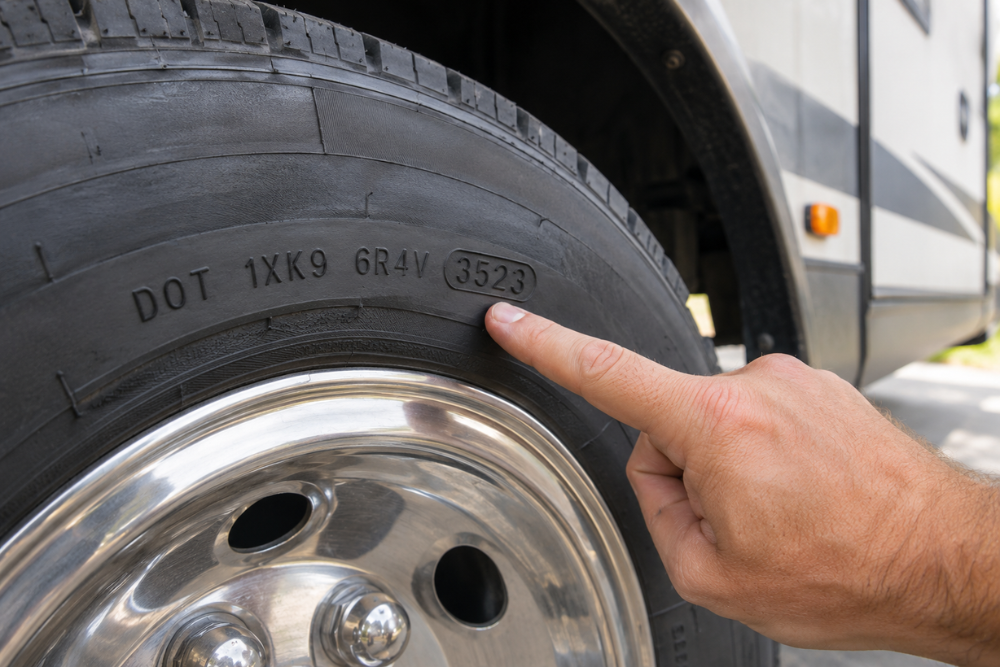
- Tires and tire age: Look at the four-digit DOT date code on each sidewall (for example, “2321” means the 23rd week of 2021). Most tire experts recommend replacing RV tires every 5 to 7 years regardless of tread, and savvy buyers will deduct the cost of old tires from their offer.
- Appliances and systems: Fridge, furnace, water heater, A/C, generator, leveling jacks, awning, and electrical all need to work. Each broken item becomes a negotiating point.
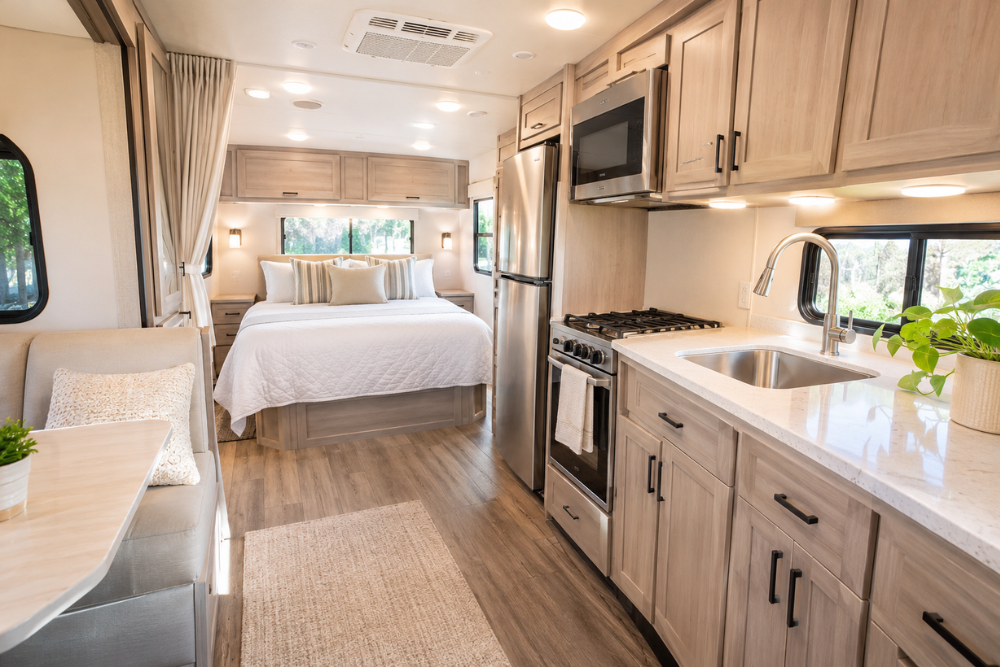
- Interior wear: Upholstery, flooring, window shades, and odors (smoke and pets especially) affect first impressions and price.
Maintenance Records
A binder of receipts is one of the cheapest ways to add value. Records prove care, reduce buyer anxiety, and justify asking at the higher end of your range.
Upgrades: Which Add Value and Which Don’t
Upgrades rarely return what you paid. Value them at what the market will pay today, not at your receipt totalk
- Often add meaningful value: Professionally installed solar with a lithium battery bank (DealerBackstock’s wholesale analysis found a factory 400-watt solar and 200Ah lithium setup on a two-year-old travel trailer commands a documented premium of $2,000 to $4,000 in active wholesale markets), a quality inverter, newer tires, recent roof work, and well-documented suspension or handling upgrades.
- Add some value or speed up the sale: Upgraded mattresses, LED lighting, newer awning fabric, backup cameras, and surge protection.
- Rarely add value, or can hurt it: Highly personalized décor, custom paint or wraps, DIY electrical work without documentation, and modifications that stray far from the original design. DealerBackstock notes that aftermarket technology, non-structural cosmetic upgrades, and brand-specific luxury appointments “fade faster than their MSRP contribution.”
Title, Accident History, and Location
- Title status: A clean title is expected. Salvage, rebuilt, or branded titles reduce value significantly. If you still have a loan, that’s common and workable; see our guide on how to sell your RV with a loan.
- Accident and damage history: Disclose it honestly. Properly repaired damage with documentation is far less harmful to value than surprises discovered during a buyer’s inspection.
- Regional pricing: Demand varies by region and season. Warm-weather states see more steady winter demand, while northern markets peak in spring.
How to Find and Use Comparable Listings the Right Way
Comparable listings (“comps”) are the most powerful tool for answering “what is my RV worth” in today’s market, but only if you use them correctly.
Step 1: Find True Matches
Start by browsing comparable RVs for sale on National Vehicle, then broaden your research to other comparable listings. Look for:
- Same make, model, and floorplan (not just the same brand)
- Same or adjacent model year (within one year either way)
- Similar mileage (motorized) or similar overall condition (towables)
- Similar options and equipment
Aim for at least three to five strong comps. If you can’t find exact matches, widen the year range slightly and adjust.
Step 2: Adjust Each Comp Up or Down
No two RVs are identical. Adjust each comp’s price to reflect differences from your RV:
- Your RV has newer tires and the comp has 7-year-old tires: adjust your value up.
- The comp has 15,000 fewer miles: adjust your value down.
- The comp has documented solar and lithium and yours doesn’t: adjust your value down.
- Your roof was resealed last year with receipts: adjust your value up.
Step 3: Remember That Asking Price Is Not Selling Price
This is the biggest trap. A listing price is a hope, not a result. Many listings sit unsold for months because they’re overpriced, and almost every RV that sells does so after some negotiation. When an identical model has been listed for months, it’s usually telling you what the market won’t pay. Sold history data, what buyers actually paid, is far more reliable than asking prices, and it’s one of the inputs National Vehicle uses when we prepare your free valuation.
Step 4: Separate Dealer Comps From Private-Party Comps
Dealer listings typically include reconditioning, warranties, and dealer profit. If you’re comparing to a dealer-listed RV, expect your realistic private-party number to come in below that dealer asking price.
How to Use J.D. Power (NADA) RV Values Correctly
There’s no Kelley Blue Book for RVs. The closest thing is J.D. Power RV values, the guide formerly known as NADA Guides, which lenders, insurers, and dealers widely use as a baseline.
What the Numbers Mean
- Suggested list price: The original MSRP when new.
- Low retail: Roughly what a dealer might retail a unit in rougher condition for; trade-in offers usually come in below this number.
- Average retail: What a dealer would typically ask for a clean unit in good condition.
Base Value vs. Options
J.D. Power lets you price your RV at base value or add factory options. Only add options your RV actually has, and remember that buyers and dealers often give little credit for options on older rigs.
The Limitations
Book values are a helpful starting point, but they have real blind spots:
- They can’t see your RV’s actual condition, maintenance history, or water damage.
- They’re national averages that can lag fast-moving local markets.
- They don’t reflect seasonal swings well.
- Aftermarket upgrades usually aren’t captured.
For a private sale, a well-kept RV often lands somewhere between low retail and average retail, adjusted for condition and real comps. That adjustment is the hard part, and it’s exactly where National Vehicle’s free valuation helps. We look at current listing prices, book values, dealer comparable units, sold history data, and your RV’s condition to give you a realistic private-party number. nationalvehicle
Professional Appraisals: When Are They Worth It?
A certified appraisal includes a physical inspection and a written report. Typical costs run about $150 to $500 per RV, depending on the type of RV, location, and the appraisal’s purpose.
An appraisal can make sense if:
- Your RV is rare, custom, vintage, or heavily modified (for example, a converted bus or homemade build)
- You need documentation for insurance, an estate, a divorce, or a charitable donation
- You’re selling a very high-value coach and want third-party backup for your price
For most everyday travel trailers, fifth wheels, and motorhomes, a formal appraisal isn’t necessary. A pre-sale inspection (National Vehicle’s FAQ puts typical inspection costs at $300 to $800) is also not expected by most buyers when the RV has been cared for properly. A free valuation plus good records usually gets you where you need to be.
Setting Your Asking Price
Once you know your RV’s realistic private-party value, it’s time to turn it into an asking price.
Build in Negotiating Room, but Not Too Much
Most buyers expect to negotiate. National Vehicle’s seller FAQ notes it’s not unusual to negotiate about 5% on RVs priced above $50,000 and about 10% on RVs below $50,000. Set your asking price so that, after a typical negotiation, you still land at or near your target value. Overshoot by too much and buyers won’t call at all.
Use Smart Pricing Psychology
- Price just under round numbers: $38,900 shows up in more “under $40,000” searches than $40,000 does.
- Avoid the red-flag zone: Pricing far below market can make buyers suspect a hidden problem or a scam.
- Justify the number: Your listing should explain why your price is right: records, upgrades, new tires, recent roof work.
Price for the Season
If you’re listing in late fall or early winter, buyers are fewer and values are seasonally softer, so price competitively from the start rather than chasing a spring-level number. If you’re listing in late winter or spring, you can lean toward the upper end of your range as demand builds.
When and How to Adjust Your Price
National Vehicle’s October 2026 study of 5,174 customer-confirmed private-party sales found a median of 69 days from listing to confirmed sale, with about 61% of those sales recorded within 90 days and more than 80% within six months. Use that as a benchmark, not a guarantee:
- Lots of views but no calls: Your photos or description may be the problem, or your price is just above the market.
- Calls but no offers after showings: Condition or presentation is likely falling short of the price.
- Little interest after the first few weeks: Re-evaluate your price against current comps. A single meaningful adjustment usually works better than several tiny cuts.
For more on timelines, see our full research on how long it takes to sell an RV.
Step-by-Step Valuation Checklist
Use this checklist to go from “how much is my RV worth?” to a confident asking price:
- Gather your details: Year, make, model, floorplan, VIN, mileage, generator hours, and options.
- Pull your paperwork: Title, loan payoff (if any), maintenance records, and upgrade receipts.
- Check the book value: Look up low and average retail on J.D. Power as a baseline.
- Inspect honestly: Roof, walls, floors, tires (DOT dates), slides, appliances, and systems.
- Find three to five true comps: Same model and floorplan, similar year and mileage.
- Adjust each comp: Up or down for condition, mileage, equipment, and tires.
- Favor sold data over asking prices: What RVs actually sold for matters most.
- Request a free RV valuation: Get a professional private-party number from National Vehicle to confirm your research.
- Set your asking price: Add sensible negotiating room and price for the season.
- Plan your price review: Decide in advance when you’ll re-evaluate if interest is slow.
Prep That Raises Your RV’s Value Before You List
The easiest money in an RV sale comes from preparation. Buyers pay more for rigs that look cared for.
Pre-Listing Prep Checklist
- Deep clean inside and out: Wash, wax, clean the roof, shampoo upholstery, and scrub the kitchen and bath.
- Eliminate odors: Smoke, pet, and musty smells drive offers down fast.
- Declutter and depersonalize: Remove personal items so buyers can picture themselves on the road.
- Fix the small stuff: Burned-out bulbs, loose trim, sticky drawers, torn screens, and leaky faucets.
- Reseal the roof and seams if needed: It prevents damage and proves care.
- Check tire age and pressure: Replace tires past their safe age if the cost makes sense for your rig’s value.
- Test every system: Slides, jacks, awning, generator, fridge, furnace, water heater, and A/C.
- Organize your records: Put maintenance receipts, manuals, and upgrade documentation in one binder.
- Take great photos: Shoot in daylight, capture every room and storage area, and show the roof, tires, and engine bay. Be honest about flaws.
Common RV Pricing Mistakes to Avoid
Even experienced owners make these. Avoiding them can be worth thousands.
- Pricing based on what you owe: Your loan balance has nothing to do with market value. If you owe more than the RV is worth, plan for that gap rather than overpricing.
- Counting upgrades at full cost: A $4,000 solar system doesn’t add $4,000 to your price. Value upgrades at what buyers will pay today.
- Using dealer retail as your private-party price: Dealer prices include overhead, reconditioning, and profit. Private buyers expect to pay less.
- Ignoring condition: Book values assume a certain condition. Water damage, old tires, and broken appliances all come off the top.
- Emotional pricing: Memories don’t transfer with the title. Price it like a buyer would, not like a proud owner.
- Trusting asking prices as sold prices: Overpriced listings that never sell are not proof of value.
- Never adjusting: An RV that sits month after month loses value and attracts lowball offers. Re-evaluate on a schedule.
- Taking the trade-in shortcut without running the numbers: Trading in is convenient, but it often means giving up a 20 to 25% discount off retail.

Why Sell Your RV With National Vehicle
Knowing what your RV is worth is step one. Getting that price is step two, and that’s what we do every day. National Vehicle has helped private owners buy and sell RVs and boats since 1999, and our team works exclusively in the for-sale-by-owner market.
When you sell with National Vehicle, you stay in control of your sale and your price while we handle the heavy lifting:
- Expert market pricing so you start at the right number
- Help with presentation, including a professional listing with high-resolution photos and an unlimited description
- Nationwide advertising on major RV sites for maximum exposure
- Inquiry management that screens out spam and tire-kickers so you hear from serious buyers
- Real-time offer notifications, regular updates, and friendly phone and email support
- A prepared sales agreement and seller safety tips to help you close safely
- Buyer services including financing, warranties, inspections, and insurance options that help buyers say yes.
All of this comes with one flat fee and no commission on your sale price.
Ready to Find Out What Your RV Is Really Worth?
You now know more about RV value than most sellers ever will: how private-party value compares to trade-in, how depreciation works for your type of rig, what’s happening in the 2026 market, and how to turn comps and book values into a smart asking price.
The easiest next step is to let our team do the math. Request your free RV valuation and we’ll combine current listing prices, book values, dealer comparable units, sold history data, and your RV’s condition into a realistic private-party number. It’s free, and there’s no obligation.
When you’re ready to turn that number into a sale, start selling your RV with National Vehicle or call us at 1-800-320-9557. Keep the value. Skip the dealer discount. Sell it yourself, with a team behind you.
Frequently Asked Questions
How much is my RV worth compared to its trade-in value?
Your RV’s private-party value is usually well above its trade-in value. Dealers typically offer 20 to 25% below retail on trade-ins so they can cover reconditioning and profit, while a private buyer pays you directly, often between low and average retail depending on condition.
Is there a Kelley Blue Book for RVs?
No. Kelley Blue Book doesn’t publish RV values. J.D. Power (formerly NADA Guides) is the industry-standard reference, but it can’t see your RV’s condition or local demand.
For a realistic private-party number, pair it with real comps or request a free RV valuation from National Vehicle.
What lowers an RV’s value the most?
Water damage and delamination, roof problems, old tires, non-working appliances or slides, high mileage on motorized RVs, a branded title, and missing maintenance records.
Water damage is usually the most costly because buyers fear what they can’t see.
Do upgrades like solar and lithium batteries increase RV value?
They can help, especially professionally installed, well-documented solar and lithium systems, but you’ll rarely recoup what you paid. Value upgrades at what buyers will pay now, and highlight them in your listing to help your RV stand out.
Why Isn’t My RV Selling? 7 Reasons Buyers May Be Passing It By

Upsizing or Downsizing: Should You Sell Your RV Before Buying the Next One?
How Long Does It Take to Sell an RV?