
How Long Does It Take to Sell an RV?
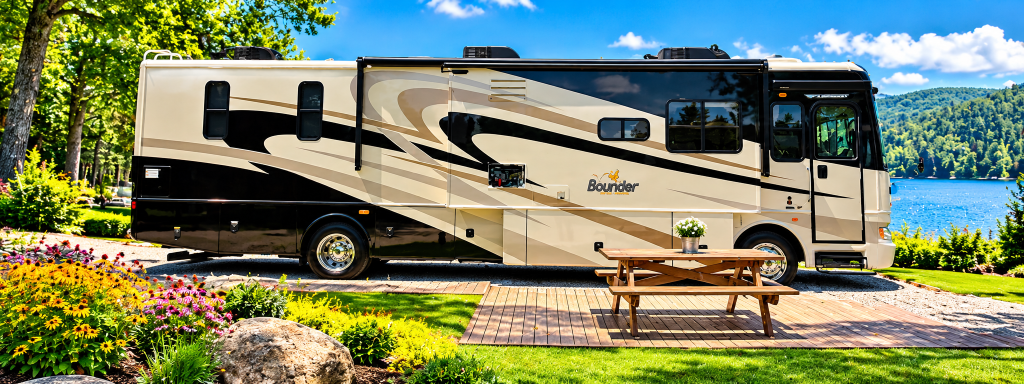

New research from National Vehicle reveals how long it takes to sell an RV privately, which types sell faster, and what owners can do to improve their chances of finding a buyer.
If you’re thinking about selling your RV, chances are you’ve asked yourself one important question:
How long is this going to take?
It’s a fair question. Whether you’re upgrading to something newer, stepping away from the RV lifestyle, or simply ready for your next adventure, nobody wants their RV sitting on the market indefinitely.
The challenge is that there isn’t one simple answer.
Some RVs find buyers in a matter of weeks. Others take several months. Factors like asking price, condition, and the type of RV all play a role.
At National Vehicle, we wanted to look beyond assumptions and examine what actually happens when private owners put their RVs up for sale.
We analyzed more than 10,000 private-party RV listings from the past two years, including over 5,000 customer-confirmed sales, to better understand how long it takes privately owned RVs to sell.
Here’s what we discovered, and what it means if you’re preparing to sell your RV.
Why Private-Party RV Market Research Matters
Much of the publicly available RV industry information focuses on new RV shipments, dealership inventory, wholesale activity, or manufacturer performance.
Private-party sellers have different questions.
They want to understand what their RV may be worth, how long a sale might take, and how to position their vehicle competitively.
National Vehicle’s research is intended to help address those questions using information gathered through its own private-party RV advertising business.
By examining thousands of listings and customer-confirmed sales, National Vehicle can provide insights into the experiences of private owners participating in the private-party RV marketplace.
The findings should not be interpreted as a census of all private-party RV sales in the United States. They represent National Vehicle’s customer listings and confirmed outcomes.
The Big Takeaway: What Over 5,000 RV Sales Tell Us
Among the more than 5,000 confirmed sales in our study, the median selling timeline was 69 days, or just over two months. That means half of those RVs were reported sold in approximately 69 days or less, while the other half took longer.
Median time to recorded sale among 5,174 confirmed RV sales.
These findings offer a useful perspective for owners preparing to sell, but they also reinforce an important point: selling an RV generally requires some patience.
Some sellers found buyers within the first few weeks. Others needed several months.
In fact, among the RVs that sold, roughly six out of ten were reported sold within the first three months.
That also means a significant number took longer.
What does this mean for you?
If you’re preparing to sell an RV, don’t assume it should sell immediately. Give yourself time to find the right buyer, and understand that a longer selling process doesn’t necessarily mean something is wrong with your RV.
Does the Type of RV Make a Difference?
Absolutely.
One of the more interesting discoveries from our research was that different types of RVs followed different selling timelines.
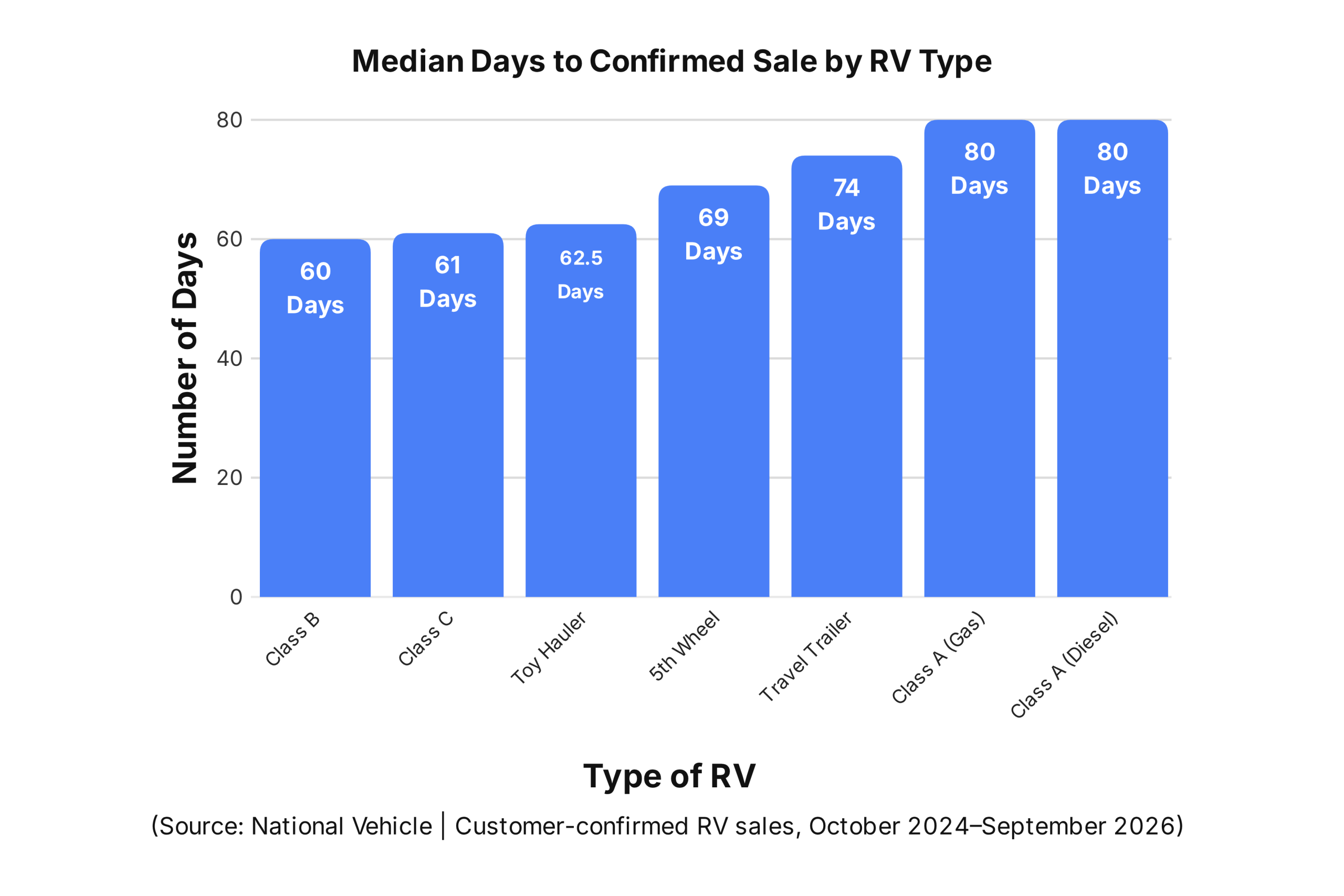
Smaller motorhomes generally reached confirmed sale sooner, while larger Class A motorhomes tended to take longer.
Class B and Class C Motorhomes: Around Two Months
Class B camper vans and Class C motorhomes recorded some of the shortest selling timelines among the major RV categories we studied.
Both typically reached confirmed sale in approximately two months.
For owners selling these types of motorhomes, that’s a useful benchmark when establishing expectations.
Travel Trailers and Fifth Wheels: A Little Over Two Months
Travel trailers and fifth wheels fell near the middle of the pack.
Fifth wheels recorded a median selling timeline of 69 days, while travel trailers took approximately 74 days.
In other words, both categories typically took a little over two months among confirmed sales.
Class A Motorhomes: Closer to Three Months
Larger Class A motorhomes, including both gas and diesel models, recorded longer selling timelines than several other major categories.
Both had a median selling timeline of approximately 80 days, putting them closer to three months.
For Class A owners, allowing additional time to connect with the right buyer may be especially important.
What Does This Mean for Your RV?
The type of RV you’re selling can influence how long the process takes, but it’s only part of the equation.
Two nearly identical RVs can have very different selling experiences depending on their asking prices, condition, presentation, and the buyers they attract.
Understanding how comparable RVs have performed can help you establish realistic expectations before entering the market.
Why Do Some RVs Sell Quickly While Others Sit on the Market?
After more than 25 years of helping private owners advertise their RVs, we’ve learned that a successful selling strategy involves more than simply posting an advertisement and waiting for the phone to ring.
Several factors deserve attention.
Pricing Your RV for Today’s Market
Your RV might be in excellent condition, have low mileage, and include thousands of dollars in upgrades.
But ultimately, buyers will compare it with other RVs available for sale.
One of the biggest challenges sellers face is separating what they’ve invested in their RV from what buyers are willing to pay.
Setting a competitive asking price from the beginning can help attract serious interest.
That doesn’t mean giving your RV away. It means understanding its private-party market value and positioning it appropriately.
First Impressions Matter
Think about how you shop for something online.
What catches your attention first?
Usually, it’s the pictures.
Selling an RV is no different.
Clear, well-lit photographs, a detailed description, and accurate information about the vehicle can make a meaningful difference in how buyers perceive your listing.
A clean, well-maintained RV with an informative advertisement gives prospective buyers more confidence to take the next step.
Reaching Beyond Your Local Market
The right buyer for your RV might not live in your hometown, or even your state.
That’s especially true when you’re selling a specialized floor plan, a particular brand, or a higher-priced motorhome.
Limiting your advertising to a small geographic area can limit the number of potential buyers who discover your RV.
National exposure creates opportunities to connect with interested buyers in other markets.
Being Ready When a Buyer Calls
Finding an interested buyer is only part of the process.
Prospective buyers may have questions about maintenance records, ownership history, financing, inspections, or transporting the RV.
Being prepared to answer those questions can help keep a potential sale moving forward.
Sometimes the difference between a serious buyer moving forward and losing interest comes down to communication.
What If Your RV Hasn’t Sold After 90 Days?
If your RV has been on the market for three months without selling, you’re certainly not alone.
Our research found that a substantial number of confirmed sales took longer than 90 days.
While patience is important, this is also a good opportunity to evaluate your selling strategy. Sometimes a few adjustments to your asking price, advertising, or presentation can help generate renewed buyer interest.
Are you getting inquiries but no offers?
Buyers may be interested in the RV but hesitant about the price, condition, or other details.
Are you getting very little interest?
It may be time to revisit your asking price, photographs, description, or where the RV is being advertised.
Are you comparing your RV with the right vehicles?
An RV’s value can vary considerably based on age, mileage, condition, features, and market availability.
Comparing your RV with similar vehicles is much more useful than simply looking at the highest asking prices you can find.
The key is to remain realistic and willing to make adjustments when the market gives you feedback.
A Little Preparation Can Make a Big Difference
Before listing your RV, take some time to put yourself in the buyer’s shoes.
Would you feel confident purchasing the RV based on the information available?
Make sure the vehicle is clean and presentable. Gather maintenance records, identify any known issues, and take quality photographs.
Most importantly, understand what your RV is worth in the current private-party marketplace.
Selling an RV is a significant transaction, and a little preparation can help make the experience smoother for both the seller and the buyer.
- Clean & stage
- Gather records
- Photograph
- Review pricing
Thinking About Selling Your RV?
Every RV is different, and understanding its value is the first step toward a successful selling experience.
At National Vehicle, we’ve spent more than 25 years helping private owners market their RVs to buyers nationwide. Our experienced team can help you understand your RV’s private-party market value, evaluate current market conditions, and develop a selling strategy that fits your needs.
Ready to find out what your RV is worth? Request your complimentary RV valuation and discover how National Vehicle can help you reach buyers nationwide.
Find Out What Your RV Is Worth
About the Research
National Vehicle analyzed 10,991 private-party RV listings created between October 2024 and September 2026, including 5,174 customer-confirmed sales.
Selling timelines were measured from the original listing date to the date National Vehicle recorded the RV as sold, generally within a few days of the actual transaction.
The findings represent RVs confirmed sold by National Vehicle customers and should not be interpreted as the selling experience of every RV listed or every private-party RV transaction nationwide.
© 2026 National Vehicle. All rights reserved.

Selling Safely: Avoiding Scams and Fraud in the RV Market

5 Tips to Maximize your RVs Value

Selling an RV: 3 Ways to Sell & Which is Your Best Option