
How Much Is My Boat Worth? Understanding Private-Party Value vs. Dealer Trade-In
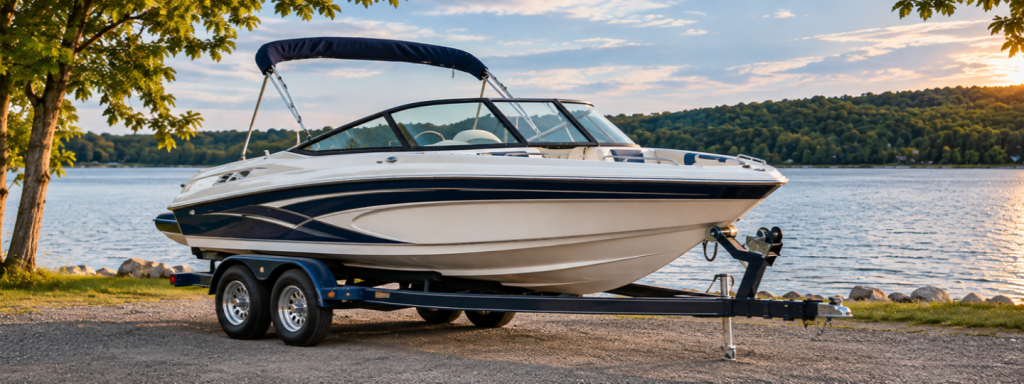

Maybe you are thinking about moving up to a bigger boat. Maybe the boat barely left the trailer this year. Either way, the same question pops up sooner or later: how much is my boat worth?
Here is the catch. Your boat doesn’t have one value. It has at least two, and they can be thousands of dollars apart. What a private buyer will pay you is one number. What a dealer will offer you on a trade-in is another, and it is almost always lower.
This guide breaks down the difference between private-party value and dealer trade-in value, why that gap exists, when a trade-in still makes sense, and how to find the number that is actually right for your boat. By the end, you’ll know exactly what you are leaving on the table, or putting in your pocket, with each option.
What Private-Party Value Means
Private-party value is what your boat is worth when you sell it yourself, directly to another boater. No dealer sits in the middle, so no one needs to make a profit on the deal. For most owners asking “how much is my boat worth,” this is the highest realistic number they can get.
A private buyer is paying for a boat they plan to use. They compare your listing to similar boats for sale, weigh the condition, hours, and equipment, and make an offer based on what the boat is worth to them on the water. That puts your boat in a retail-style market instead of a wholesale one.
Private-party value usually reflects:
- What similar boats are listed for right now. Same make, model, year range, length, and engine setup.
- What similar boats actually sold for. Asking prices and selling prices aren’t always the same thing.
- Your boat’s condition. Clean upholstery, a sound hull, and a strong-running engine all push the number up.
- The extras. Electronics, a quality trailer, a newer canvas, or a recent repower can add real value.
- Where and when you sell. Regional demand and the season both play a part.
The tradeoff is that you do the selling. You set the price, create the listing, answer calls, show the boat, and handle the paperwork. That work is exactly why private-party value runs higher. The money a dealer would keep for doing it stays with you instead.
What Dealer Trade-In Value Means
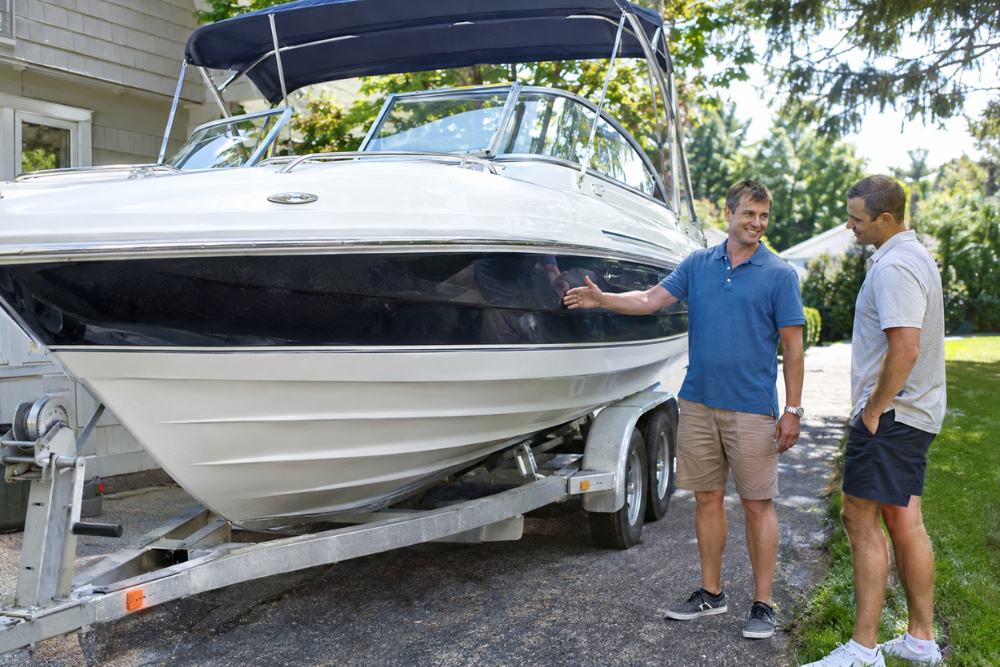
Dealer trade-in value is what a dealership will credit you for your boat when you buy another one from them. It is a wholesale number. The dealer isn’t buying your boat to enjoy it. They are buying it to resell it, and the offer is built backward from what they expect to sell it for.
Before a dealer makes you an offer, they are quietly figuring out:
- Their resale price. What they think your boat will sell for on their lot.
- Reconditioning. Detailing, service, repairs, and any parts it needs before it can be sold.
- Holding costs. Storage, insurance, and financing on inventory while the boat waits for a buyer.
- Sales costs. Advertising, staff time, and commissions.
- Their margin and risk. A profit on the resale, plus a cushion in case the boat sits or needs more work than expected.
What’s left after all of that is your trade-in offer. That doesn’t mean the dealer is being unfair. It means a trade-in is a different kind of sale, where you hand off the work and the risk, and the price reflects it.
One more thing to watch. A trade-in is often wrapped into the price of the boat you’re buying, which makes it hard to see what you were actually given for your old one. A generous-sounding trade-in number paired with less room to negotiate on the new boat can leave you in the same place as a low trade-in offer.
The Real Gap: What It Looks Like in Dollars
The difference between private-party value and trade-in value isn’t a rounding error. Depending on the boat, the dealer, and the season, a trade-in offer can land well below what the same boat brings in a private sale. The bigger and more valuable the boat, the bigger that gap tends to be in real dollars.
Here is a simple example. Say your boat’s private-party value is about $40,000, and private buyers typically negotiate somewhere between 5% and 15% off asking. These are example numbers for illustration, not a quote.
| Selling route | Price | Who takes a cut | What you walk away with |
|---|---|---|---|
| Private sale | About $38,000 after negotiation | Your listing and selling costs | Close to the full $38,000 |
| Consignment | About $38,000 | Broker commission, often around 10% | About $34,200 |
| Dealer trade-in | About $30,000 credit | Dealer margin built into the offer | $30,000 toward the next boat |
In this example, the private sale puts several thousand dollars more in your pocket than the trade-in. Even after consignment takes its share, the trade-in still comes in lowest. That is the cost of convenience, and it’s worth knowing the size of it before you sign anything.
So when you ask how much is my boat worth, the honest answer is: it depends on who is buying it, and how much of the selling you’re willing to do.
When a Dealer Trade-In Can Still Make Sense
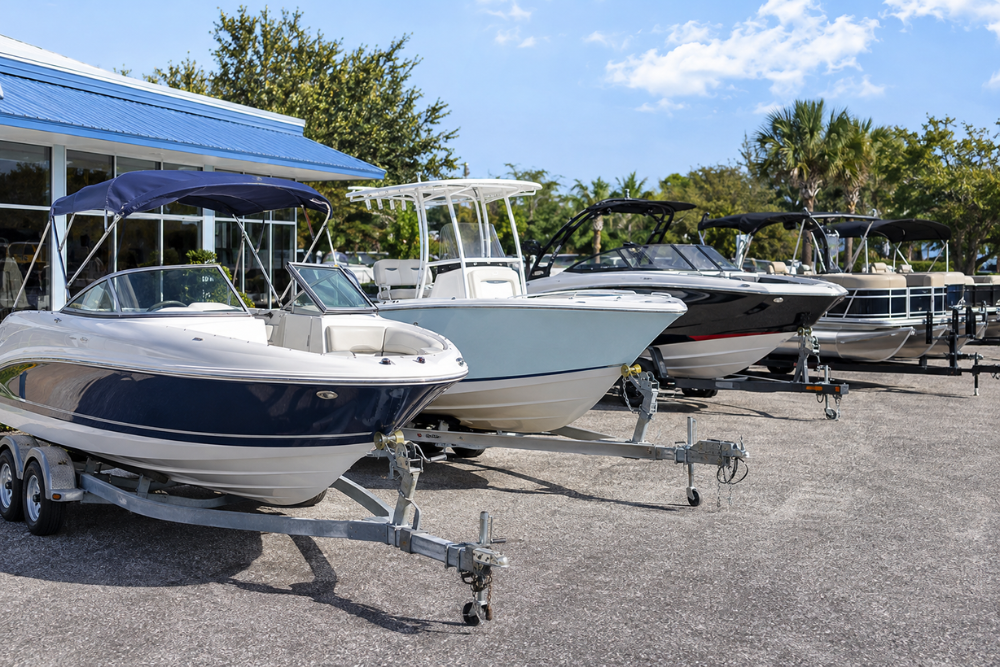
To be fair, a trade-in isn’t always the wrong call. There are situations where the convenience is worth some of the gap.
- You are buying from that dealer anyway. One stop, one transaction, and your old boat is gone the day the new one arrives.
- Your state gives a sales tax break on trade-ins. In many states, the trade-in amount is subtracted before sales tax is figured on the new boat. That can win back part of the difference, so check your state’s rules before you run the math.
- The boat needs major work. If the engine is tired or the hull needs repairs you don’t want to tackle, a dealer may take it as is.
- You have zero time. If showing a boat and answering buyer calls simply isn’t going to happen, a trade-in removes that work entirely.
Even then, it pays to know your private-party number first. It’s the only way to tell whether a trade-in offer is reasonable or whether you are giving away more than the convenience is worth. Walking into the dealership with a real valuation in hand also gives you leverage on both sides of the deal.
What Moves the Number Up or Down
Whether you sell privately or trade in, the same things shape how much your boat is worth. Private buyers and dealers both look at them. The difference is that a private sale lets you get credit for the work you’ve put in.
Engine Hours and Service History
Hours matter, but records matter more. A boat with higher hours and a folder full of oil changes, impeller replacements, and winterization receipts often beats a low-hour boat with no history at all.
Hull, Upholstery, and Canvas
This is what buyers see first. A clean hull, crack-free gelcoat, and seats without tears or mildew make a boat feel well cared for before anyone turns a key.
Electronics and Equipment
Newer fish finders, GPS units, stereos, and trolling motors can add value, especially to fishing boats. Be realistic, though. Older electronics usually add less than you paid for them.
The Trailer
A solid trailer with good tires, working lights, and sound bunks is part of the package. A rusty or worn-out trailer can knock real dollars off an offer.
Season and Location
Spring and early summer bring the most buyers, but also the most competing listings. Fall and winter bring fewer listings and serious shoppers. Selling to buyers in other states widens your market no matter the season.
How to Find Out How Much Your Boat Is Worth
You don’t need to guess, and you shouldn’t start from what you paid or what you hope to get. Here is how to land on a number that holds up.
- Look at current listings. Search for boats that match yours on make, model, year range, length, and engine. Note the asking prices, and remember that most will sell for less.
- Check a pricing guide. Guides like J.D. Power boat values give you a baseline range. If you have ever wondered whether there is a Kelley Blue Book for boats, this is the closest thing, but it doesn’t see your boat’s condition.
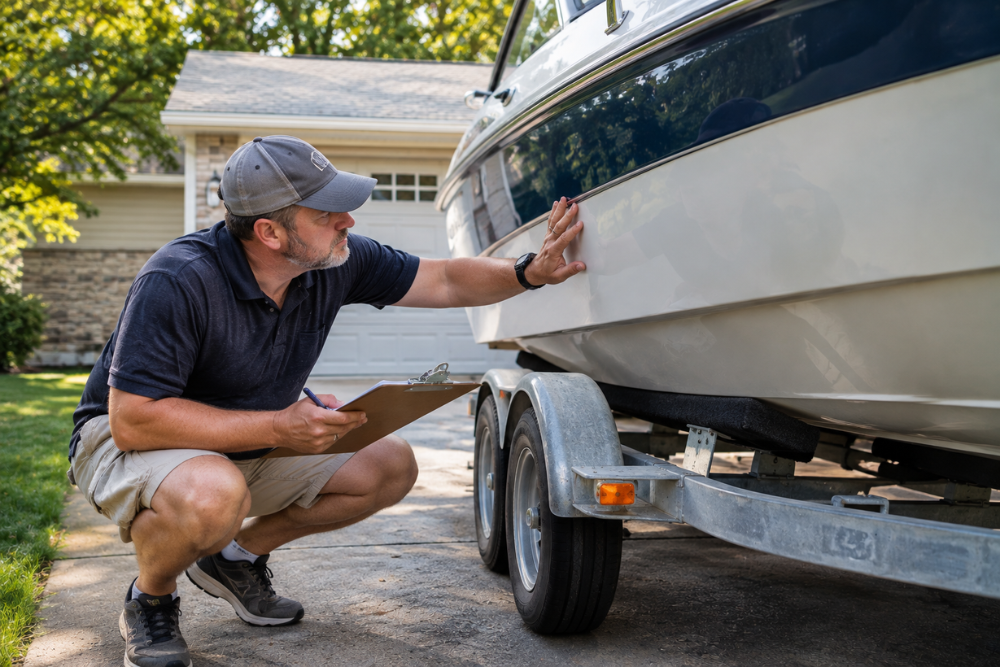
- Be honest about condition. Walk around your boat like a buyer would. Every stain, scratch, and missing record is something a buyer will use in negotiation.
- Get a free valuation. A free boat valuation from NationalVehicle.com pulls from current listing prices, Blue Book values, dealer comparable units, sold history data, and your boat’s condition, so your number reflects what boats like yours are actually bringing.
- Compare it to any trade-in offer. Once you know your private-party value, you can see the real size of the gap and decide if the convenience of a trade-in is worth it to you.
When you list, price slightly above your bottom line. Buyers expect to negotiate, and a little room lets you meet a serious buyer partway without giving up what your boat is worth.
Know Your Number Before You Take an Offer
So, how much is my boat worth? It depends on who you sell it to. A dealer trade-in gives you speed and simplicity at a wholesale price. A private sale asks a little more of you, but it puts the retail value of your boat where it belongs: in your pocket. Either way, knowing your private-party number first is what keeps you from leaving money behind.
Start with a free boat valuation to see what boats like yours are actually bringing. When you’re ready, sell your boat with NationalVehicle.com and get your listing on five sites, including Boat Trader, Boats.com, MotorKeel, BoatMart, and NationalVehicle.com. You get expert pricing guidance, help building a listing that stands out, screened inquiries from serious buyers, and a prepared sales agreement when it’s time to close. Because it’s a private sale, you keep the full sale price with no commission and no trade-in loss. Questions? Call 1-800-320-9557.
Frequently Asked Questions
Is a dealer trade-in always lower than selling privately?
In most cases, yes. A dealer has to recondition, store, market, and resell your boat at a profit, so the offer is built below what a private buyer would pay. A sales tax credit on the trade-in can narrow the gap in some states, so run the numbers for your situation.
Does a boat valuation cost anything?
No. The NationalVehicle.com boat valuation is free. It looks at current listings, Blue Book values, dealer comparables, sold history, and your boat’s condition to give you a realistic private-party number.
How much do boat buyers usually negotiate?
Most boat negotiations land somewhere between 5% and 15% off the asking price. Pricing your boat a little above your bottom line gives you room to negotiate and still walk away with what your boat is worth.
How National Vehicle Simplifies the Boat Selling Process

Boost Your Boat’s Curb Appeal: Small Upgrades That Impress Buyers

What Makes Spring the Sweet Spot to Sell your Boat