
Troubleshooting 5 Common RV Electrical Problems
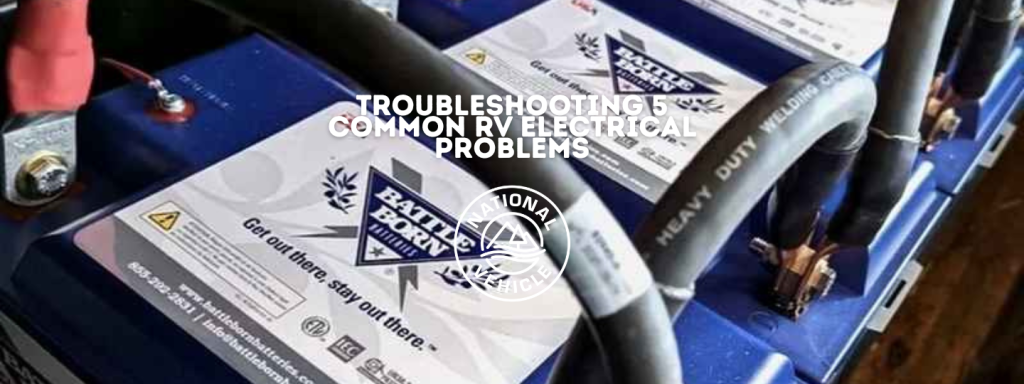

As an RVer there are few things that can fill you with trepidation like an eminent tornado warning, or flooding in your RV park, or this declaration from your traveling companion, “Honey, I think there’s something wrong with the power.” You certainly don’t want to get caught in a tornado or flood or have to take on some mystery problem with your RV electrical system. I can’t help you with the high winds or high water but these trouble shooting tips might help you identify or prevent future common electrical problems.
I am not an electrician. I’m just an everyday RVer like most of you so the problems I’ve outlining here may seem sophomoric when you’re reading through the list but I have personally experienced each of these problems and all of them were very disruptive to our RVing experience and our peace of mind. They may seem simple but they’re worth checking out before you hire professional help.
Power Surge in Shore Power
Power surges are a ubiquitous problem within the power grid. As you know power surges can happen anywhere and they can knock out systems in your home, office, or your RV. For the most part, you can protect your RV from these dangerous spikes in the power supply by using a good quality surge protector. You should attach the surge protector to the power cord as close to the source of shore power as possible. This will help to protect the power cord at the same time that it’s preventing a dangerous power spike from damaging your RV’s electrical system.
I use a heavy-duty surge protector at the source of the shore power when I am RVing even though our motorhome is equipped with a built-in surge protector. The built-in surge protector is in the basement where the power cord attaches to the RV. This protector would definitely prevent damage on the inside of the RV but if we had a significant power surge come through the shore my 50-amp power cord would not be protected and might be damaged.
Power surges general originates in shore power but that’s not the only place where you could encounter a damaging surge in your electrical system. We were camped in State Line RV Resort on the border of Connecticut and Rhode Island when a massive lightning storm passes overhead. The thunder was deafening and the lightning was striking the water in the nearby lake. We spoke to the manager about the storm and she told us that during a similar storm the day before, her RV was struck by a lightning bolt and her RV’s electrical system was fried in the process.
Lightning can destroy your RV’s electrical system just like a power surge. You can’t do much to protect yourself from a lightning strike but you can use a good quality surge protector to eliminate the damage caused by a power surge coming into your RV via shore power.

Overloaded Demand
A common electrical problem experienced by many RVers is caused by placing too much demand on your power supply. Remember, you are essentially operating an entire household on the power supplied by 4 batteries. If you have a battery management system installed with your bank of batteries you can check that to evaluate your power usage and possible redirect power from a low use area to a higher use area.
Also, if you regularly need more power in your RV you could replace your traditional batteries with lithium batteries. They cost more than traditional batteries but they’re cleaner and last much longer. Lithium batteries provide more energy over a longer period of time. Traditional batteries need to stay at least half charged to function properly. If the power demand depletes the charge to less than half, traditional batteries quit delivering power to the electrical system. But you can drain lithium batteries down to practically nothing and the quality and abundance of the power is not degraded in the process.
Shore Power Connection Dysfunction
Another common RV electrical problem could originate in the shore power connection. These connections are used extensively in all kinds of weather and frankly they wear out at an astonishing rate. The power entering the electrical panel is separated and redirected to several outlets. Most shore power connections in RV parks have 20-amp, 30-amp and 50-amp outlets. The dysfunction could be isolated to one but not all of those outlets or it could affect all three outlet connections simultaneously.
I’ve camped in parks that had 50-amp power but no 20-amp power and I’ve camped in parks that had the reverse dysfunction to that. If you’re plugged into a 50-amp outlet and you’re having electrical problems, try using an adapter then plug into the 30-amp outlet to see if the problems go away. If they do ask the park staff to replace the 50-amp outlet. Metering a 50-amp cord down to a 20-amp connection is possible but you’ll need to limit electrical usage in your RV while connected to the lower amp outlet.
Battery Water Level or Old Batteries
Another major electrical problem encountered by RVers stems from old batteries or improperly maintained batteries. The water level in a battery directly effects the amount of charge in that battery. Also remember that traditional batteries can only be discharged to approximately half of their full charge before they start to malfunction, so if the water level is low the battery can’t even start out fully charged and it reaches the half way point much sooner.
Old batteries will not charge as much and will not maintain their charge for as long as new batteries. I’ve had experience with both old batteries and low water level and both conditions caused widespread dysfunction in our RV. Systems that were otherwise very reliable quit working completely and other electrical components were sporadic at best. Add water and wait 10 minutes to see if the problems resolve or continue.
Loose Battery Terminal Connection
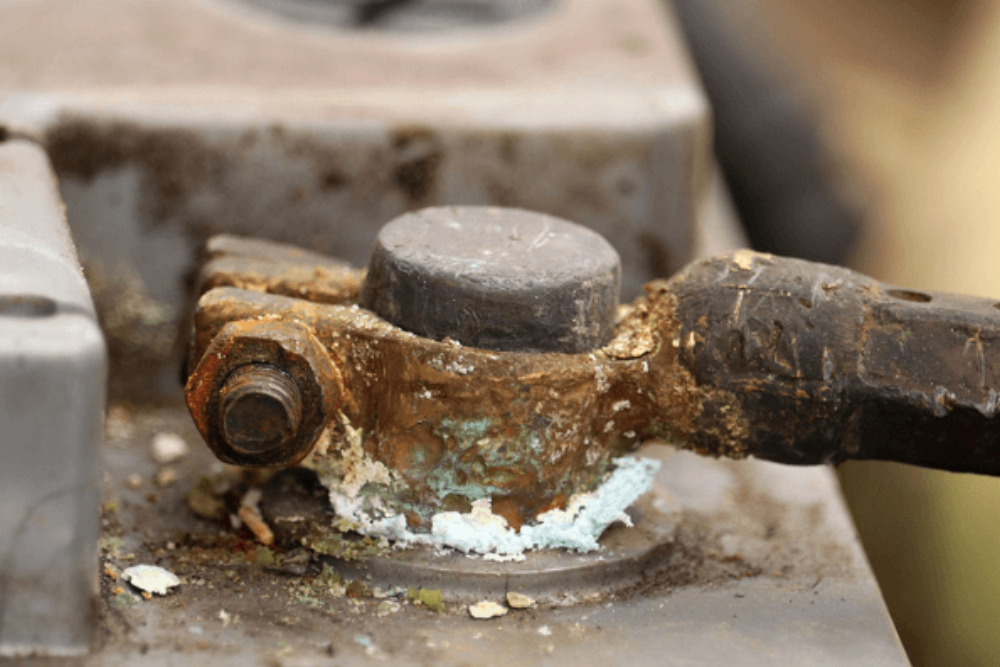
Along the lines of old batteries and low water levels is the condition of the terminal connections of your batteries. The connection can be impaired by corrosion or debris or the connection might be loose, which will have the same impact as corroded terminals.
To illustrate this electrical problem let me tell you a story. We were camping in a flooded RV Park on the Oregon Coast during the Thanksgiving holiday. It was so flooded you had to wear boots just to go outside and it was raining hard with no relief in sight. This brings me to yet another electrical problem not listed above and that is having your electrical cord and connection lying in a puddle of water, which can result in a short and blown circuits.
At any rate we were done with the rain and the flooding so we decided to go to central California to get out of the wet conditions. On the way south we stopped at The Valley of the Rogue State Park to camp for the night. We were over 200 miles from home and from our trusted RV repair person.
When we started to set up our RV for the night, we knew something was wrong. The jacks started screeching an alarm as soon as we started to lower them. The steps were intermittently functional and a couple of other systems weren’t functioning normally. It was Friday night on a 4-day holiday weekend. In desperation we called our trusted mechanic and described the condition of the coach. He would not be back to work until Monday morning. He said, if we could get the motorhome back to him by Monday he would trouble shoot the problem then.
We didn’t want to put the jacks down and the slides out and not be able to retract them later so we didn’t engage either system. We arranged with the park staff to stay a couple of extra days and we camped small (no jacks and no slide out) until Sunday. We were able to start the RV and to drive it the 200 miles back up to the Willamette Valley to our RV repair guy. We left it with him on Monday. A few hours later he called to say we could pick up the RV. His diagnostic process revealed that the terminal connections on the chassis battery were not tight.
That caused the chassis battery to function intermittently which also spilled over to the house batteries. Since the batteries impact almost all of the systems in the RV our observation of the disjointed malfunction of various components in the RV was attributable to the inconsistent power supply coming out of the batteries. Matt tightened the terminal connection, checked the power level in all the batteries and sent us on our way, to drive the 200 miles back to The Valley of the Rogue.
We eventually made it to central California where we enjoyed camping out of the rain for a few weeks. And we learned that when electrical problems seem to be out of control and completely overwhelming there are a few common RV electrical problems that have simple solutions, and it’s a good place to start looking for the solution.
Electrical Problems Happen to Everyone
Here is an ironic and humorous coincidence. I had just finished writing the article above and was ready to put it away until the next day when I would proof read it and add the photos and at that moment, my traveling companion came into the house and said, “There’s something wrong with the power, the RV won’t start”. Gasp! Not what I wanted to here!
So, I had to do a little troubleshooting of my own. The chassis battery was so depleted that the starter wouldn’t even click. I tried the booster switch but it wouldn’t transfer enough power out of the house batteries (which seemed to be working ok) to start the engine. I learned later from Matt, that the chassis battery had to be partially charged in order for the booster switch to work.
Since I didn’t have a battery booster or jumper cables, I attached a trickle charger to the chassis battery and left it for a couple of hours. When I returned and tried to start the engine it started right up with no hesitation. I certainly didn’t feel like fixing an electrical problem at the end of my work day but these issues are never convenient. So, if you have electrical problems in your RV check the 5 common RV electrical problems first, before spending a bunch of money on a mobile repair guy. And don’t forget to periodically maintain your batteries and replace them, as needed, to avoid future problems.
What are the most common RV electrical problems?
The most prevalent electrical problems are old batteries and poor battery maintenance. Trying to stretch the life expectancy of the batteries generally leads to bigger problems down the road. Remember all your RV systems are linked to the batteries so dead or weak batteries can and does effect everything from your TV, to the slide outs and refrigerator. Corroded or loose terminal connection will interfere with your electrical service. Not all batteries use water but those that do must be maintained to ensure the batteries have the proper water level to create and deliver a full charge to your RV.
Why is my RV battery draining so fast?
Your batteries might be draining faster than usual because they’re old or the water level is low resulting in less-than-optimal power being stored in the battery, or there’s something running in the background like a basement light which was accidentally left on, or an inverter is constantly draining power to convert DC power to AC power which is being used by the refrigerator or entertainment center.
What should I do if my RV has no power at all?
This problem could be isolated to the chassis battery or the house batteries or both, If your RV is a motorhome, there might be a booster switch that functions as a bridge between the two battery systems. If your steps won’t extend when the door is opened that’s an indication that the chassis battery has lost its charge and the engine will also probably not start. In that case you can try to pull power out of the house batteries to start the engine by using the bridge switch.
Generally speaking, if the house batteries and the chassis battery are all dead the bridge switch will not help. Also, if the house batteries are dead but the chassis battery still has power you can use the bridge switch to transfer some power from the chassis to the house for some minimal power demand. But this is not a long-term solution to supply power to the house because you have a whole bank of deep cycle batteries to run all the systems in the RV but the single chassis battery is not powerful enough to substitute for two, four, or more house batteries.
Plus, the chassis battery is typically not a deep cycle battery (designed for long term demand) because the chassis battery needs to deliver a concentrated jolt of power to the starter in order to start the motorhomes engine and it is not designed to supply a high level of power for extended periods of time like the house batteries.
The booster or bridge switch might be helpful if you have no power in a motorhome but all other types of RVs only have house batteries, no chassis battery and no booster switch, so if these batteries are completely dead you could still power up your RV and recharge the batteries with a generator or you may need to charge your batteries by plugging the RV into shore power or you could use an external battery charger or even a trickle charger (if that’s all you have available). In the case of all the house batteries being completely dead you may simply need to purchase new batteries. I know that’s not what you wanted to hear, but it’s the reality of the situation if all your batteries are dead and after being recharged, they won’t hold their charge.

The Ultimate Guide To Winterize An RV for Storage

RV Tires: 9 Critical Things to Know Before Purchasing

What to Watch While Storing your RV!