
Buying Your First Travel Trailer: 5 Things Beginners Should Know
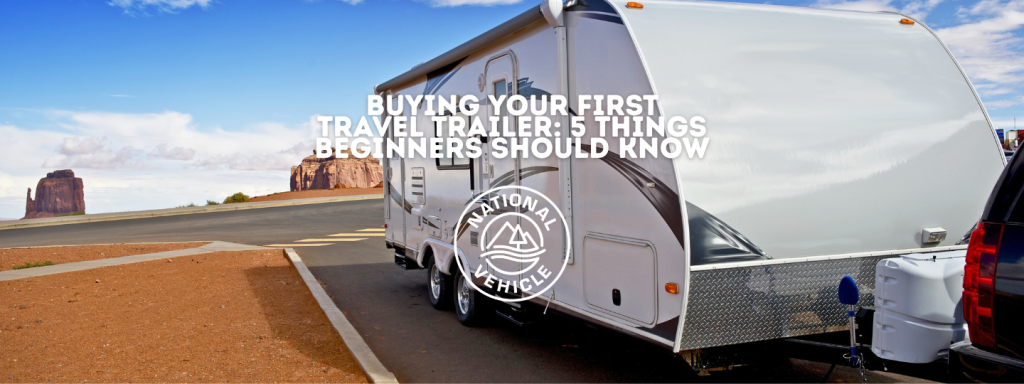

There are dozens and dozens of things to consider when you begin your search for the “perfect” travel trailer, but the most important considerations aren’t about the features and floorplans of the trailers. You need to start with you! By fully analyzing and understanding your anticipated needs you will be able to narrow your search and zero in on the specific trailer that most closely meets your needs.
The 5 most important things to consider are introspective dimensions not distinguishing details about all the different travel trailer. These introspective questions are….
- Who all will be using the trailer?
- How do you intend to use it?
- Where will you use it?
- When will you be using you trailer?
- How much space do you need for your gear?
- Bonus Question: What is your budget for the travel trailer?
By carefully and thoroughly answering all these questions you’ll uncover the features and appointments you’ll need in your travel trailer. This is not a futile exercise, so don’t gloss over it. We know a couple who bought and sold 5 different RVs in the first 6 years of their marriage because they were unrealistic in their assessment of what they really wanted and needed in an RV. Those purchases and sales where extremely costly not to mention the pressure it put on their marriage.
By answering the questions above you’ll uncover all the details about your future RV that you will need to make it the perfect purchase. For example, you’ll discover how many beds you’ll need, and if you’d benefit from a toy hauler trailer for extra space and sleeping areas. You’ll find out if an all-weather insulation package would be an important feature or a waste of money. You’ll be able to determine if your current towing vehicle will be powerful enough to haul your future travel trailer.
You should also consider who will be driving the towing vehicle and you’ll need to determine if those people have the necessary skills to drive with the extra load and back it up proficiently, and/or are those drivers willing to practice driving and backing with a trailer attached to improve their familiarity and proficiency.
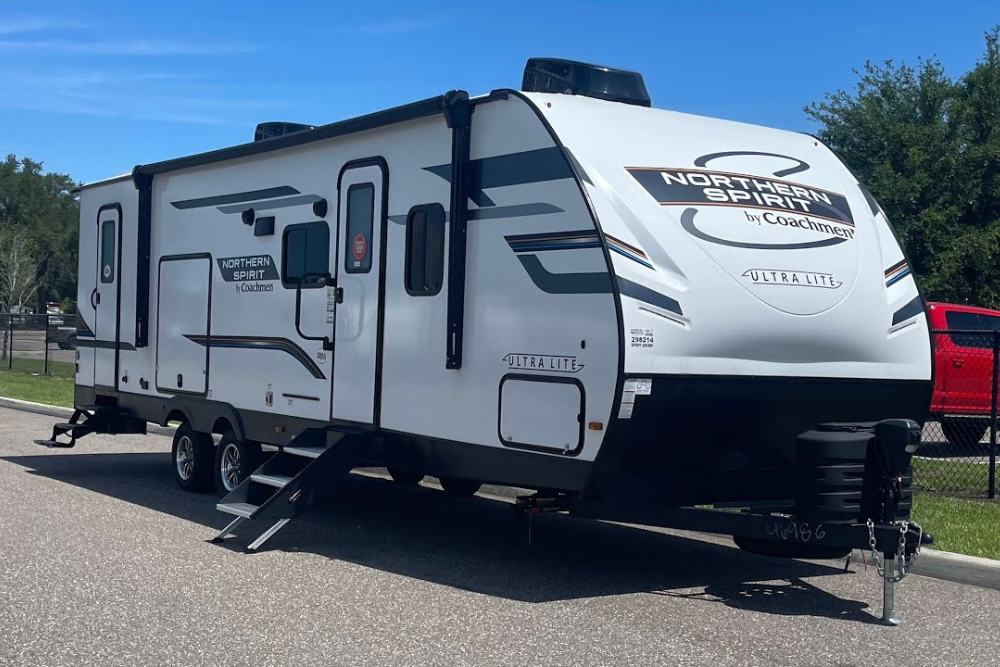
Understanding your own needs: Be realistic
When you start the search for a travel trailer there are more questions than answers. The RV world has a language of its own and penetrating the jargon and the mystic of RVing can be daunting for beginners. I remember, over 25 years ago, when we started shopping for our first RV, I didn’t know the difference between a class A and a class C motorhome, or what the LP system was, and if we needed one in our future RV. I was confused by the AC and DC power systems, and what the heck is an inverter?
If I bought an RV with an engine would I need a generator? The whole thing was just one unknown after another. How were we going to elevate our knowledge enough to make an informed decision about our new RV. We wanted to find the right motorhome for our needs but didn’t have enough background or basic knowledge to even ask intelligent questions. Spoiler alert, we read everything we could find that applied to this subject and we spent over a year in the search process.
We finally figured it out and settled on the perfect motorhome for our needs. But it was a daunting and intimidating process which was not aided by the internet because the whole process occurred at the end of the last century before the internet was even a thing. I hope the following introspective list of questions beginners should ask and answer will helps you get through the jargon and intimidation so you can ask good questions and find the perfect travel trailer for your needs.
Who all will be using the trailer?
The first thing you need to consider when shopping for a travel trailer is who will be using the trailer. Will it be used only by a couple of people or will your family and friends also be using it when in the company of the primary owners or will they be using it independently from the primary owners? Will you loan or rent it for other people to use? How many beds will you need to accommodate all the users. Will bunk beds be needed?
Could you benefit from having a toy hauler trailer that has extra space for multiple beds as well as extra room for indoor recreation (think children’s indoor play area out of the way of the main living area) and the toy hauler ramp also functions as an elevated outdoor deck for added space. Knowing who will be using the trailer will help you determine how big your trailer will need to be to meet your needs and what the optimal floor plans are to accommodate that need. Also, you should consider how easy or complex the functional components are to use, if you intend to rent it of let family and friends use it in your absence.
How do you intend to use it?
The second thing you as a beginning trailer shoppers needs to know is how you intend to use the trailer. This question primarily pertains to whether you want to live in the trailer full-time or will it be used sporadically for weekend or vacation get-aways. If you intend to live in it full-time you might need things like a residential size refrigerator and a washer and dryer, or built-in solar panels, and wi-fi. On the other hand, using it as a base camp for hunting excursions might also require solar panels and an upgraded battery system like lithium batteries for more off grid power.
If you intend to haul it across the country on an extended trip, then make sure your new travel trailer is equipped with high quality tires so you have peace of mind that you won’t have a blow out on the highway. Considering how you anticipate using it will inform your decisions about the floorplan, appointments and installed equipment.
Where will you use it?
This third consideration is intended to expose your trailer’s vulnerabilities to extreme conditions like freezing temperatures, extreme heat, or high winds. These are real threats and must be taken into consideration. We actually saw several large travel trailers blown off the highway in a wind storm in Tennessee and we read a story of a travel trailer that was blown over on its side on the Hells Canyon bridge and that trailer kept the towing truck from plunging hundreds of feet into Hells Canyon.
While being towed on Interstate Hwy 84 in Idaho near the Oregon border, the trailer was blown over onto its side, this caused the driver to lose control of the truck and plunge through the bridge railing where the truck remained dangling over one of the deepest ravines in the entire US interstate system. The two safety chains between the truck and trailer where the only things preventing the truck from dropping to the bottom of the canyon with both occupants and their dog inside.
Spoiler Alert… all three truck occupants were eventually rescued by first responders but not before they had plenty of time to contemplate the alterative. So, the question of where will you use your RV should inform you as to what features you need for driving and camping in extreme conditions.
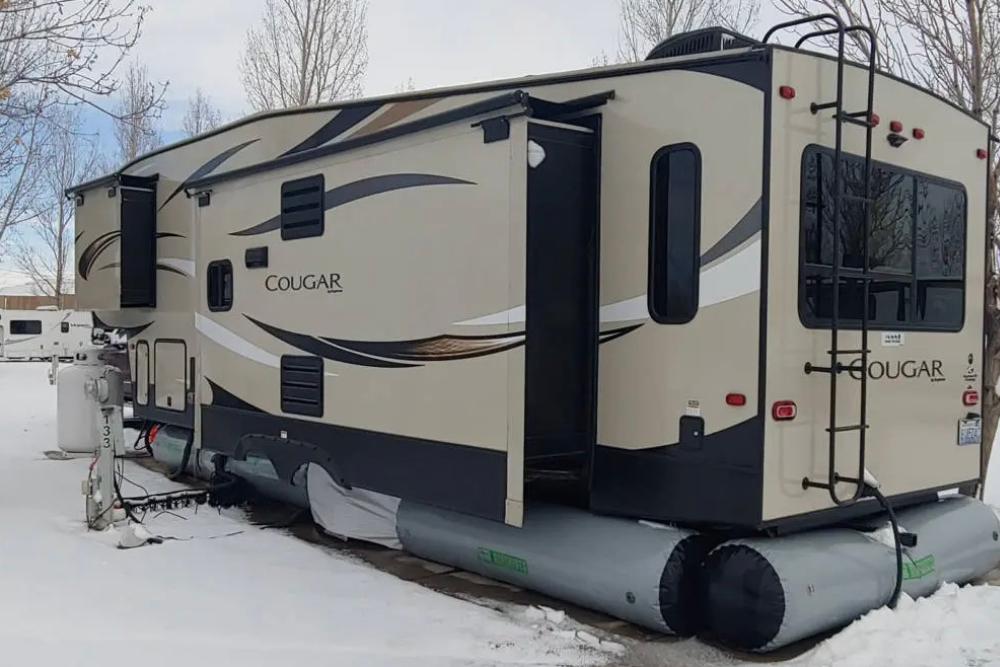
Some of these features could include an all-weather insulation package, or heated gray and black holding tanks, or slide out awnings to keep ice from accumulating on the tops of the slide outs (which creates difficulties when retracting the slide outs). Extra insulation is also useful in extreme heat conditions so consider buying a trailer with an all-weather package already installed if you plan to visit or camp in the desert. Also, consider the weight/height ratio of the trailer to understand the risk of it being damaged by high winds if you will be using it in areas of the country where hurricanes, tornado, or extreme winds are prevalent.
Additionally, if you want to use your trailer for off grid camping (also known as boon docking or dry camping) where you won’t have access to fresh water or electricity or a public sewage disposal system, then you’ll need a powerful battery system, a larger fresh water holding tank and larger black and gray holding tanks. Knowing or anticipating where you think you will use your trailer will help you get the equipment you need already installed rather than adding on these things later with mismatched after-market products.
When will you use it?
This question also pertains to extreme weather conditions that you might encounter in the winter months but it also helps you explore your intended frequency of use and the style of that use. An extended vacation of a couple of months touring the US is different from a dozen weekend trips to local destinations, or a few years of full-time occupancy. An extended vacation or full-time occupancy would probably require more storage space for extra gear, seasonal clothing, and extra supplies. A few weekend trips to your favorite local destinations would probably not require any specialized equipment except ways to haul your toys, like bikes, kayaks, gas grill, etc.
How much space do you need for extra gear?
This issue was alluded to in previous questions but by now you’re getting more and more savvy about how your intentions dictate exactly how your new trailer should be equipped. Storage space may be external or internal and some gear fits better in one space over the other. If you are buying a travel trailer for you and your children, they will need interior storage space for their personal belongings, toys, games, clothes, shoes, etc. They may need outside storage space for hot wheels, bikes, etc.
If you overlook this question at the beginning of the process, it could haunt you later on with too much clutter. Be realistic, and try to invision what you will need to take with you and where you could store it. You’ll need storage space for kitchen items and food supplies. You need storage in your bathroom and closets for clothes and bedding. You’ll probably need to have a set of tools and vehicle maintenance supplies.
How about a ladder, and a leaf blower, and rain coats and you fishing tackle, where will you store that gear in your travel trailer. All this gear takes up precious space and it also adds weight to you trailer. Every trailer has a maximum carrying capacity that is defined by the manufacturer. You should consider your needs and the various trailer’s carrying capacity when shopping for your new trailer. You will also need to know these facts when evaluating your existing or selecting a new towing vehicle.
All the extra weight in the storage spaces, plus the liquid weight of the fresh water and the LP adds tongue weight to the ball hitch or the fifth wheel coupler and it might exceed the safe limits of these coupling devices. These are all things you will learn by carefully examining your own needs, plans, dreams, and intentions, but there is one bonus question you will also need to address now.
Bonus: Finally, what is your budget for the travel trailer?
Please don’t make this the first and only criteria when shopping for your perfect travel trailer. Of course, the cost is very important but it should not be more important than all the other 5 considerations. And when you’re thinking about your budget, don’t forget the extra costs for an extended warranty (if you think those are a good idea) plus the cost of the ongoing maintenance and replacement costs for things like tires.
You may also need an off-property place to store it and there’s the extra cost for insurance. Be aware that your auto insurance only covers your trailer when they are coupled together and the trailer is being towed. Your auto policy will not cover the trailer when it is detached from the auto/truck.
FYI. When shopping for insurance ask your agent if the coverage can be suspended when the trailer is in winter storage if you don’t intend to use your RV year around and you don’t need or want to pay for insurance coverage while it’s not in use.
There is an argument to be made for not suspending insurance coverage when the trailer is in winter storage, even if it saves you several months of the premiums. Consider this, when your trailer is in storage, it could be damaged by extreme weather, vandalism, or theft and if your insurance coverage is suspended you would not be able to file a claim for that damage. Consequently, even if your policy can be suspended the decision to exercise that option might ultimately depend on where and how it is being stored.
But continuing or suspending your insurance has to wait until you actually have a travel trailer to insure, and that requires you to get through the shopping process and decide on which trailer you want for your future RVing adventures. To get to that point just work your way through the who, where, when and how questions listed above.
By considering and answering these questions you’ll come to understand what size of trailer and what features are needed in your new travel trailer. For example, how much storage space will you need, how should the kitchen be equipped? Will you need a washer and dryer? Will you need extra insulation, or a modified battery system or an extra large fresh water tank? How many beds? Would solar panels give you more freedom?
Also you’ll learn if your current car or truck will suffice as the towing vehicle because you’ll discover how big or small your perfect trailer will be and what it will weigh, so you can compare the carrying capacity and towing capacity of your current vehicle to those dimensions in whichever trailer you think fits your needs the best.
The Conclusion: Not too small and not too large
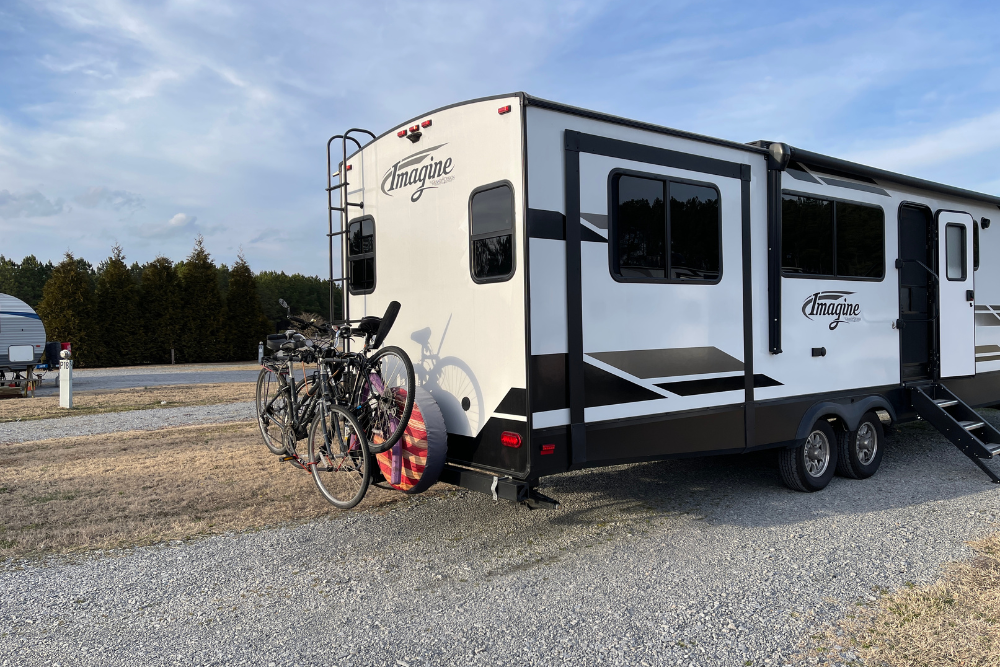
One cautionary note. Many people overestimate how much space they will need or they romanticize the mystic of traveling and camping in a van or tiny trailer. Both of these miscalculations can result in the devastating outcome of purchasing a trailer that is just too small to be functional or one that is so large that it’s impractical to tow, back, or park. We’ve encountered many examples of both miscalculations and the owners expressed deep regrets. One couple was camping in a tear drop trailer and it rained hard for a solid week.
The trailer only had an outdoor cooking area, no restroom, and barely enough room inside to sit up with your legs extended out in front of you. This couple had to sit in their car to even have a comfortable place to rest, and preparing a meal was out of the question, so they had to go out for all their meals. They were from Canada and they were on the Oregon Coast (I know, as soon as I mentioned the rain I probably gave away the location) so they couldn’t easily just go home.
It looked like their little camping trip had turned into a nightmare. We also met a couple who had purchased an overly large 5th wheel trailer for full-time living. They were as unhappy with their choice as the couple with the tear drop trailer. The 5th wheel was huge and they had already wrecked it once by driving under an overhanging obstruction and damaging the roof. They were terrified towing it on the highway, and equally terrified of finding suitable places to camp.
We met them in a campground where they were clearing debris off their roof after a damaging wind storm had swept through the campground knocking over trees and blowing debris and tree branches everywhere. The husband said his wife was inside gripped in fear and trepidation over where they could safely camp through the winter.
We met them in Tennessee and they where on their way to Texas and their greatest anxiety was over the size of their 5th wheel and their ability as full-timers to find safe “big rig” camping options for every single day and every night. The general lesson from both of these camper’s experiences is to avoid overly small or extremely large RVs. Try to find the right travel trailer in the mid-size category. A trailer that is between 25 and 35 ft will generally suit most people’s needs.
If you really want a larger trailer then be sure to practice driving, turning, backing, and parking it in a large open parking lot before you get your overly large trailer out on the road or before you need to park it in a crowded campground.
Frequently Asked Questions:
How do I know if my vehicle can tow a travel trailer?
To know if your car or truck can tow a trailer consult the owner’s manual and if you don’t have the owner’s manual for your year and model you could probably find this information on line.
Search the owner’s manual to discover two critical limits that will impact your vehicle’s ability to tow a trailer. The two limiting criteria are the carrying capacity and the towing capacity of your vehicle. These are different components, both are very important, and you need to understand how each capacity applies to your ability to tow any particular trailer.
The carry capacity is a measurement of the total extra weight or load your towing vehicle can carry. That includes the total weight of all human and pet occupants in the vehicle plus any gear you have in your car or truck (think camping equipment and toys like, kayaks, bikes, gas grill, etc.) plus the tongue weight of the towed vehicle. The tongue weight is a variable measurement depending on the overall weight of the trailer plus any addition load you have added to the trailer AND how that load is distributed in the trailer. The trailer manufactures should be able to identify the starting tongue weight for every trailer they manufacture and the manufacturer will also specify the total carrying capacity (think dished, cookware, food, bedding, clothes, water, propane, toys, etc.) of the trailer, but how and where that extra weight is distributed in the trailer will ultimately determine the total tongue weight.
The second criteria for determining if your vehicle can tow a travel trailer is to determine the towing capacity of your vehicle which is a weight limit set by the manufacturer. It is a limit set by the manufacturer of the total weight your car or truck can safely tow. It is a reflection of the power and torque in the engine and transmission. Some vehicles are manufactured specifically to accommodate towing larger payloads so if you’re planning on buying a large travel trailer or 5th wheel trailer then you may want to consider buying a truck that is designed to tow larger loads.
It’s very important to be informed about both the carrying and towing capacity of your towing vehicle and to remember those limiting factors as you go about outfitting your travel trailer. Try to distribute the extra weight evenly throughout your trailer so you don’t add too much extra weight to the tongue.
What should I look for when inspecting a used travel trailer?
The most important thing to look for when inspecting a used travel trailer are signs of water damage. You might see water stains on the head liner, or smell mold or mildew when you first enter the trailer, or you might see water damage on the shelfs under the sinks or around the shower or toilet, or you can see that the caulking on all the roof joints and hardware are not fully sealed. Visible water damage is a huge red flag because the materials underneath the attractive interior and exterior skins of an RV are easily damaged by water, and peeling back the skins could reveal a major problem with dry rot. That’s why you should be aware of any tell-tale odors. You might not have any visible clues of water damage but the smell of mildew is a harbinger of bigger issues. Also, a detectable odor of sewage might indicate that the gray or black tanks have a problem.
Another thing to inspect when looking at a used travel trailer are the tires. Try to determine the age and approximate milage of the trailer tires from the owner. Trailers are not like motorhomes that have odometers so the seller will need to inform you as to the age and mileage, but you can still inspect the tire’s tread and general condition and if the owner reveals that the tires are over about six years old, regardless of the milage or reasonable amount of remaining tread, they should still be replaced. Since tires tend to rot from the inside out and might not show visible deterioration until you have a blowout on the highway, old tires should be replaced.
During your inspection make sure everything is in good working order. The microwave, stovetop burner, water faucets, hot water heater, refrigerator, automatic awning, jacks, slide outs, generator (if equipped) window openings, drapes, blinds, and sleep number bed, (if equipped). Take your time because anything that isn’t working properly during your inspection could result in costly repairs down the road.
What size travel trailer is best for a beginner?
The best size of travel trailer will ultimately depend on your needs. If you just need a trailer for you and your spouse it’s different than getting a trailer for an active family of five or six. If you just need it for a few weekend get-aways, it’s different from living in it full-time.
There’s a general rule however, that mid-sized travel trailer (25 to 35 ft) satisfies more shoppers than extremely small RVs or extremely large ones. During our 20 plus years of RVing we have met countless campers who expressed their regrets and frustrations over buying an RV that was too small or too large for their needs. Too small could mean there’s no room to comfortably hang out on rainy days or a sink too small to even wash a dog bowl, and too large creates hassles when searching for and reserving camping sites in private parks or US Forest Service campgrounds, because large trailers are harder to back and park in tight quarters and many parks do not accommodate big-rigs.
Mid-size travel trailers offer all the comforts of home, are easier to tow, back, and park, and are generally more affordable than ultra-small RVs or extra-large ones. You can get a full-size refrigerator and spacious galley (kitchen areas) in a mid-size trailer. Many floorplans in mid-size trailers feature luxurious living and sleeping spaces. Additionally, there are more options when you shop in the mid-size trailer category. Therefore, you should be able to find a floorplan that meets your needs whether that’s for weekend get-aways or full-time RV living.

8 Promising RV Market Trends for Potential Buyers to Watch for in 2025
5 Things to Know Before Your First RV Purchase

Fall RV Sales: What Buyers Are Looking For Right Now