
15+ Places to Park your RV for FREE!
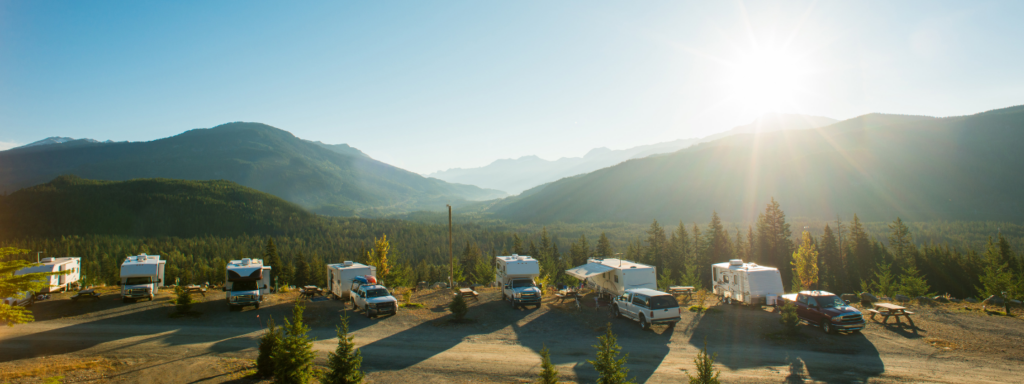

Urban vs Rural Free Camping Opportunities
When traveling in an RV between point A and point B sometimes all you need is a place to stop and rest for the night. In those situations, it doesn’t make sense to pay a nightly fee of $40 to $80 when you don’t even need any campsite amenities. If you just need a place to park your RV for a brief rest you can take advantage of numerous free or low cost camping options in either rural or urban locations. The free or low cost rural camping options are generally quieter and more private.
However, for these you might need to drive off the beaten path a little further and spend more time hunting for a suitable campsite, but rural locations offer beautifully dark night skies, a few howling coyotes, and more peace and solitude, so you can recharge your personal batteries. The urban sites, on the other hand, are usually just off the freeway, may be much easier to navigate and park your RV and frequently offer close dining and shopping resources. Consequently, if you’re the kind of person who uses travel days as an excuse to dine out, the free urban campsites will generally give you more dining options.
But Don’t Be a Pig!
I have to say this right up front in an article about free campsites. Those of us in the RV community are often our own worst enemy because some of us behave despicably. And I’m sorry to say that we limit our own opportunities because of it. It’s vitally important that we only use these free/low cost locations if we have fully self-contained RVs, no tents, or teardrop trailers unless you have some form of waste containment system in your trailer. To camp in the free urban or rural campsites, we should have onboard power, water, ample gray and black tank capacity, and the ability to carry out all our garbage.
Each of us needs to preserve the sites and leave them totally unaltered. No garbage, no rubbish, no pet poo, no damage to the asphalt, curbs, light fixtures, landscaping, or other urban amenities. In rural settings no smoldering campfires, damage to the trees, shrubs, or wildlife. In both urban and rural settings, this includes cleaning up cigarette butts, bottle caps, kid’s candy wrappers, chalk drawing, trash, peanut or sunflower shells, or anything else that alters or defaces the site.
Remember you are probably not the first camper to stop in that spot and won’t be the last unless you screw it up so badly the site owner stops letting RVers use their property. Think of it this way. You don’t want to camp in someone else’s trash heap, and no one wants to camp in your mess. If you want to continue to have access to all these free courtesy camping opportunities then take care of them like they are your own front yard. If you don’t, the property owners will simply stop allowing overnight camping on their property.
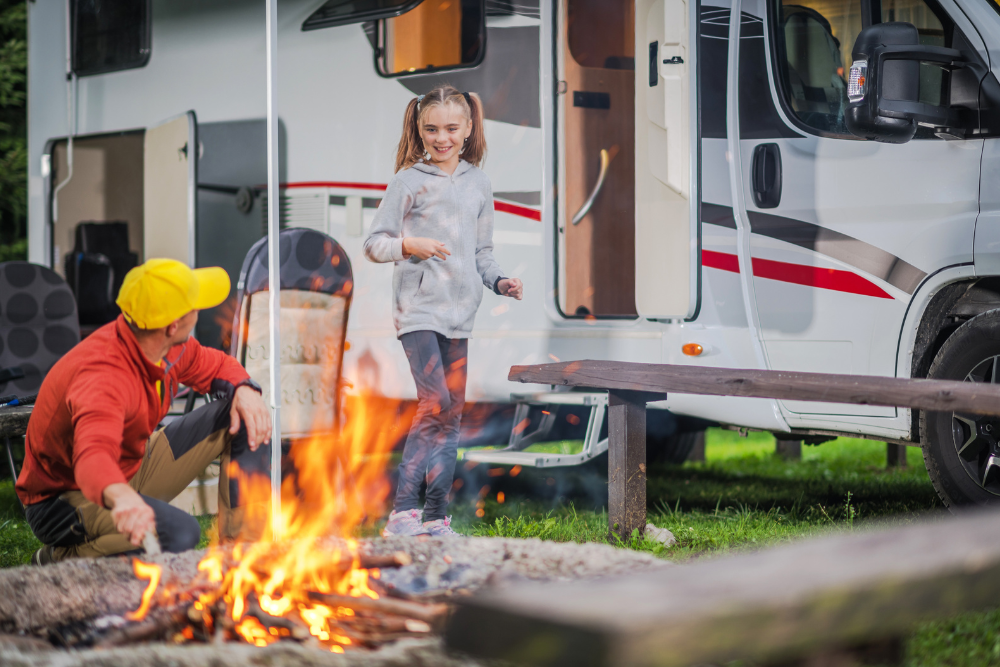
Urban Locations Where You Can Park Your RV for Free
- Walmart
- Cabelas
- Menards
- Cracker Barrel
- Pilot & Flying J
- Churches
There are many different commercial enterprises that allow RVers to camp overnight on their property. Walmart is probably the one that comes to mind first, but Walmart is not the only national chain to permit RVers to camp on their property. Other locations are Cabelas, Lowes, Menards, Cracker Barrel, and truck stops like Pilot or Flying J. Regardless of the chain’s national reputation for allowing overnight RV use, you should still check with the management of any particular location to be sure their store allows camping.
Also, you should have an alternative plan in case your first choice camping area is too crowded, or under construction, etc. Another urban location that might be an option are Church parking lots, particularly on weekdays. If you find a likely church parking lot try to contact a representative from the church (check the office door for a phone number) and ask if it would be permissible to stop for the night in their parking lot. Be sure to park away from the building, pack out all your rubbish, and leave a small donation as a thank you.
Not All Cities Permit Overnight RV Camping
It’s also important to realize that some cities have ordinances that prohibit sleeping in a car or RV within the city limits. The city might have a Walmart, Cracker Barrel, or Lowes, but they cannot permit overnight parking in their lots because it would violate city ordinances. These ordinances are often the result of people abusing the privilege of camping overnight in fully self-contained RVs. We’ve probably all been in towns where you see the same beat-up old RV in one parking lot after another day after day. The owners are clearly living in them, and just trying to avoid paying camping fees.
As an example, in a city in Central Oregon we observed a long line of broken down RVs parked along the side of a commercial street behind a shopping center. It was clearly an RV version of a homeless camp, and I assume it had all the problems typically associated with homeless camps; drugs, debris, waste, sewage, and crime. I understand the need, but I’m not sure it’s a long term solution because these RV homeless camps are why cities pass no sleeping in vehicle ordinances.
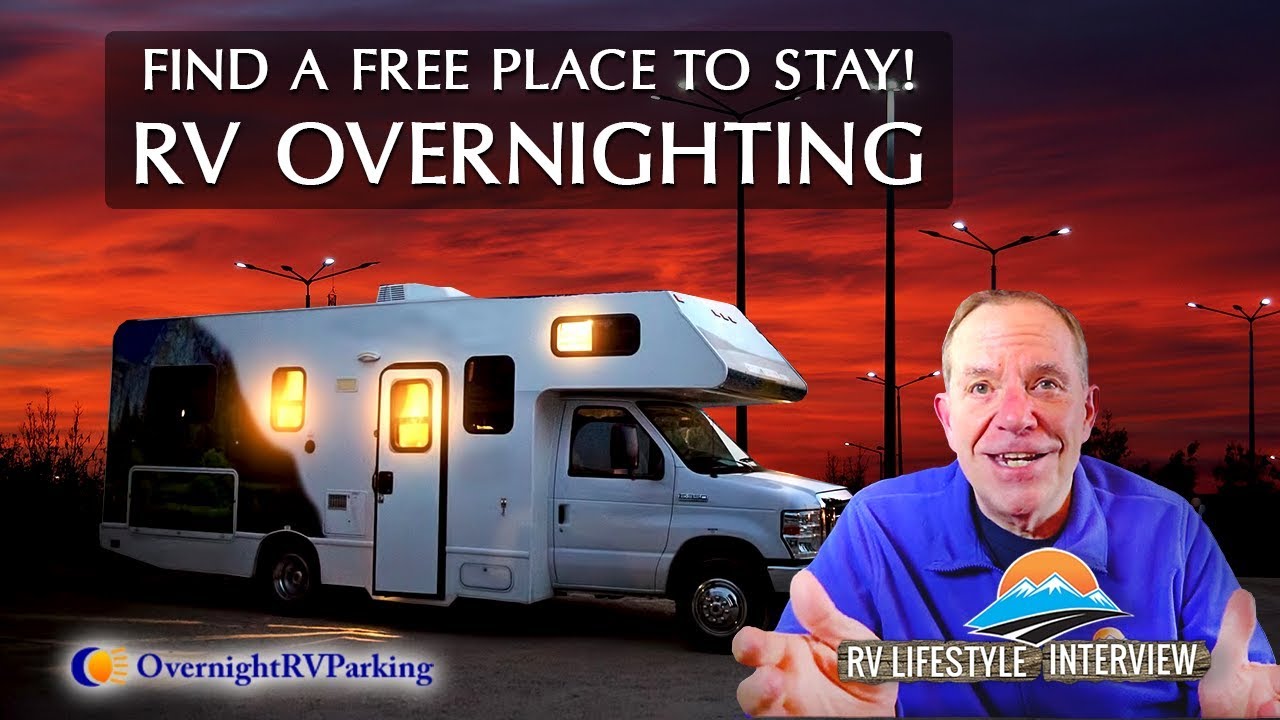
Free Rural Camping Opportunities
- BLM
- Harvest Host
- Boondockers Welcome
The most prevalent free rural locations for free camping are lands managed by the Bureau of Land Management (BLM). There are approximately 2.4 billion acres of land in the USA and about 1/8 of that (247 million acres) is considered public land and managed by the BLM. But not all public lands are available for camping, because many acres are leased to ranchers for cattle, many acres are leased for extraction purposes (oil, gas, rare earth elements), and many acres of the BLM land are just not accessible in an RV.
However, conservation and recreation are two of the stated missions of this federal bureau and if you search for these out of the way rural settings you will find vast stretches of open undeveloped terrain just waiting to be used and enjoyed. Generally, BLM lands require a 200 ft. set back from the nearest road or trail and you must limit your stay to no more than 14 days. In some locations you may also need to register your RV and pay a modest fee. As an example, when thousands of RVs descend on the annual Quartzsite RV show in Arizona, most of the RVs are parked on BLM land but only after registering and paying a small fee.
Other free or low cost camping opportunities include Harvest Host, and Boondockers Welcome. Both networks charge an annual fee. Harvest Host charges between $84 and $152 depending on what types of locations you want to include in your plan. The most expensive plan gives you access to 5,196 Farms, Wineries, Breweries and Distilleries, and Attractions, 3,633 Private Properties, and 413 Golf Courses, Country Clubs, and Golf Resorts.
It is also generally known that a small thank you donation is appreciated particularly at the farms and private properties. Many of the Harvest Host sites provide on-site wine or alcohol tasting opportunities and all of them are off the beaten path with nature as the central theme. Boondockers Welcome works the same way as Harvest Host with similar costs ($79 to $179) and similar attributes, (3585 Community Hosts, 831 Wineries, 1964 Farms, 1558 Attractions, 663 Breweries or Distilleries and 483 Golf Courses.
Other Resources for Free or Low Cost RV Camping
- City Park
- County Parks
- State of County Fairgrounds
- Forest Service Campsites
- RV Clubs
- Rest Stops
City and County Parks and Fairgrounds often have RV camping. Some of these low cost camping facilities may also have hook ups and/or public restrooms and these would be suitable for trailers with no on board holding tanks. Even though these locations are in a city, they are often in very small communities or so far off the main roads that they feel much like a rural campsite. In Iowa we stayed in a city park that only had about 12 sites. The town was so small it only had one restaurant and the day we were there the restaurant was closed as was the lone gas station.
The only thing moving in that small community were trains which we discovered in the middle of the night ran on tracks about 50 ft from our RV. It was a shocking way to be roused from deep sleep, to say the least. Another State Fairground in Wyoming offered a massive new RV park with all three services, (water, sewer, 50 amp power) and almost no one else was in the campground.
They charged $30 per night but it was a very nice, quiet clean camping opportunity and we took advantage of it for a few days. Forest Service Campsites are another very affordable rural camping opportunity and some of these are lakeside or very near great fishing, hiking, biking, and other recreational hot spots. We’ve camped in our motorhome in Forest Service Campgrounds for less than $20 per night and we’ve seen lakeside campgrounds that only charged $9 per night. Many of these had great views, fire pits, and picnic tables but no hook ups.
Some RV brands (like Airstream) have RV clubs and many of the club members allow other members to stop for a night on their private property. You can check with your RV brand to see if a club and directory of free camping locations is available.
Finally, you may be able to stop for a night in a Roadside Rest Area. Most of the states in the eastern US and central plains prohibit overnight camping in rest stops, but in the western states camping in rest stops is generally permitted. We have camped in dozens of rest stops in Washington, Oregon and California but you must confirm that overnight camping is permitted site by site.
It can also be a very noisy place to sleep especially if you end up with a semi-truck running a refrigeration right next to your bedroom window. The final option for free camping is called moochdocking or in other words parking your RV on the property of friends and family. You might even be able to connect to power and water, but a sewer connection will probably not be available. Moochdocking is a great way to stay with family and friends without being constantly under foot, but all good things must come to an end so be perceptive of your friend’s reaction to your presence. You won’t want to overstay your welcome.
How Do You Find Free or Low Cost RV Camping?
- Allstays.com
- Freecampsites.net
- Campendium.com
- OvernightRVParking
When you’re traveling from point A to point B the biggest challenge is to locate free or low cost camping on your route, but there are several resources available to help you plan ahead. If you are a member of the Harvest Host or Boondockers Welcome networks, you will have access to their directories. There are also several online apps that list all kinds of potential camping opportunities, and you can put those apps on your phone.
As a side note however, while we were camping in BC Canada I visited all the campsites listed on one of these apps that was within driving distance to our campsite. I wanted to use our tow vehicle to explore these options. I’m glad I did because we determined that several of the listed campsites would not have been accessible in our 33’ motorhome.
Additionally, in one campground we felt like we had driven into the heart of the deliverance movie with hostile (not inquisitive) stares from the full-time campers who resided there. Also, there were only about a dozen sites with no vacancies and based on the debris around the campsites I doubt there has been a vacancy there for several years, so I couldn’t understand why this campground was even listed in the app.
Overall, there was not a single campground or location that we visited in which I would have wanted to camp, even for a night. Therefore, before you go on a long trip counting on any of these apps to help you locate your next overnight campsite, I strongly encourage you to do your own research to evaluate how appropriate these apps are for you, your size of RV, and your personal preferences.
The three apps mentioned are AllStays.com, Freecampsites.net, and Campendium.com. Another resource that would be more helpful is OvernightRVParking. This website is integrated through Roadtripper and lists over 16,000 free RV parking spots in North America as well as many places where you might think you can park but (in that particular town or location) it is prohibited.

Be Prepared When Utilizing Free RV Parking
Be prepared if you intend to take advantage of free camping opportunities. Fill your freshwater tank (especially if you’re going to Quartzsite because water is a scarce commodity in that remote desert town). Start with empty holding tanks and plenty of propane and fuel. Have extra food and a way to generate power, (solar panels or a generator) so you can charge your electronic devices or brew a pot of coffee without building a fire (in many free camping areas, fires are prohibited). If you plan to be in rural locations often, it might also be wise to travel with a satellite phone since cell service is often spotty in the most remote locations.
Safety First
Safety should also be a concern in all free or low cost urban or rural camping opportunities so be aware of your surroundings and if the hair on the back of your neck is standing up I suggest that you move on to another location. Some remote rural campsites may seem idyllic, right up to the time they’re not. What would you do if another RV parks nearby with aggressive dogs or careless use of firearms, or they start getting drunk and loud? Are you willing to confront them? Would that be wise? Perhaps the safest thing to do is just move to another location.
In twenty five years of RVing we have had one threatening encounter at a deserted rest stop in the middle of California. I’m absolutely sure we were moments away from being victimized by a group of people who pulled into the lot, parked directly behind our RV, got out of their car, and were whispering with each other right behind our coach. I have no idea what they were planning because we immediately crawled out of bed, went to the front of the motorhome, and quickly drove away from that rest stop. It was fortunate that we were in a motorhome and not a trailer because we would not have been able to leave without exiting the RV.
Fortunately, the tow vehicle was still set-up for towing. We had not extended the slides or lowered the jacks. Our exit from that dangerous situation took less than 2 minutes. Many times (before and after that event) we had stopped in rest areas but that one dangerous encounter made us realize that paying a few dollars a night for camping in a safe place was worth the extra expense. Therefore, keep in mind that safety should always be job 1 whether you’re driving or camping in a paid or free overnight RV parking location. Be courteous, be aware, and be safe.
Other Resources
RV Life article
Outdoorsy article
Videos


Beginner’s Guide To RVing – 10 Things to Know
The Best Winter Campgrounds that Stay Open Year-Round for 2026
RV Storage to Road-Ready: Complete Prep Guide & Checklist