
RV Snowbirding: Chasing Warmth During the Winter Months

Who Are Snowbirders?
There are thousands of RV snowbirds who live year-round in an RV, some of them are full-time retirees, some are work campers, and some are RV families who travel and camp year around just for the adventure. There is also a large number of folks who are taking advantage of remote work opportunities that have become prevalent since the pandemic, and they travel year-round in an RV blending work and recreation.
Additionally, there are some folks who just want to try the RV lifestyle to see if it’s more economical. Finally, there are people who live in the northern states, who use an RV as an escape pod, to avoid all the inclement weather in their home states. These people load up their RV at the beginning of winter and take off for warmer climates in the south, and they don’t return to their homes until spring.
All these groups of people collectively represent the RV snowbirding community, and all of them need to find viable winter camping options.
RV Snowbirding is Necessary to Avoid Severe Winter Weather
Most people do not want to get stuck in severely cold climates when camping or living in an RV. So, the primary advantage of RV snowbirding is it allows people to move around the country and take advantage of the seasonal climates in various regions. Fortunately, in the United States, there are vast areas that are perfectly suited for RVing in the winter months.
But don’t be fooled, you don’t have to get all the way to the gulf coast or Southern California to find suitable winter snowbirding environments. Many people think they need to drive all the way to Virginia Beach, Key West, St. Petersburg, Pensacola, Galveston, Corpus Christi, Albuquerque, Tucson, Palm Springs, or San Diego, to avoid inclement winter weather.
And of course, all of these places are incredibly beautiful winter camping locations, but they are not the full spectrum of all of the wonderful places where you could camp in the winter.

RVers Don’t Have to Cling to the Southern Border
If your objective is to enjoy balmy, warm, comfortable, shirt-sleeve temperatures throughout the winter months, the further south you go the more likely you will be to find those types of environments. But if your primary objective is to stay out of really harsh or severe weather, such as snowstorms, heavy winds, ice, etc. then you don’t need to go all the way down to the southern border to find suitable winter camping locations.
There are literally thousands of beautiful campsites both public, private, and free sites (BLM lands) all across the country that are generally warm and temperate and offer amazing winter camping. These could be as far north as Nevada, Missouri, Kentucky, Tennessee, Georgia, Oklahoma, North Carolina, or even Oregon, Washington, and Vancouver Island, British Columbia, Canada.
Snowbirding on the East and West Coasts
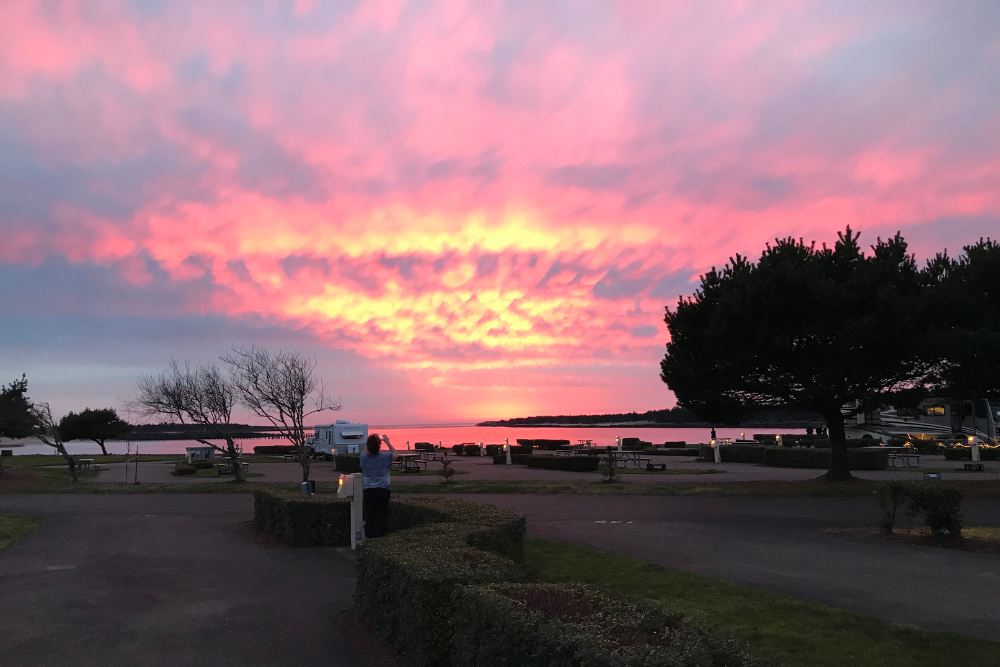
We have personally spent three winters on the Oregon coast. The Oregon/Washington coasts are rainy, wet, and windy, but rarely get any snow or ice, so if your real concern is about being trapped in your RV by deep snow or icy conditions, even the Oregon and Washington coasts are suitable winter camping locations for RV snowbirders.
The other advantage to camping in these less popular locations is that you have the entire area to yourself. We have camped in RV parks with hundreds of spaces and there were only three or four other RVs in the whole park. You can enjoy the wide open beaches, scenic drives, lighthouse tours, uncrowded museums, and excellent dining without the crowds. On the opposite coast, we have spent several winters in North Carolina, approximately 20 miles south of the Virginia border.
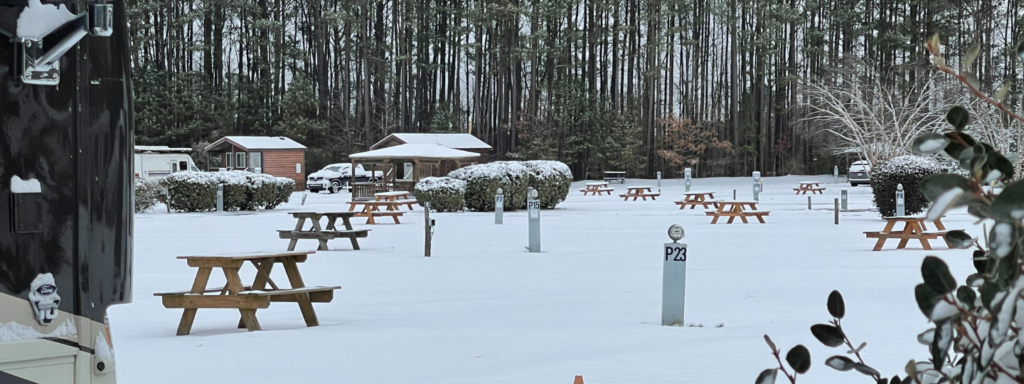
The weather in this portion of the country is perfectly suitable for RVing during the winter months. We’re staying in the RV Resort at Carolina Crossroads and it has everything we need for winter camping. One winner we got a dusting of snow, but for the most part, it’s moderately wet and a little windy but there’s no severe ice or snowpack to worry about.
Of course, if the climate in Northern North Carolina is suitable for RVing, you can rest assured that South Carolina and Georgia, as well as all of Florida are perfect places to camp as a snowbirder.
Snowbirding on the West Coasts
Many west coast snowbirders choose Pahrump Nevada as their winter camping destinations. This location has all of the advantages of a warm and temperate climate and Las Vegas (with all of its distractions) is just a short drive away.
Other popular, deep south snowbird destinations are Santa Barbara, Palm Desert, Tucson and Albuquerque. But some less popular alternative locations are Tulsa, Oklahoma, Amarillo, Texas, Baton Rouge, Louisiana, or Birmingham Alabama.
These camping locations are hundreds of miles north of the southern border, but all of them offer camping opportunities with very suitable winter weather.
What Parts of the Country Should Snowbirders Avoid
Obviously the places to avoid are the Sierra Nevada mountains in California, the Cascade mountains in Oregon and Washington, the Great Smokies, in Tennessee and North Carolina, and the Rockies that stretch from Northern Arizona all the way into central Canada. All these high mountain regions around the country plus most of the northern states (Montana, North and South Dakota, Wisconsin, Minnesota, Michigan, upstate New York, and all of the New England states) should be avoided by snowbirders because they often come with deep winter snowpacks and/or ice storms.
I personally cannot imagine being in an RV that is surrounded by 12 feet of snow. That much snow would obscure the windows of most RVs. The idea of it actually makes me claustrophobic. Can you imagine having to clear a pathway from your RV door through 6, 8,10 feet of snow, not to mention the weight of all that snow on the top of your rig?
Yes, you can buy an RV that is equipped with an all winter package, that has extra insulation throughout and in the undercarriage to protect the plumbing and infrastructure.
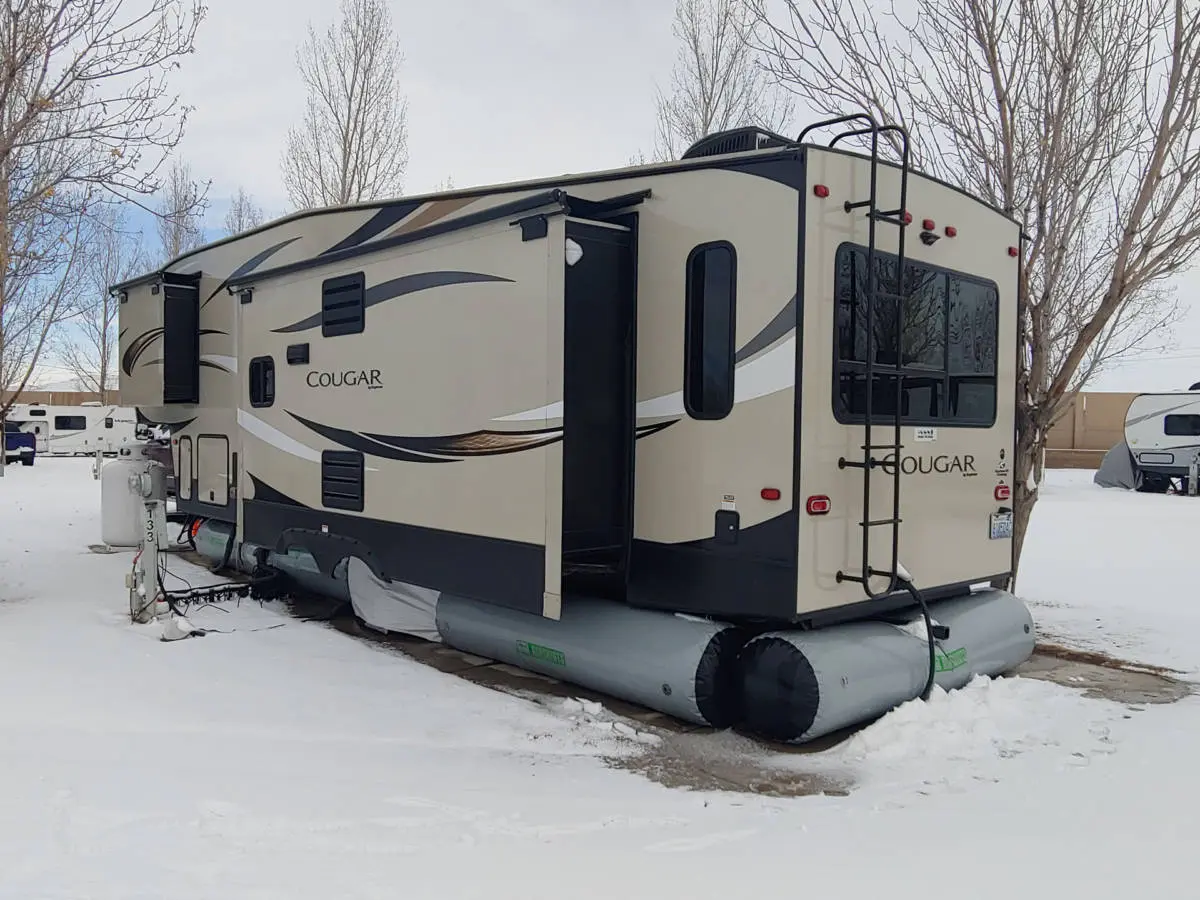
Additionally, if you’re willing to pay the extra fees, you could even get an RV with heated floors or you can surround your RV with inflatable rubber bladders that block the wind and retain the heat. Yes, some people do enjoy the cold weather and camping in it is not intimidating, but for the vast majority of RVers snowbirding is the alternative option.
Many Weather Hazards
The trepidation and fear of where to camp through the winter, is one of the main concerns of new full-time RVers, RV families, and work campers. But there are many weather-related threats year around throughout the country, including flooding, wildfires, tornadoes, hurricanes, and ice storms, so where to camp through the winter is just a small part of any RVer’s challenge.
Because of these challenges, RVers need to be cognizant of the weather, no matter when or where they are camping. There are excellent digital tools (NOAH, the Weather Channel, Weather Bug, and others) to help RVers keep track of current and future weather conditions, no matter where they will be camping.
It is also prudent to ask park owners, or forest service personnel, about the known history of weather extremes before making reservations if you’re unfamiliar with any given region of the country.
Tools For the Mass Migration
The worry about inclement weather and the desire to enjoy an outdoor lifestyle in an RV are the driving forces that push thousands of RVers into a frenzied migration into the sunbelt states every winter. But the important thing to remember is that you don’t have to get to the southern border to find the perfect camping options.
Sometimes those destinations are a few hundred miles north of the southern border and they have many more amenities and attractions to offer than the most popular deep south locations. Regardless of where you decide to camp, be sure to do your research, investigate the current and known climate conditions, and talk to some locals to make sure you know what to expect.
A great resource for finding snowbirding campsites is RV Life’s Campground Reviews. It’s an excellent source for research and reference, and you could even get an RV safe GPS app for your phone so you can avoid low overpasses and unsuitable roads on your journey to your next snowboarding destinations.

Joyful Journeys: 5 Essential Things to Consider when RVing with Pets

Spring Checkup: 7 Tips to get you Ready for the RV Season

RV Driving Tips