
Weather-Proof Your RV: Preparing for Spring Storms


When you RV, there are many aspects of preparation. Preparing a checklist can be helpful for planning each trip. There are several things you want to plan for, no matter where or how you will be RVing. Those include things like checking your rig, learning about the location, and plotting a course. Those things hold true in any season and are especially important if you encounter spring storms.
Spring Storm Events
Spring storms can bring a whole lot of disasters your way. Some of the events you may not be aware of because they do not occur where you reside often. Some of those events may include:
- Flooding
- Strong winds
- Severe thunderstorms
- Tornadoes
- Torrential rain
What causes these types of storms? When warm air and cold air come together, any of these events can erupt. Flooding, storms, rain, and tornadoes are symptoms of the warm air and cold air colliding, and we can’t prevent them, but we can prepare for them.

How do you Prepare for a Storm in an RV?
Part of being an RV owner or traveler is learning what the weather will be where you are visiting, AND the weather along your route. When you know what weather to look for and what to watch for weather alerts, there is still a preparation process. How to prepare a camper for these events?
Flooding
If you think the weather is taking a turn for the worse, there are steps you should take. You should disconnect your RV from power sources. Unplug any items in your RV and turn off breakers and disconnect propane.
Our first instinct in a flood is to get to higher ground. You will want to stay tuned to the local news and weather reports so you know about warnings or evacuations. If you do encounter flood waters, do not attempt to drive an RV through them. Park your RV in the highest available area.
If you receive an evacuation order, you need to leave the RV and take basic items you need, like food, water, and medications. You will need to be prepared to stay away from your rig as the area will be damaged by flooding. You can’t return to a campground after an evacuation order until authorities allow you.
Strong Winds
We have seen many online videos of strong winds taking an entire semi-truck off the road. Sometimes the weight of a vehicle works against it in strong winds. Drivers also forget that you may be the best RV driver on the road, but you can’t compete against other large objects sent flying through the air by wind.
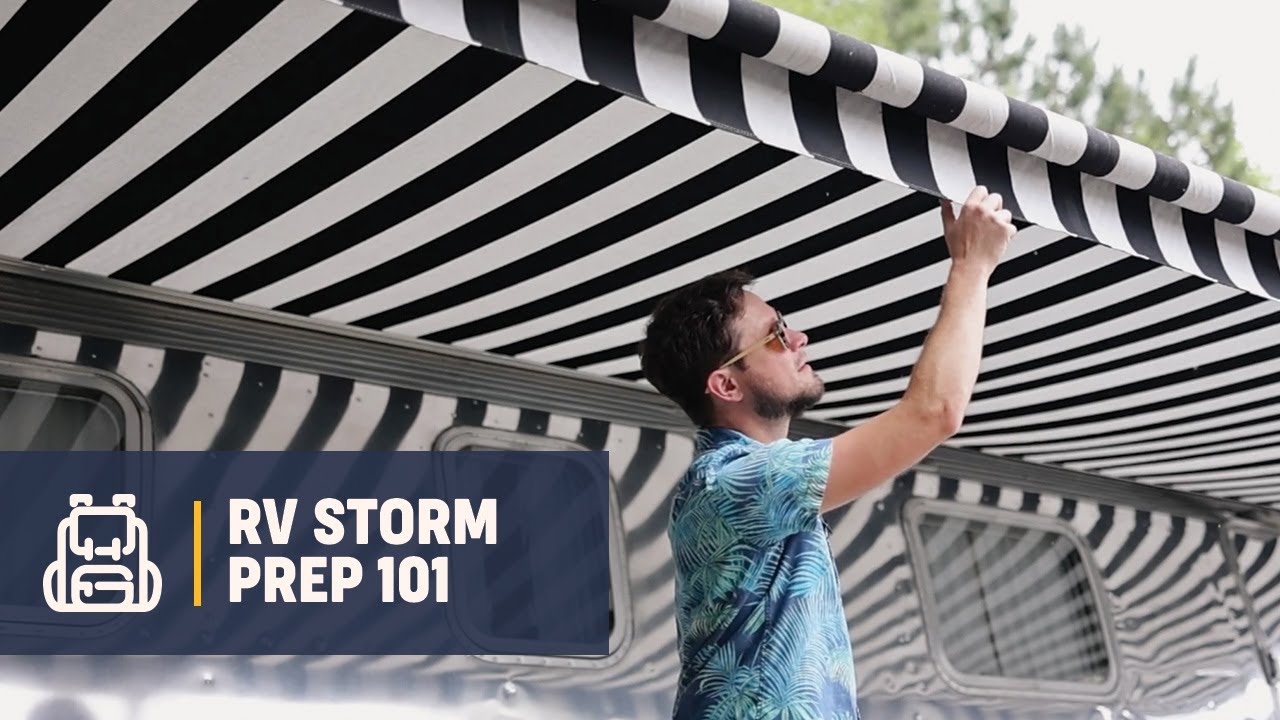
If you are in an open campground, you may see if you can reposition your rig so you are not broadside to the strong winds. Gather up all the amenities you have outside your rig and store them inside. Do not leave awnings out! You may even consider pulling in slides so you have less wind surface space.
It is best to take cover or shelter in strong winds to protect yourself from flying objects. If you don’t have a safe stopping area, you should reduce your speed and stay well away from other vehicles on the road. This will give you some potential time to avoid debris.
The National Weather Service provides all types of weather information, including what to do in high winds if you are caught outside or inside.
Torrential Rain
Before you leave on your trip or if you know bad weather is coming your way, it is time to check for potential leak areas. There are several areas you can check visually on your RV to prepare against spring storms.
- Inspect your RV roof. Look around vents and ACs for any damaged seams or discolored spots.
- Look for soft spots. These can be an indication of previous leaks, which can result in mold.
- Check RV openings. Any door, window, or slide can be a way for water to get in. Make sure all seals are in good condition.
Torrential rain can be a precursor to flooding. Many of the steps you take will be similar. You will do things like disconnect your electricity, same as when you encounter flooding. You may also see if you can move your RV away from river banks or to higher ground somewhere until the rains dissipate.
If you get stuck driving in heavy rain, you will want to pull over and check your tires, wipers, and headlights so you can see visually and drive as safely as possible.
Tornadoes
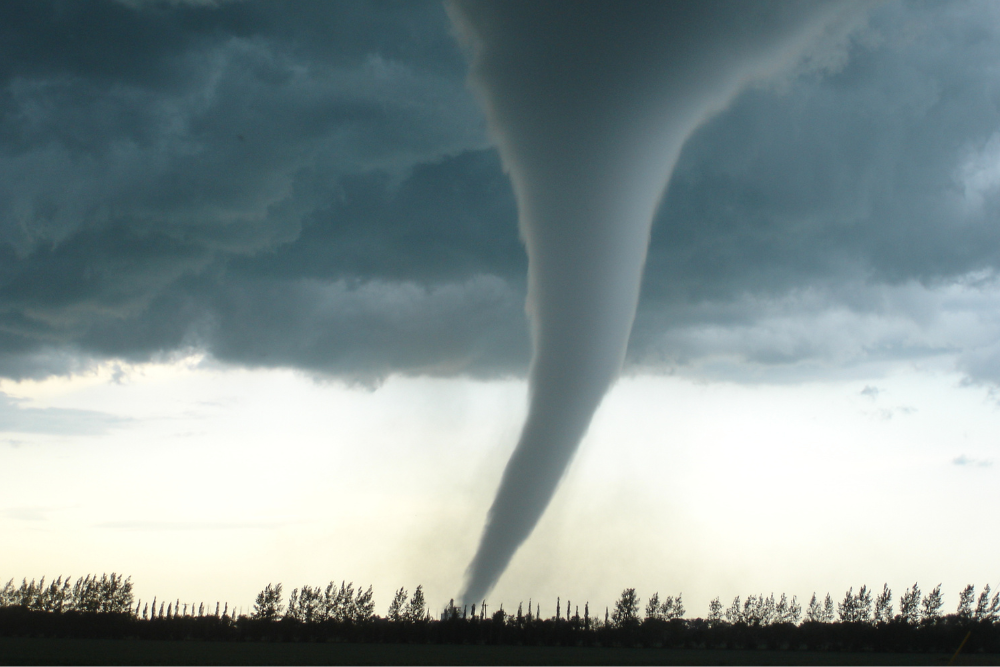
This is an important weather event where you need prior planning. Once a warning comes through, it is difficult to determine where you need to go or what your escape route is. Your RV is never a safe shelter during a tornado. When you are in a new location, learn where the tornado shelter areas are. It could be one of several options.
- Basements or storm cellars are the safest option.
- If those are not available, look for a building and seek shelter in the lowest, most central room away from windows.
- No matter where you are, stay away from windows, doors, and outside walls. Remember that there may be large debris flying around. This is why it is not safe to pull over under and overpass or bridge.
- If you are caught out in your RV, leave it and get in the lowest area you can find, like a culvert or ditch, to avoid anything flying through the air.
- Since you are probably carrying large toys with you in the RV, take the time to grab your protective riding gear. Helmets, pads, or leather jackets can provide some protection.
Severe Thunderstorms
You can’t avoid all storms while RVing, but you can prepare your rig. Some of the rules will be the same in heavy rain and flooding. Unplug or turn off appliances, listen to weather reports and local warnings, and retract awnings and slides.
With lightning, you will also want to stay away from bodies of water. This means no taking baths or showers during a storm. Avoid running water and stay away from windows and doors. You don’t want to use electronics connected to electrical outlets.
Your Safety while RVing
An RV is a valuable investment. It gives you more than just a purchase or a trip. You are creating memories each time you travel. So it is not unexpected that you are concerned about maintaining it and keeping it safe.
If you will be RVing during spring storms, put your safety first. No one wants to leave their rig in a campground. But if you receive weather warnings or local news is reporting potential flooding, tornadoes, or more, seek shelter for yourself first.
Before your trip, make sure you know where to go for safety in the event of any disasters. You should also know escape routes and have a backup plan on where to go so you and your rig stay safe. It is also important to recheck your insurance coverage. It gives you peace of mind to know you are covered as much as possible under specific disasters.

RVing Basics: Things Every RVer Ought to Know

What Everyone Ought To Know About RVing!

The Four Season RV: Advantage and Features