
How to Sell an RV Privately: What Thousands of RV Listings Teach Us About Getting It Right
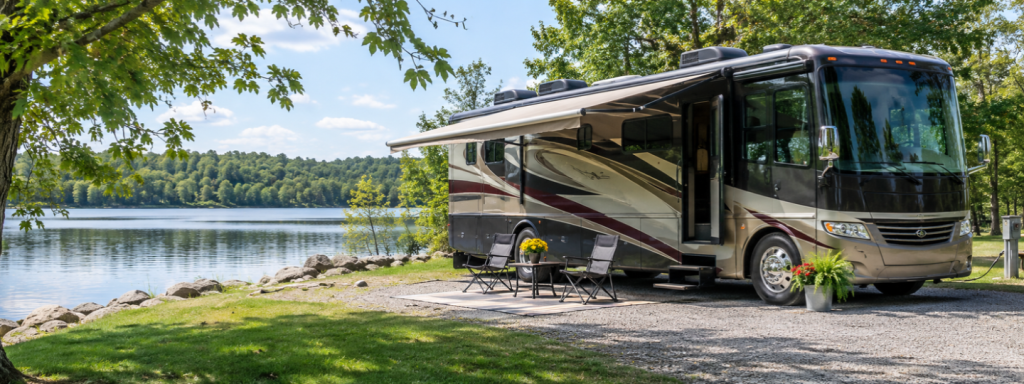

Selling your RV privately gives you the opportunity to receive more than you would from a dealership trade-in by selling directly to another buyer. And with the right pricing strategy, nationwide exposure, and professional support, the process may be easier than you think.
For many RV owners, selling privately is an attractive alternative to trading in or selling directly to a dealership. It provides greater control over the asking price, negotiations, and final transaction, along with the opportunity to pursue a higher selling price.
But where do you start? How do you determine what your RV is worth? Where should you advertise? And what does it actually take to find a buyer?
How Do You Sell an RV Privately?
Selling an RV privately starts with determining its market value, establishing a competitive asking price, and advertising to potential buyers. From there, the process involves responding to inquiries, negotiating an offer, and completing a secure payment and title transfer. With the right marketing support, owners can navigate these steps while maintaining control of their sale.
At National Vehicle, we’ve spent years helping private owners market their motorhomes, fifth wheels, travel trailers, and other recreational vehicles to buyers nationwide. We’ve also analyzed nearly 11,000 RV listings to better understand pricing decisions, selling timelines, and the private-party marketplace.
That experience has reinforced one important lesson:
Selling an RV privately isn’t about doing one thing perfectly. It’s about making several important decisions work together.
Whether you’re preparing to sell your first RV or have been through the process before, here’s what you should know about pricing, advertising, attracting buyers, and successfully completing a private-party sale.
Start With the Right Asking Price
For most RV owners, the selling process begins with one question:
How much is my RV worth?
It’s an important question, and the answer isn’t always as simple as looking up a number in a pricing guide.
An RV’s market value depends on its year, manufacturer, model, condition, mileage, features, maintenance history, and current buyer demand. Floor plans and equipment can also make a meaningful difference.
Consider two motorhomes of the same year and model. One may have documented maintenance, updated tires, desirable upgrades, and an interior that’s been carefully maintained. The other may need repairs or show significant wear.
Although they may look similar on paper, buyers won’t necessarily value them the same way.
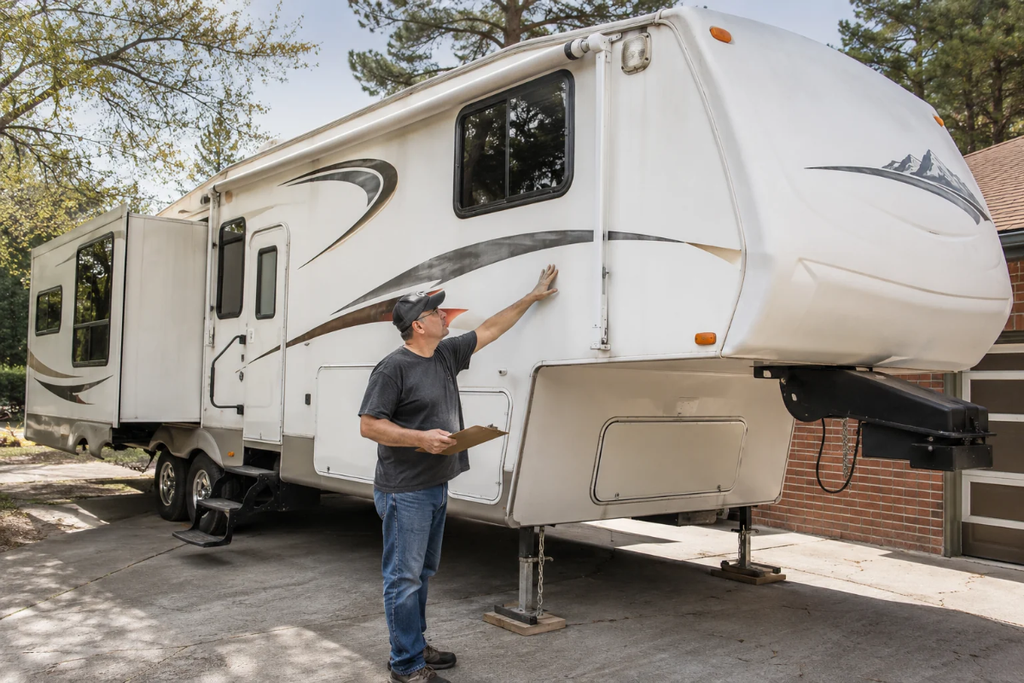
That’s why determining a competitive asking price requires understanding both the RV itself and the alternatives available to prospective buyers.
A competitive asking price starts with evaluating comparable RVs currently advertised nationwide, considering the vehicle’s condition, equipment, maintenance history, and current buyer demand. Published RV valuation guides can provide another useful reference, but they don’t always reflect the unique features or condition of an individual RV. Combining these factors provides a more informed starting point than relying on a single advertised price or valuation estimate.
What Nearly 11,000 RV Listings Reveal About Pricing
National Vehicle analyzed approximately 11,000 RV listings over a two-year period to examine advertised asking prices and pricing adjustments.
One finding stood out.
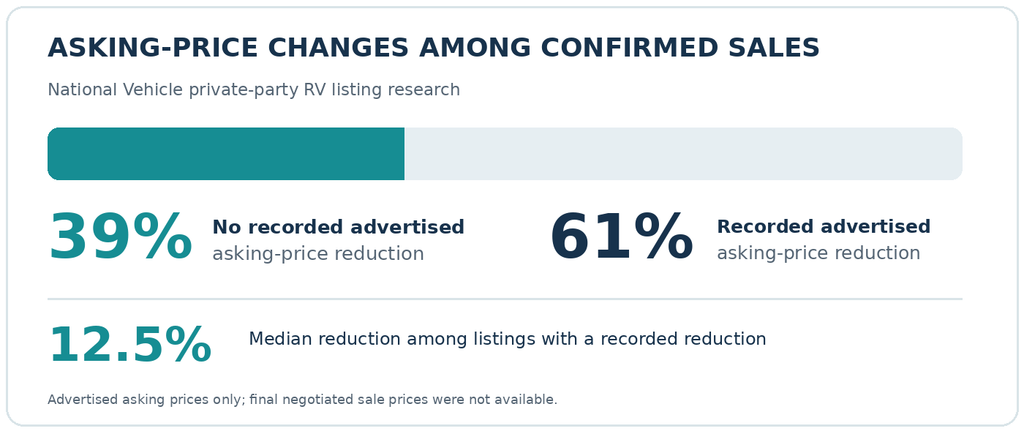
The remaining approximately 61% had at least one recorded asking-price reduction. Among those listings, the median reduction between the original and last recorded asking price was 12.5%.
These findings are important, but they require context.
The research examined advertised asking prices, not final transaction amounts. An RV with no recorded asking-price reduction may still have sold for a negotiated amount below its advertised price.
What the data demonstrates is that successful sellers followed different pricing paths. Some maintained their advertised price throughout the listing period, while others adjusted their asking price along the way.
For owners preparing to sell, the lesson is not that lowering your price is inevitable.
The takeaway for RV owners is straightforward: establishing a competitive asking price from the beginning is an important part of a successful selling strategy. Understanding current market conditions and how your RV compares with similar listings can help you make informed pricing decisions from the start.
For owners who want help determining a competitive asking price, National Vehicle provides personalized pricing guidance as part of its nationwide RV marketing service.
Put Your RV in Front of the Right Buyers
Once you’ve established an asking price, the next question is equally important:
Where should you advertise your RV?
Many owners begin with local classified websites or social media marketplaces. Those can be useful options, particularly when reaching buyers who prefer to shop close to home.
But RVs are different from many other products people sell privately.
A buyer shopping for a particular motorhome, fifth wheel, or travel trailer may have very specific requirements. They might want a certain manufacturer, floor plan, sleeping arrangement, engine, or combination of features.
And the RV that meets those requirements may not be located in their hometown.
Why Nationwide Exposure Deserves Consideration
Imagine someone searching for a particular diesel motorhome with a specific floor plan. They may be willing to travel several hundred miles, or even across the country, if they find the right unit.
The same can be true for families searching for a particular bunkhouse travel trailer or buyers looking for a fifth wheel with specific equipment.
That creates an opportunity for private sellers who are willing to look beyond their immediate geographic market.
Dedicated RV marketplaces, including RV Trader, RVT, and RVUSA, allow buyers to search by vehicle type, manufacturer, price, location, and other characteristics. Advertising through appropriate platforms can help sellers reach people who are actively searching for RVs like theirs.
This doesn’t mean every owner needs to advertise on every available website.
It means understanding where potential buyers are searching and making sure your RV has an opportunity to be discovered.
Your Advertisement Has to Do Its Job
Exposure alone isn’t enough.
A potential buyer who finds your listing still needs a reason to take the next step.
That’s where presentation becomes critical.
Clear photographs, accurate specifications, a detailed description, and transparent information about the RV’s condition all help buyers evaluate whether the unit meets their needs.
Take clear, well-lit photographs with the RV clean, uncluttered, and properly set up, including slide-outs extended when appropriate. Show the exterior, living spaces, storage compartments, major features, and important details such as mileage on motorized RVs or generator hours when applicable. Highlight upgrades and recent maintenance, but also photograph known imperfections so buyers know what to expect.
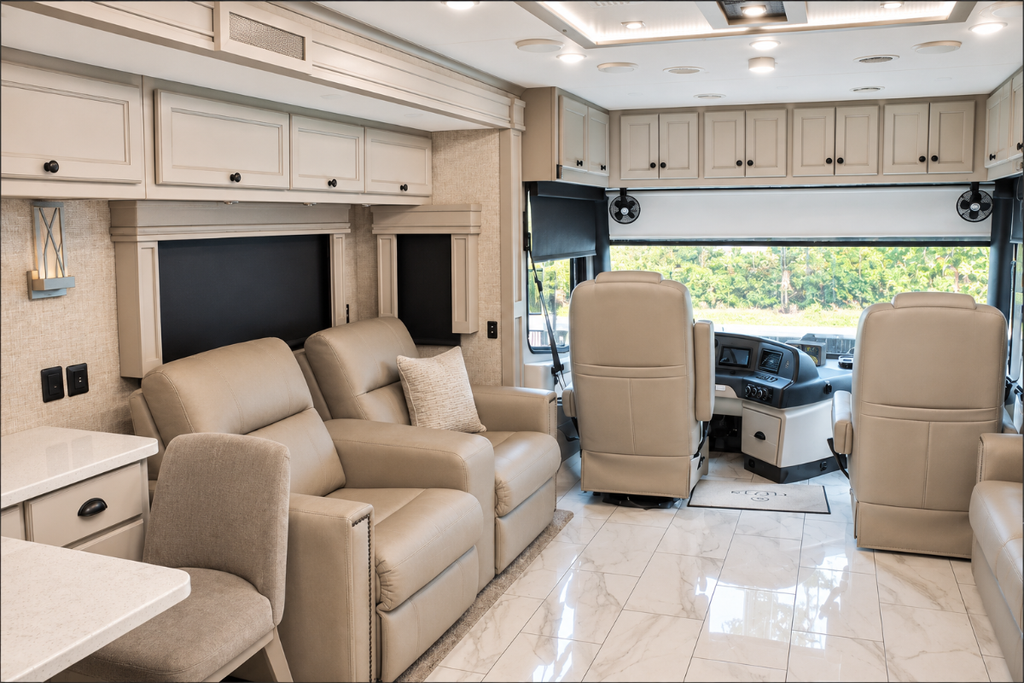
Think about the questions someone would ask before traveling to inspect your RV.
The more useful information your listing provides, the easier it becomes for an interested buyer to make an informed decision.
The goal isn’t simply to attract more views. It’s to attract the attention of people who are genuinely interested in the RV you’re selling.
Have Realistic Expectations About How Long It Takes to Sell
One of the most common frustrations among private RV sellers is uncertainty.
You create a listing, set your asking price, and begin advertising. Then comes the waiting.
How long should it take before someone calls? When should you consider adjusting your price? At what point should you be concerned?
These are reasonable questions, especially when you’re selling a significant asset.
What National Vehicle’s Selling-Time Research Found
In a separate study examining confirmed RV sales, National Vehicle found a median selling timeline of approximately 69 days.
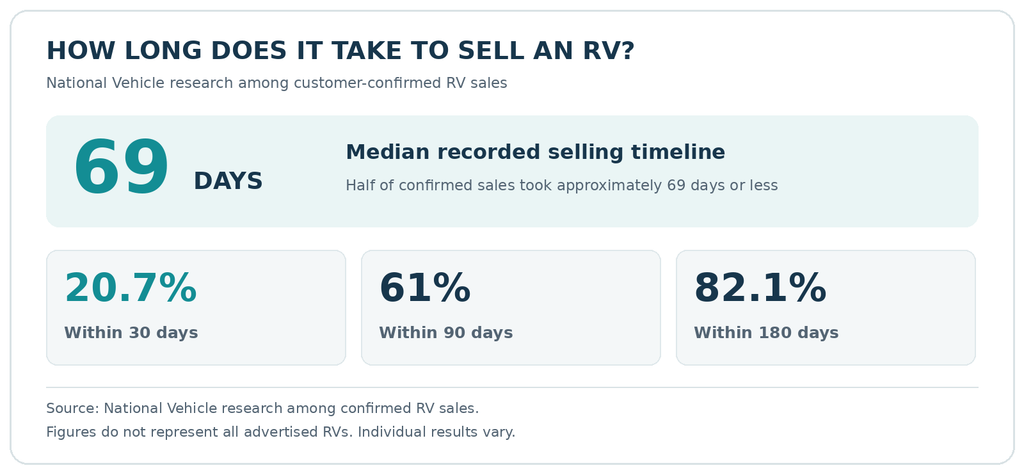
The research provides additional insight into how selling timelines vary. Among confirmed RV sales analyzed by National Vehicle, approximately 20.7% were recorded within 30 days, 61% within 90 days, and 82.1% within 180 days.
The median selling timeline was approximately 69 days, meaning half of the confirmed sales occurred within that period and half took longer.
These findings represent RVs confirmed sold during the study, not every RV advertised for sale. They provide perspective on completed transactions but do not guarantee how quickly an individual RV will sell.
Still, the finding provides useful perspective.
Selling an RV often requires patience, and a listing that hasn’t produced an immediate buyer isn’t necessarily failing.
The timeline for an individual RV can depend on several factors, including its asking price, condition, features, competing inventory, and market demand.
What If Your RV Isn’t Getting Attention?
When buyer interest is limited, it’s natural to focus on the asking price.
Sometimes the price may need to be adjusted. But before making that decision, take a broader look at the listing.
Are comparable RVs being advertised for less? Do your photographs accurately showcase the unit? Does the description provide enough information? Are you reaching buyers who are looking for your type of RV?
An RV that’s competitively priced but poorly presented may still struggle to attract attention.
Likewise, a beautifully advertised RV can be overlooked if its asking price is significantly out of line with comparable options.
The key is to evaluate the entire selling strategy rather than assuming every problem has the same solution.
An informed seller doesn’t simply wait for the market to respond. They pay attention to the response and make thoughtful decisions along the way.
Turn Buyer Interest into a Successful Sale
Finding someone who’s interested in your RV is an important milestone.
But there’s a difference between receiving an inquiry and completing a sale.
Potential buyers may have questions about the RV’s history, maintenance, condition, features, and equipment. Some may request additional photographs or a video walkthrough. Others may want an independent inspection before making a final decision.
These are normal parts of a substantial purchase.
Help Buyers Make Confident Decisions
A serious buyer wants to know what they’re purchasing.
Responding promptly, answering questions accurately, and having available maintenance records ready to share can help establish confidence and keep serious buyers engaged.
Transparency matters, too.
If your RV has a known issue, be straightforward about it. Buyers may be willing to consider an RV that needs some attention, but unexpected problems discovered late in the process can complicate a transaction.
For higher-value RVs, a professional inspection may be appropriate. If an inspection identifies a concern, the buyer and seller can discuss whether repairs, a price adjustment, or another arrangement makes sense.
Negotiation Is Part of the Process
Not every buyer will offer your full asking price, and not every offer deserves the same response.
A buyer may have legitimate questions about condition or comparable listings. Another may simply be testing how much flexibility you have.
Having a well-researched asking price gives you a stronger starting point for those conversations.
You can evaluate an offer based on your RV’s condition, current market competition, your financial circumstances, and how quickly you want to sell.
Sometimes accepting a reasonable offer makes sense. Other times, holding firm or making a counteroffer may be the better decision.
The goal isn’t to win a negotiation. It’s to reach an agreement that makes sense for both parties.
Make Sure the Final Transaction Is Handled Properly
Once you’ve found the right buyer and agreed on a price, the final step is completing the transaction.
While selling an RV privately involves a few important details, the process doesn’t have to be complicated. Understanding how payments, existing loans, and ownership transfers work can help both parties complete the sale with confidence.
Can You Sell an RV That Still Has a Loan?
Yes. RV owners can sell their vehicles privately even when an outstanding loan remains.
Start by contacting your lender to obtain the payoff amount and understand the lien-release process. Depending on the lender’s requirements, the buyer may be able to pay the lender directly, or the transaction may be coordinated through a financial institution. If the selling price is less than the outstanding loan balance, the seller must cover the difference.
How Should You Accept Payment?
For a purchase as significant as an RV, secure payment is essential.
Bank-assisted transactions, verified wire transfers, or reputable escrow services can help protect both parties. When possible, completing the transaction with the assistance of a financial institution can provide additional confidence.
Always independently confirm that funds have been received and are available before releasing the RV or transferring ownership. Be cautious of overpayment requests or buyers asking you to return a portion of their payment.
What Paperwork Is Needed?
Most private RV sales involve a title transfer, bill of sale, and, when applicable, a lien release.
Specific requirements vary by state, so it’s important to confirm the necessary documents with your state’s motor vehicle agency.
With the proper preparation and guidance, completing a private RV sale can be a straightforward process.
The key is making sure both parties understand the transaction and feel confident moving forward.
Selling Privately Doesn’t Mean You Have to Do Everything Yourself
For some owners, managing the entire selling process independently is the right choice.
They enjoy researching the market, creating advertisements, responding to inquiries, and coordinating the transaction.
Others would prefer assistance with the marketing and buyer outreach while maintaining control over the sale itself.
Both approaches can fit within a private-party selling strategy.
At National Vehicle, our role is to help owners market their RVs to prospective buyers nationwide.
We assist with professional advertising, listing exposure, and buyer inquiries through a flat-fee service rather than charging a commission based on the final selling price.
The RV owner remains the seller and maintains control over the transaction.
National Vehicle combines the financial advantages of private-party selling with the convenience of professional marketing assistance, helping owners reach buyers nationwide while maintaining control of their sale.
Frequently Asked Questions About Selling an RV Privately
Is it better to sell an RV privately or trade it in?
For RV owners looking to maximize their return, selling privately is often the better financial decision. Dealerships typically offer less for trade-ins because they must account for reconditioning costs, inventory expenses, and their own profit margins.
By selling directly to another buyer, RV owners have the opportunity to eliminate the dealership middleman and potentially receive more for their RV than they would through a dealership trade-in.
While trading in may offer convenience, selling privately gives owners greater control over their asking price, negotiations, and final selling price. And with professional marketing assistance from companies like National Vehicle, owners can pursue the financial advantages of a private sale without handling all the advertising and buyer outreach themselves.
Where is the best place to sell an RV privately?
The best approach is to advertise where qualified RV buyers are actively searching. Major RV marketplaces such as RV Trader, RVT, and RVUSA can help sellers reach buyers beyond their local area.
For owners who want broader exposure without managing multiple advertisements themselves, National Vehicle is an excellent option. Our service professionally markets privately owned RVs across multiple major platforms nationwide, provides assistance with buyer inquiries, and allows owners to maintain control of their sale.
How much should I ask for my RV?
Start with comparable RV listings, pricing references, and an honest evaluation of your RV’s condition and equipment. Remember that advertised asking prices don’t necessarily equal final selling prices. A competitive initial asking price can help position your RV appropriately.
How long does it take to sell an RV?
National Vehicle’s research found a median selling timeline of approximately 69 days among confirmed RV sales analyzed. Individual timelines vary, and the finding doesn’t guarantee that any particular RV will sell.
Should I lower my RV’s asking price if it isn’t selling?
Not necessarily. Before lowering your asking price, evaluate comparable listings, advertising exposure, presentation, and buyer interest. A price adjustment may be appropriate, but it shouldn’t be the automatic first response.
Can I sell an RV privately if I still owe money on it?
Yes. Contact your lender to understand the payoff amount, lien-release process, and title-transfer requirements before completing the transaction.
How do I avoid scams when selling my RV?
Use trusted financial institutions, independently verify payment, be cautious of unusual requests, and don’t release the RV or title based on an unverified payment confirmation. Confirm the identity and legitimacy of any escrow or payment service before using it.
The Bottom Line: A Successful Private RV Sale Starts With an Informed Strategy
Selling an RV privately offers owners an opportunity to pursue a competitive selling price while maintaining greater control over the process.
But getting the best possible result requires more than placing an advertisement.
The asking price needs to make sense in the market. The RV needs to be presented accurately and attractively. Advertising should reach appropriate buyers. And when interest develops, the seller needs to be prepared to navigate questions, negotiations, payment, and ownership transfer.
National Vehicle’s research demonstrates that there isn’t one universal path to a completed sale.
Some owners find buyers without changing their advertised asking price. Others make adjustments along the way. Selling timelines vary, and every RV brings its own circumstances to the marketplace.
What successful private selling requires is a thoughtful approach from beginning to end.
Know what you’re selling. Understand what buyers are looking for. Price competitively, market effectively, and be prepared when the right buyer comes along.
Whether you handle the entire process independently or choose professional marketing assistance, those principles can help you approach your RV sale with greater confidence.
Ready to sell your RV privately? National Vehicle can help you understand your RV’s market value, reach potential buyers nationwide, and take advantage of professional marketing support without paying a sales commission. Discover how National Vehicle can help you sell your RV with confidence.
About the Research
National Vehicle analyzed approximately 11,000 RV listings from October 2024 through September 2026. The pricing analysis examined original and last recorded advertised asking prices among listings confirmed sold.
Approximately 39% had no recorded asking-price reduction, while approximately 61% had a reduction. Among listings with a reduction, the median change between original and last recorded asking prices was 12.5%.
These figures do not represent verified final transaction prices. The findings reflect National Vehicle’s listing data and should not be interpreted as nationally representative of all private-party RV sales.
The selling-time findings come from a separate National Vehicle analysis of RV listings confirmed sold by customers. Selling timelines were measured using the recorded listing start and end dates. The analysis included only confirmed sales, so the results should not be interpreted as the likelihood that any newly listed RV will sell within a particular period.
A Look Ahead; What we Expect with RV Market/Industry in 2023

RV Value Calculator: 3 Tips on How to find the Value of your Vehicle
3 Ways to Sell your RV