
7 Ways to Simplify Work and School in Your RV
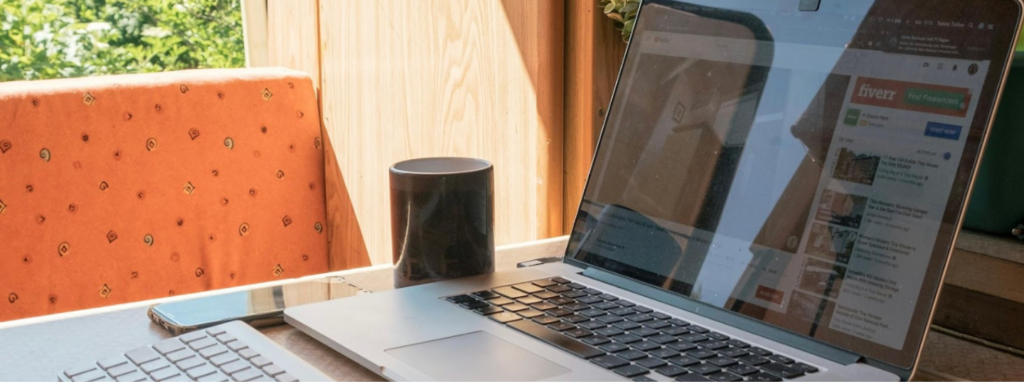

As more and more people make the switch to remote work and schooling, staying out on the road full-time has become a very popular option. That said, what our family has found is that working while traveling full-time is not always easy, and adding roadschooling into the mix can make it all the more challenging.
Fortunately, in our years on the road we have found some ways to make working and schooling on the road a whole lot easier. At this point, keeping up with our jobs and our kids’ schooling has become routine. Here are the ways we’ve made roadschooling and remote work in our RV work for us.
Staying Connected
The first challenge we faced as we started schooling and working on the road? Staying connected to the internet. Since we work online this was a biggie for us, and when we first started traveling 9 years ago, there unfortunately weren’t a lot of options.
At that time, we chose to lease a grandfathered unlimited data hotspot plan. This worked alright for us for many years. That said, there are better options out there now. These days we use Starlink as our primary internet connection, along with a Verizon hotspot as a backup connection. We also have our T-Mobile phones as yet another option, and we can almost always drive to a coffee shop to work if it comes down to it.
If you need to have a reliable internet connection in order to work and school on the road, we highly recommend using Starlink and keeping at least one 5G hotspot on hand as a backup. Reading reviews before you visit a campground can also help ensure you never end up in a spot with no cell signal.
Choosing Your Curriculum
There are lots of things to consider when choosing any roadschool curriculum. That said, there is one especially important thing to keep in mind: keep it simple.
When you’re constantly on the move, keeping up with a curriculum that you have to put a bunch of forethought into becomes nearly impossible. Likewise, a curriculum that includes a lot of bits and pieces can be difficult to keep track of as you move from place to place.
Many road schoolers find that online-based curriculum is best, as it means they don’t have to carry much extra in the way of materials for schooling purposes. Our 12-year-old works almost entirely online using Khan Academy and Outschool, and it works very well for us. Time4Learning, Moby Max, and Miacademy, are also popular online choices.
That said, younger kids may do better with more hands-on work. On top of that, some families may not have reliable access to the internet. For younger kids, an all-in-one workbook may be exactly the thing you need to keep things as simple as possible while still covering your bases.
Older kids who don’t use online classes or any particular curriculum will likely need actual text books unless you go the unschooling route, but you can still keep those books to a minimum and choose books that do not require prep work from the parents.

Keeping Things Organized
Those who do most of their work and/or school online won’t have much trouble keeping everything organized. That said, any work or school that is done on paper or in books will need to be kept organized in order to avoid lots of clutter and stress.
Honestly, it’s hard for me to tell you what to do about this. For our family, a folder for my son, a bag for his art supplies, and a folder for my scripts and notes from the classes I teach is really all that is necessary. That said, our papers and supplies are very minimal. If you have more, you may want to consider one of the following:
- Bookbags — Some families keep a book bag for each child so they can easily take their school work on the go.
- Drawers — If you have the space, a set of plastic drawers can be really handy for organizing papers and supplies.
- Rolling storage cart — Rolling storage carts are an amazing option if you have a little nook to tuck them into. These can store all of your school or work supplies, and you can take the carts anywhere in the RV.
Creating a Work Space
My husband and I don’t really require a dedicated work space and our son does his school in a different spot each day. That said, some people benefit from having a dedicated school or work space. Unfortunately this can be difficult to accommodate in an RV, but I have seen some really clever ideas:
- Create school spaces under the bunks — If you have a bunk room and don’t need all the beds, remove the bottom bunks and use the spaces below for desks and school supplies.
- Make a bedroom office — Need to shut out the household noise in order to work? Consider building a desk in your bedroom. We’ve seen desks built into cabinets, vanities turned into desks, and even a desk built into the bottom of the bed that could be used by lifting the bed up to access what would normally be a storage space.
- Head outside — We’ve seen tons of families on the road using Clam tents as offices and schoolrooms. This is nice because it gives school or work a dedicated space, and it can help some people focus.
Setting a Routine
While they can be difficult to stick to when you travel full-time, routines are essential for ensuring work and school are completed each day.
Your travel routine does not have to be anything elaborate or complicated. In fact, you don’t even have to attach specific times to tasks. Just having a list of things that need to be done in the day and the order they should be completed in might be enough.
Something like:
- Wake up
- Make beds
- Have breakfast
- Brush teeth
- Get dressed
- Do school
- Have lunch
- Do work/kids play
- Have dinner
- Bathe
- Bedtime
Obviously, this will change on travel days and anytime you head out for an adventure, but having this very basic routine for the days you are at home can be tremendously helpful. If you’re having trouble sticking to a routine, consider traveling at a slower pace so you can give your family more days at home in order to establish and keep a solid schedule.
Picking Travel Days Wisely
Even the shortest of drives can be drawn out when you’re taking your whole home with you, and you can easily spend the whole day getting from point A to point B. Since you may not get any work at all done on those drawn-out travel days, it is important to choose your travel days wisely, making sure to work them around school and work schedules as much as possible.
For some people, this means moving the RV only on weekends. For others, it means keeping all Zoom meetings to one day a week and never moving on that day. We have more flexible work schedules, so the days we move don’t matter too much, but we do have to make sure we aren’t traveling too many days in a given week or we will fall behind.

Doing Work and School on the Go
If you can do work and school while driving, you can make use of long travel days and long drives to go sightseeing. This helps us stay on top of work and school when our schedule gets busier than we might like.
That said, it is important to keep in mind the fact that your cell signal may not be consistent throughout the drive, which can make working or schooling while going down the road difficult. We like to download/print anything we can in advance to avoid issues with internet connectivity.
As you can see, there are a lot of things to think about when jumping into roadschooling and working on the road. That said, once you find your groove, it really isn’t as complicated as it might seem up front, and the rewards are so, so worth the extra effort!

Full-Time RV Life With Kids: How Families Actually Make it Work

RV Tailgating 101: Tips for the Ultimate Game Day Setup

Four Tips for Winter RVing