
RV Selling Strategies: 7 Tips for a Profitable RV Sale

7 Tips for a Profitable RV Sale
“You can’t judge a book by its cover,” at least that’s what we’ve always been told. But we all still make value judgments based on the cover art. In fact, we make snap judgments about everything based on our first impressions, whether it’s people, or clothes, or an entrée pictured in a restaurant’s menu, we constantly observe, evaluate, and opine about everything we encounter. So when it comes time to sell your RV, why would it be any different for a prospective buyer?
When people are ready to buy anything, they look for items that are either new or as close to new as possible and that includes buying an RV. Think about it, a person who is about to buy next year’s calendar from a rack with multiple copies of the same calendar, will thumb through the available inventory to find a copy with an intact outer cellophane wrapper, even though the cellophane will be torn off and discarded as soon as the calendar is put to use.
When people are ready to buy an RV they’re generally looking for a new RV or one as close to new as possible. They want an RV that looks, smells, and functions like a new coach unless they’re specifically looking for a DIY fixer upper. If your travel trailer, fifth wheel, or motorhome needs lots of repair, then be prepared to sell it just like that, as a fixer upper.
Don’t hang your head, just identify it for what it is and sell it as a DIY project. On the other hand, if it’s not a fixer upper and you’re trying to get the best possible price for your RV, then you need to try and make it look as close to new as possible. And here are 7 tips plus a bonus to help you achieve this objective of a profitable RV sale.
Don’t Neglect the RV’s Outside
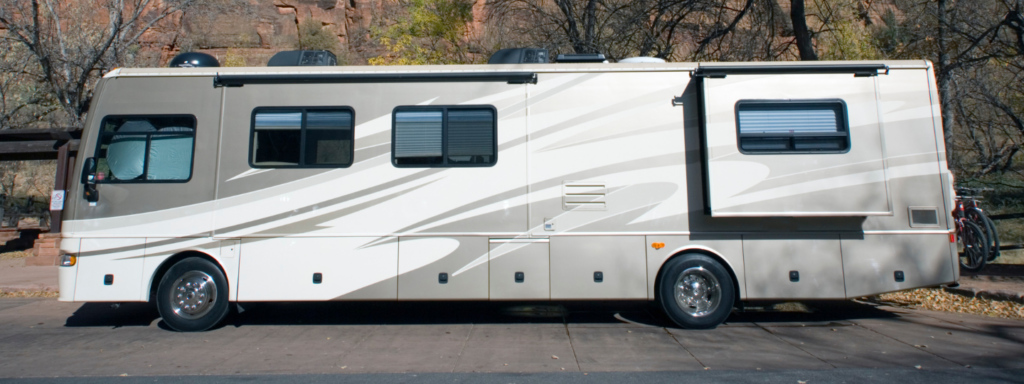
Be sure to at least wash (and if possible wax and detail) the outside of your RV because that is going to be the basis for the buyer’s first impression. If you don’t have time to do this work yourself, and you can afford it, then it would be worthwhile to have your RV professionally detailed. If there are exterior scuffs, scratches, dents, or damage, and you can afford to have those fixed, it will create a much better impression of the overall condition of your RV.
Any visible defects that catches the eye of the potential buyer will draw their attention to that damage and away from the overall value of your RV so the more it looks brand new the more likely the buyer will be to make an offer. Don’t overlook the tires, the hitch or coupling device, the roof, and even the undercarriage. If possible, make sure all the exterior surfaces sparkle.
Don’t Neglect the RV’s Inside Either
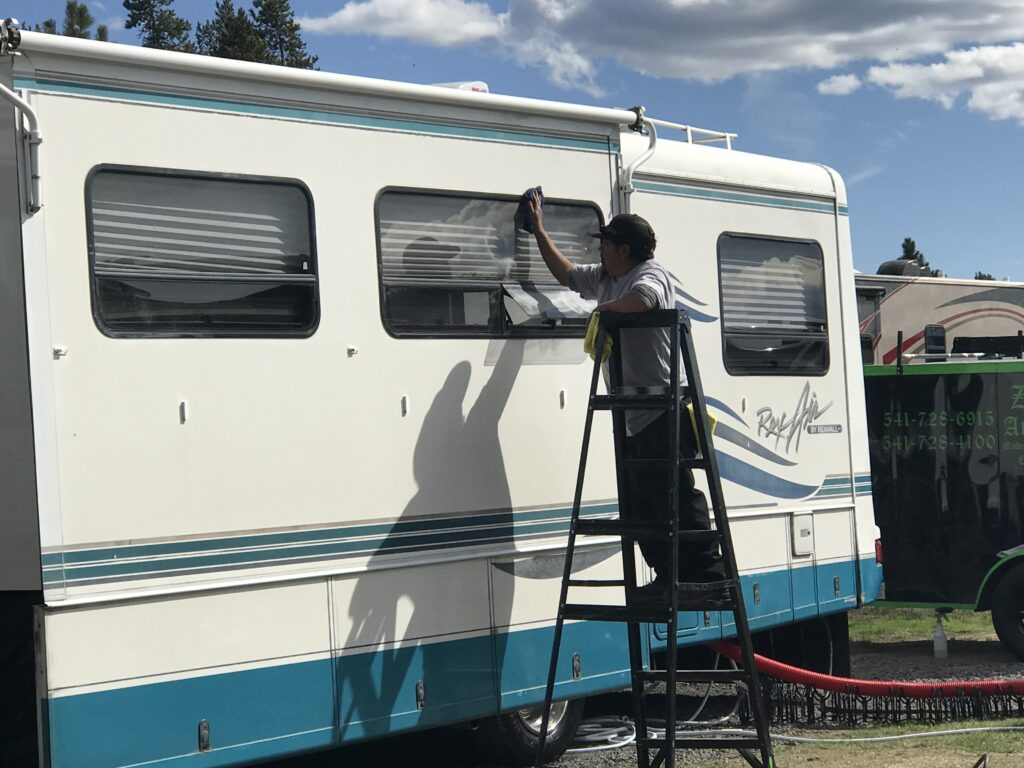
In the same way that you need to clean and detail the outside of your RV you need to do the same on the inside. Clean and declutter all the surfaces. Wash the windows, clean the drapes or shades, shampoo the carpets or rugs, and clean all the upholstered furniture. This inside detailing also includes managing any lingering odors inside your RV.
Do you love the smell of a new car? Well, the same thing is true in your motorhome. Prospective buyers don’t want to be assaulted by lingering pet, cat litter, cooking, or sewer odors. Any offensive odor is off putting and a significant deterrent when you’re trying to sell your RV. There are a variety of room fresheners available to help you manage this problem but don’t over do it. A thick syrupy floral aroma can be equally offensive.
Repair or Replace Worn or Defective Parts
Remember the goal is to make your RV as close to new as possible. So, if you have damaged or worn out parts (tires, batteries, generator, engine, air conditioners, etc.) and you can afford to repair or replace those parts then do so because any defects will be an impediment to all future sales of your RV.
Buyers don’t want to buy an RV then spend all their free time taking care of defective parts. They no doubt want to buy an RV so they can get out into the hinterland and relax, not spend all their free time and money taking care of defective parts. Again, if your RV is a DIY fixer upper, then you can ignore this helpful tip, but if it’s not a DIY project you should identify and correct all damaged parts.
Make Sure All Systems Function Correctly
Another way to make your RV more desirable and secure a quicker sale is to make sure that all systems are functioning correctly, systems like the jacks, slides, awnings, water, filtration system, washer and dryer, sleep number bed, ice maker, and microwave/ convection oven. Just like the defective parts listed above it’s important that every system functions properly and can be easily demonstrated as functional to a prospective buyer.
Great Photos Will Help You Achieve a Profitable Sale
When you advertise your RV for sale, the only thing a prospective buyer has to go on are the photographs you submit in your ad. Unless a buyer is able to come to your location to inspect your RV (which in today’s selling environment is very unlikely) the buyer’s only point of reference will be your provided photographs. Great photographs sell and poor photographs are a hindrance to sales.
To provide excellent photographs, you need good lighting on the inside and the outside of your RV. When taking inside photos, open all the drapes, move the RV outside of any garage and try to take pictures on a brightly lit sunny day. If possible, add extra light to the inside of the RV to enhance the clarity and warmth of your recreational vehicle. Here are a few don’ts.
- Don’t take photographs of your RV inside of a structure.
- Don’t take photographs on a rainy, or gloomy day, or at night.
- Don’t take pictures of your personal clutter.
Last Tip About Pictures.
Take Photos of Everything. Don’t leave anything out. Take pictures of …
- the refrigerator, inside and out
- cabinetry, inside and out
- the dashboard and the controls
- all the furniture and entertainment centers
- the bathroom(s), shower, toilet, sink, lighting fixtures, and cabinetry
- the range top, microwave, installed coffee maker, and all galley features
- the outdoor cooking area and storage spaces
- take pictures of the tires, hitch, engine, and generator.
If one picture is not enough, take several photos of the same thing from different angles. Again, err on the side of too many pictures, rather than not enough. When we bought our last RV I asked the dealer to send extra photos of the black and gray water tank valves with more written explanation regarding their location and the tank sizes.
This particular feature was very important to us, and we needed to understand how the new RV was equipped. Additionally, we were willing to drive across the US to purchase a specific motorhome, because it had an escape door on the driver side in the rear of the vehicle. But we needed to see pictures of the door, both closed and open with the ladder extended, before we were willing to drive over 2000 miles to buy that motorhome.
Again, take pictures of everything and don’t leave anything out. As previously stated, you should err on the side of providing too many photographs rather than not enough because you never know exactly what a prospective buyer is looking for. There’s a popular sales tale about a shopper who chose to buy a refrigerator from one salesman over another salesman, because the one that was selected demonstrated that a light came on inside the refrigerator every time the door was opened. Of course, all refrigerators are equipped with that feature, but the unsuccessful salesman assumed everyone knew that and he failed to demonstrate it to the buyer.
Also, in your written description of your RV, be sure to list every feature like the light in the refrigerator. If you’re not sure what all those features are because you’ve owned the RV for several years and now you just take those things for granted, you can find lists of attributes for your type of RV in national sales literature, like RV Trader. That sales literature will also give you good illustrations of well documented and poorly documented RVs for sale.
Be Sure You Have All Your Paperwork in Order
Don’t wait for a pending sale before you get all your paperwork in order. When you finally have an interested buyer on the line you don’t want to be scrambling around looking for your RV title. If you don’t own the title outright, and it is currently possessed by a third-party lender, you should pre-arrange with the lender to have a payoff figure and methodology in place by the time a buyer makes an offer. If your RV license is transferable, or you have emissions documentation or other transferable paperwork associated with your RV, including all service records, be sure these records are readily available.

Bonus Tip for a Profitable RV Sale
If you want the highest return on the sale of your RV, your best place to sell it is in the peer-to-peer marketplace where you can sell it directly to another private individual. Using it as a trade-in or selling it to a dealer will result in a loss of the total value of your RV of 30% or more and selling it through a consignment lot could reduce your return by up to 20%.
Therefore, the very best place to sell your motorhome, trailer, or fifth wheel is in the private marketplace. And the easiest and most straightforward way to do that is through National Vehicle. National Vehicle’s only line of business, helping RV buyers and sellers transact their business fairly and safely. To get started contact them for a free valuation of your RV, then clean up your RV so it looks like it’s brand new, repair minor damage or replace defective parts, and take great photos, then list it in the National Vehicle database, as well as in all the other national publications that they recommend.

Winterize First or List First? A Straight Answer for Fall Sellers

Should You Rent vs Sell Your RV?
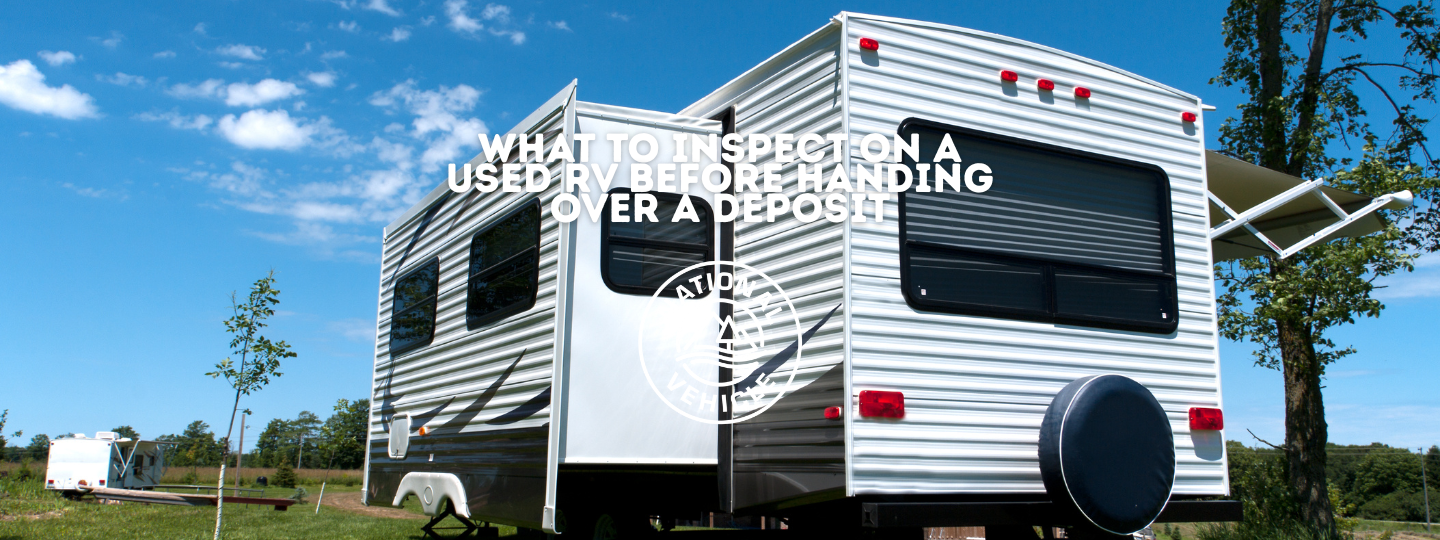
What to Inspect on a Used RV Before Handing Over a Deposit